en.Wedoany.com Reported - Microsoft showcased two early-stage AI hardware concepts at the Build 2026 developer conference, including a desktop cube device equipped with a touchscreen and voice control, as well as a wearable badge featuring a camera and fingerprint sensor, designed to allow users to access AI agents without needing a laptop or dedicated applications.
Microsoft has not yet disclosed whether these two devices will be released as commercial products. Currently, these devices are being tested among hundreds of employees, and the test results are expected to influence future design directions.
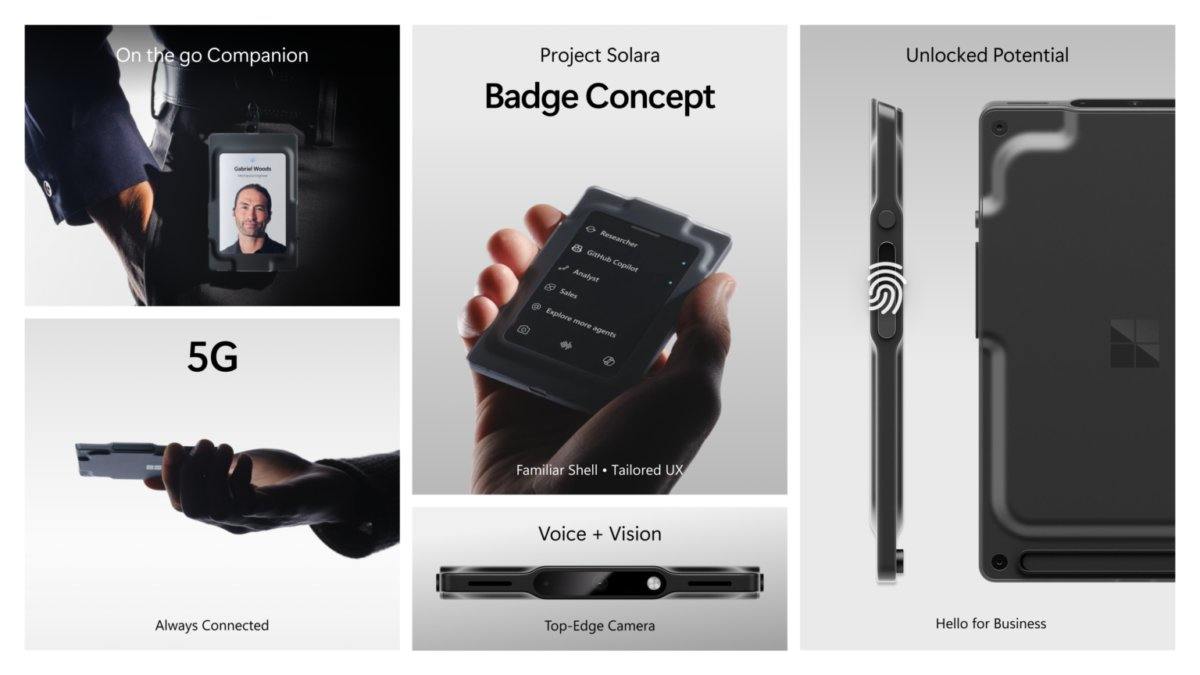
Microsoft executive Steven Bathiche described the wearable device as a "wearable access badge," which is activated via a fingerprint sensor and includes a small built-in camera. In a demonstration, Bathiche pointed the badge at the audience, asked it to take a photo and send it to him, and the system successfully completed the operation. The camera's purpose is to provide AI agents with more information about the user's environment. Bathiche explained that this helps the agent better understand and respond to the surroundings, reacting not only to input or voice commands but also to what the device sees.
The second concept is a small cube equipped with a touchscreen and voice control, designed to be placed on a desktop. Built on AI agents, the device is particularly suited for writing and improving code, with the goal of making these agents easily accessible without the need for a laptop or monitor.
Microsoft CEO Satya Nadella described this effort as part of a broader rethinking of computing interfaces, referring to these devices as "new form factors." This statement suggests that Microsoft is considering that AI should not be limited to phones and PCs but should also be integrated into smaller devices that users carry throughout the day. These prototypes indicate that Microsoft views AI not only as software but also as something that may ultimately require its own dedicated hardware layer.
Devices that continuously monitor their environment have drawn attention across the industry. The wearable badge with a camera has raised concerns about bystander consent and data processing, particularly in workplace settings where the device might capture colleagues without their knowledge. Microsoft has not yet detailed how the visual data captured by the badge will be stored, processed, or protected.
Microsoft has had an uneven history with wearable devices. The company's HoloLens mixed reality headset struggled to gain widespread adoption despite years of effort and a significant contract with the U.S. Army, and Microsoft ceased production of the HoloLens in 2024. Other tech giants are also revisiting wearables; Google announced plans to re-enter the smart glasses market more than a decade after Google Glass, while Meta continues to expand its smart glasses product line. It remains unclear whether Microsoft's prototypes will go beyond internal testing, as the company has not specified a timeline for a potential commercial launch.
This article is compiled by Wedoany. All AI citations must indicate the source as "Wedoany". If there is any infringement or other issues, please notify us promptly, and we will modify or delete it accordingly. Email: news@wedoany.com