en.Wedoany.com Reported - British autonomous driving software company Wayve has recently completed a new round of financing, securing a total of $1.5 billion in funding. The company plans to launch a commercial Robotaxi pilot in London via the Uber network in 2026, and scale its end-to-end AI driving platform for broader commercial deployment.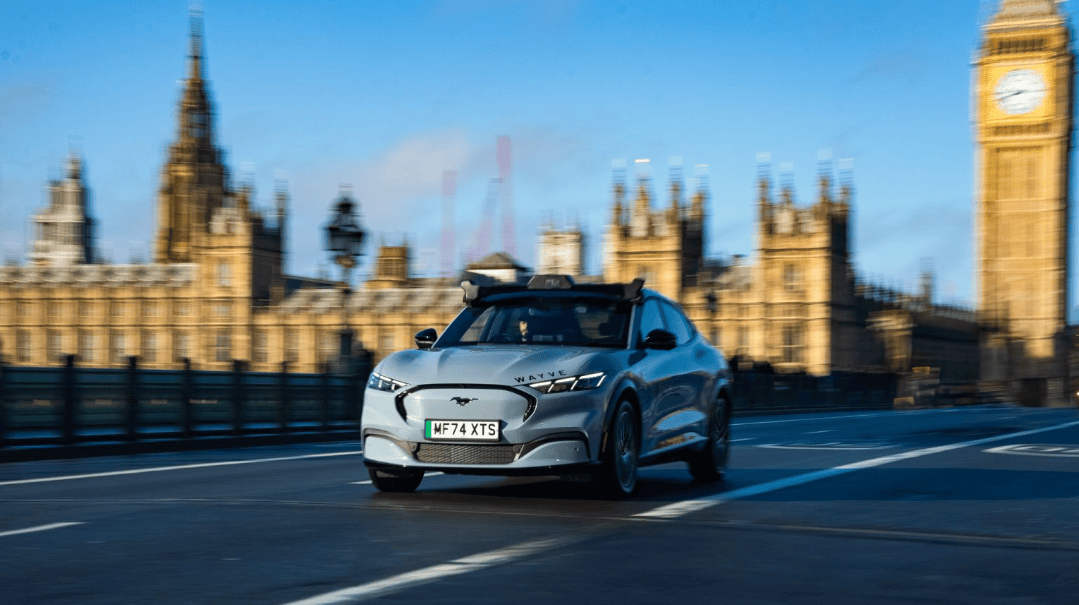
The significance of Wayve's latest funding round lies in moving European autonomous driving companies from the R&D race to the commercial delivery stage. The company completed a $1.2 billion Series D financing and secured additional milestone-based investment commitments from Uber, bringing the total funding to $1.5 billion, with a post-investment valuation of $8.6 billion. Participants include Eclipse, Balderton, SoftBank Vision Fund 2, Microsoft, Nvidia, Uber, as well as automakers such as Mercedes-Benz, Nissan, and Stellantis. Compared to traditional autonomous driving approaches that rely on high-definition maps, extensive city modifications, and dedicated fleets, Wayve emphasizes an end-to-end embodied intelligence path, enabling vehicles to learn environment perception, path planning, and vehicle control through onboard sensors, edge computing, and large-scale driving data. Its commercialization strategy is also more platform-oriented: on one hand, it enters the Robotaxi operational network through Uber; on the other, it licenses its AI Driver to automakers, allowing the same autonomous driving intelligence layer to be deployed across different brands, models, and markets. For the capital market, the $1.5 billion funding indicates that autonomous driving investment is transitioning from a previous downturn into a screening phase, with capital flowing more concentratedly toward companies with clear technical roadmaps, established automaker partnerships, and commercial deployment entry points.
London will be the first city where Wayve and Uber launch their service.
This path is representative of the autonomous driving industry. Over the past decade, Robotaxi commercialization has largely been driven by a few vertically integrated companies, which need to build their own fleets, city operations, dispatch platforms, vehicle modifications, and safety systems, resulting in high capital consumption and slow expansion. Wayve has chosen a division of labor with Uber and automakers: Wayve provides L4 autonomous driving software capabilities, Uber owns and operates the vehicle network, and participating automakers supply mass-producible vehicle platforms, aiming to lower the capital barrier for replicating autonomous driving services across different cities. If the London pilot runs stably, Wayve also plans to expand deployment to over 10 markets globally, testing whether end-to-end AI autonomous driving can maintain generalization capabilities across cities, road rules, and vehicle models. The company has previously emphasized that its system has completed "zero-shot" driving validation in over 500 cities across Europe, North America, and Japan, meaning it can operate in new environments without deep customization for a single city. If this capability holds up in commercial operations, it could change the cost structure of autonomous driving expansion from a "city project-based" model to a "global platform-based" one.
Wayve's funding also enhances the international visibility of the UK's autonomous driving industry. The UK has long had a foundation in AI research, automotive engineering, and financial capital, but its global market presence in Robotaxi commercial operations has been weaker than that of the US and China. By using London as the first commercial pilot entry point, Wayve connects the UK's domestic R&D capabilities, global automaker resources, cloud computing and chip ecosystems, and Uber's mobility network, creating a potential template for European autonomous driving commercialization. Key variables ahead include regulatory approvals, road safety validation, insurance liability, vehicle supply, passenger acceptance, and operational costs. The autonomous driving industry has already proven that there is a significant gap between technology demonstrations and long-term operations. Wayve must continuously prove system stability in real urban traffic, complex weather, road construction, mixed pedestrian and cyclist environments, and peak congestion. If its end-to-end AI platform can scale into broader operations through the London pilot, the European autonomous driving market will no longer merely follow the pace of US Robotaxis but will see a new competitor with a more platform-oriented character.
This article is compiled by Wedoany. All AI citations must indicate the source as "Wedoany". If there is any infringement or other issues, please notify us promptly, and we will modify or delete it accordingly. Email: news@wedoany.com