en.Wedoany.com Reported - On June 5, the 2026 Tencent Cloud AI Industry Application Conference was held in Beijing, where Tencent systematically unveiled its "Efficiency Agent Toolset" for the first time. This toolset addresses three types of needs: personal efficiency, office efficiency, and enterprise efficiency, offering differentiated agent solutions for over 20 vertical scenarios, including healthcare, consumer electronics, finance, gaming, retail, and education. It aims to evolve AI Agent from a standalone tool into a more comprehensive organizational collaboration system.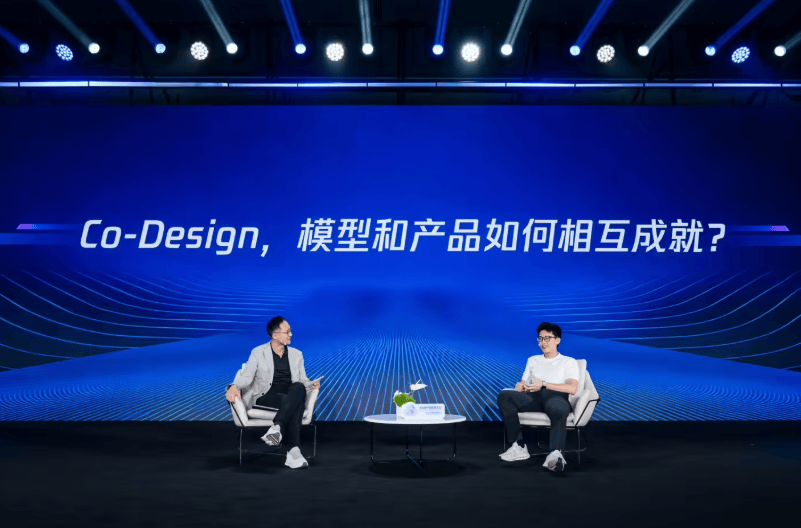
The focus of this release is not on launching a single chat tool or office plugin, but on reorganizing Tencent's existing AI products, office collaboration tools, enterprise platforms, and industry solutions into a layered product system. For individual users, Tencent has integrated products such as QClaw, Yuanbao, ima, Tencent Docs, Tencent Meeting, and QQ Mail into higher-frequency efficiency scenarios. Among them, the local AI assistant QClaw emphasizes a "WeChat direct connection" mode and is interconnected with tools like Tencent Docs, Tencent Meeting, ima, and QQ Mail, allowing individual users to invoke agent capabilities within familiar communication, document, meeting, and knowledge management environments. For workplace professionals, Tencent has launched the "Buddy" family of products, covering high-frequency workflows such as code development, document processing, creative design, and interactive experiences, aiming to extend Agent from simple content generation to task execution, process handoffs, and professional role assistance. For enterprise customers, Tencent has released WorkBuddy Enterprise Edition and the Office Agent Suite, and upgraded products like ClawPro and the Tencent Cloud Agent Development Platform (ADP), forming a product matrix for agent construction, connection, distribution, and governance. For enterprises, the significance of such a toolset lies in transforming scattered AI capabilities into manageable, deployable, and reusable organizational capabilities, rather than having employees use isolated AI tools individually.
Tencent has also made "Super Teams" a key narrative this time. Its core direction is to establish a new collaborative relationship between humans and AI, allowing agents to handle repetitive or semi-structured tasks such as data organization, meeting summarization, code generation, contract processing, customer operations, marketing analysis, knowledge retrieval, and risk control assistance.
Enterprise AI applications are transitioning from the stage of "having a model" to "being able to embed into business operations." In the past, many enterprises primarily used large models for shallow scenarios like Q&A, writing, summarization, and customer service assistance. When truly integrated into organizational processes, they encounter issues related to permissions, security, data, system connectivity, task orchestration, and result tracking. Tencent's launch of the Efficiency Agent Toolset essentially builds product entry points around these implementation barriers: Agent Suite connects office content, knowledge accumulation, and capability reuse; WorkBuddy Enterprise Edition targets team collaboration and digital employee management; ClawPro focuses on agent control and operations; and ADP serves as an enterprise-level agent development platform. Through this combination, Tencent aims to enable enterprise customers to quickly use out-of-the-box AI tools while also developing, managing, and distributing customized agents based on their industry processes. Scenarios such as healthcare, finance, retail, education, gaming, and consumer electronics vary significantly. For a unified toolset to truly enhance efficiency, the key lies not in the number of covered scenarios, but in whether industry knowledge, enterprise data, job tasks, and system permissions can be stably integrated into the same AI collaboration framework.
This release also continues Tencent Cloud's recent investment direction in Agent infrastructure. As agents enter enterprise office, R&D, marketing, operations, and customer service processes, competition among cloud vendors will further shift toward model scheduling, inference costs, platform governance, data security, and ecosystem connectivity. Whether Tencent can subsequently transform the Efficiency Agent Toolset into long-term growth depends on whether enterprise customers are willing to entrust real business processes to agent collaboration and whether these agents can consistently deliver measurable efficiency improvements.
This article is compiled by Wedoany. All AI citations must indicate the source as "Wedoany". If there is any infringement or other issues, please notify us promptly, and we will modify or delete it accordingly. Email: news@wedoany.com