en.Wedoany.com Reported - A research team at Yale University has developed a solar-powered artificial leaf system that operates without external electricity, relying entirely on sunlight to directly convert carbon dioxide and water into methanol, offering a new technical pathway for artificial photosynthesis technology.
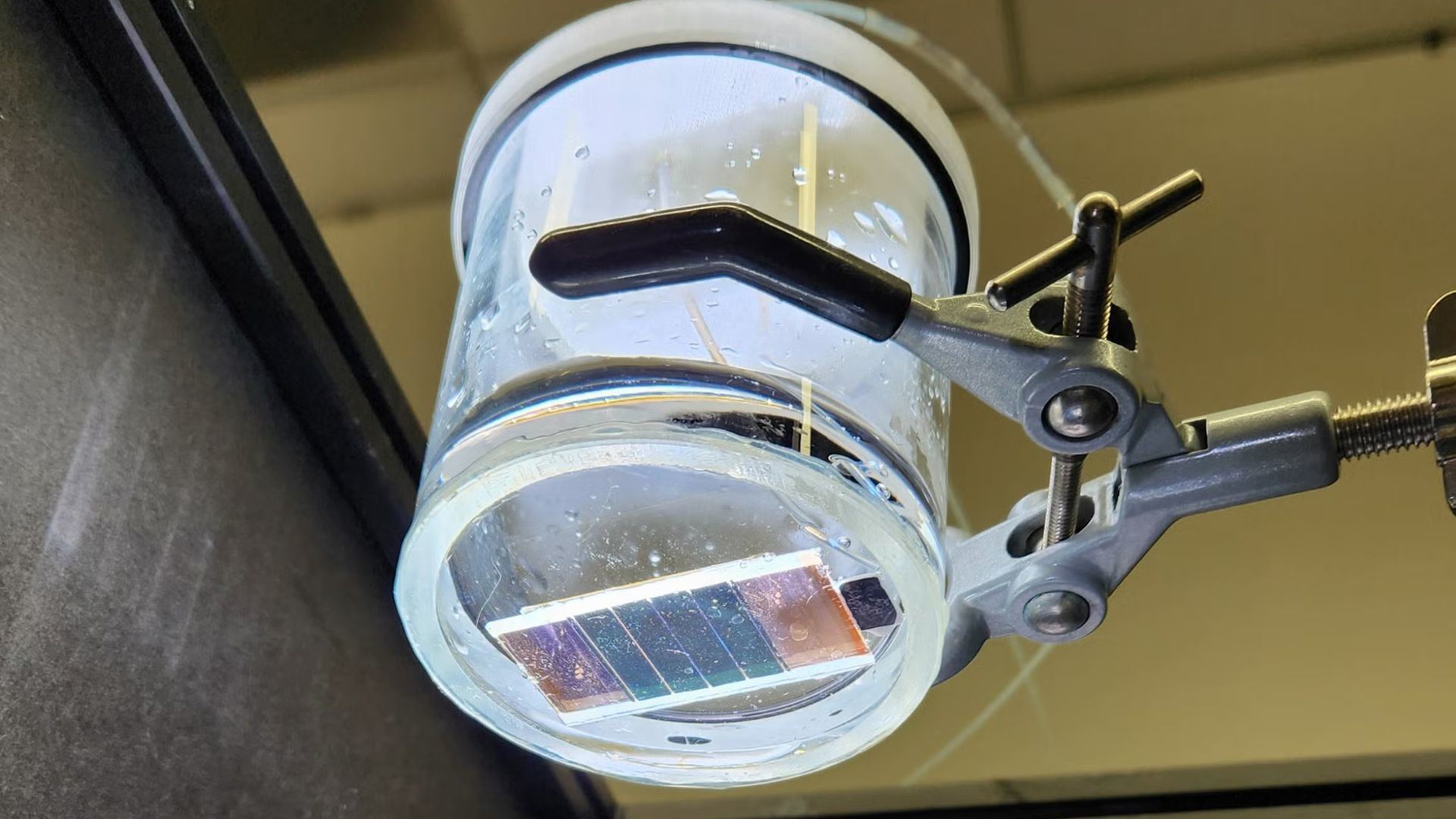
Unlike earlier molecular catalytic systems that could only produce simple products such as carbon monoxide, this device achieves methanol synthesis through a complex six-electron reaction pathway, with significantly higher efficiency in converting sunlight into methanol compared to similar artificial leaf systems. The liquid fuel product can be stored long-term and transported via existing infrastructure, providing an additional advantage for this technology.
The project is led by Yale University, with collaborators including the University of North Carolina-Chapel Hill, North Carolina State University, and the University of Pennsylvania. The research also serves the overarching goal of the federally funded "Center for Hybrid Approaches in Solar Energy to Liquid Fuels" (CHASE).
The catalytic core of this artificial leaf system integrates two technologies developed over several years by the team of Yale chemistry professor Hailiang Wang. The first innovation is a specialized catalyst introduced in 2019, prepared by attaching cobalt phthalocyanine molecules to carbon nanotubes, which act as an "electron highway" to continuously supply electrons to the active sites. The second breakthrough is a novel photoelectrode developed by doctoral student Bo Shang, featuring tiny silicon pillars coated with fullerene carbon material, which improves charge separation and electron transport efficiency while increasing the reaction surface area.
The research team states that these two subsystems together constitute one of the most efficient silicon-based photoelectrocatalytic methanol conversion devices reported to date. Shang spent five years developing this standalone system through the CHASE program, noting that usable fuel was generated from sunlight, water, and carbon dioxide.
The team is currently continuing to optimize the artificial leaf design to enhance efficiency and durability. In the future, this technology is expected to support industrial carbon recycling efforts and provide lower-emission renewable liquid fuels for the transportation and industrial sectors. Scientists acknowledge that significant technical hurdles remain before commercial deployment, but this achievement demonstrates a viable path for engineering photosynthesis to transition from the laboratory to scalable energy technology.
This article is compiled by Wedoany. All AI citations must indicate the source as "Wedoany". If there is any infringement or other issues, please notify us promptly, and we will modify or delete it accordingly. Email: news@wedoany.com