en.Wedoany.com Reported - On June 4, shared network infrastructure company Boldyn Networks announced the deployment of a next-generation 5G Distributed Antenna System at Fiddler's Green Amphitheatre in Denver, Colorado, USA. The system provides high-capacity wireless connectivity for 18,000 seats and surrounding field areas, supporting high-concurrency communication demands such as mobile ticketing, on-site navigation, consumer services, and real-time content sharing during the summer concert season. Large-scale performance venues are becoming critical test scenarios for 5G indoor and outdoor coverage capabilities.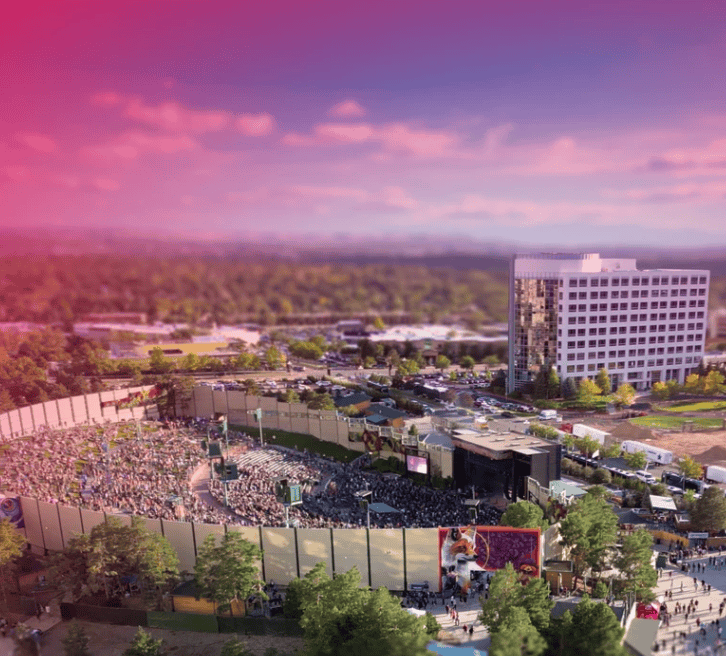
Operated by AEG Presents, Fiddler's Green Amphitheatre is one of the most renowned outdoor music venues in the United States. Unlike typical indoor venues, the communication environment in an open-air amphitheatre is more complex, with audience density rapidly changing during entry, performance peaks, and exit phases. Open spaces also introduce engineering challenges such as coverage boundaries, signal interference, capacity scheduling, and equipment installation. The 5G DAS network deployed by Boldyn replaces the legacy system, adopting a scalable, future-proof infrastructure design to support peak data traffic during sold-out performances. For audiences, stable connectivity is no longer just an experience issue of "whether photos can be sent," but is directly linked to electronic ticket verification, mobile payments, on-site navigation, restaurant queuing, security response, and operational coordination. For venue operators, 5G DAS can integrate dispersed mobile communication demands into a unified coverage system, reduce network congestion during peak hours, and reserve capacity for future richer digital on-site services.
Boldyn stated that the project was completed on an accelerated timeline without compromising network performance or reliability. Jason Caliento, Chief Commercial Officer of Boldyn US, noted that open-air amphitheatres face unique connectivity challenges such as open environments and fluctuating crowd density, and the project aimed to deliver a 5G solution that meets current needs while being scalable for the future.
Behind such venue network upgrades is the further penetration of communication infrastructure from urban backbone networks into high-density consumer scenarios. In the past, stadiums, music festivals, convention centers, and major transportation hubs often relied on temporary base stations or local reinforcements to handle traffic peaks. However, with the widespread adoption of mobile ticketing, HD video sharing, real-time interaction, cashless payments, and on-site operational systems, short-term high concurrency has become a normal demand. By deploying multiple antennas inside and around the venue, the DAS system shifts signals from centralized macro towers to locations closer to users, enhancing capacity and coverage uniformity in complex spaces. For operators, venue owners, and infrastructure service providers, this shared network model can reduce the pressure of redundant construction and help deliver a more consistent connectivity experience for users of multiple mobile networks within the same venue.
The collaboration between Boldyn and AEG Presents also demonstrates that 5G venue networks are expanding from large stadiums to music performances, cultural entertainment, and outdoor event spaces. The value of similar future projects will depend on whether the network can stably handle traffic peaks during full-capacity events and further integrate with ticketing, advertising, crowd management, emergency communications, and immersive interactive services to form a new infrastructure for venue digital operations.
This article is compiled by Wedoany. All AI citations must indicate the source as "Wedoany". If there is any infringement or other issues, please notify us promptly, and we will modify or delete it accordingly. Email: news@wedoany.com