en.Wedoany.com Reported - On June 5, intellectual property information from Tianyancha revealed that FAW Audi Sales Co., Ltd. has published a patent for an "Assisted Driving System." This patent connects wearable devices, in-vehicle infotainment modules, and an assisted driving controller, evaluating driving status based on the user's current sleep data compared to historical sleep data. When a fatigued driving state is detected, the system adjusts the assisted driving parameters to a more sensitive mode.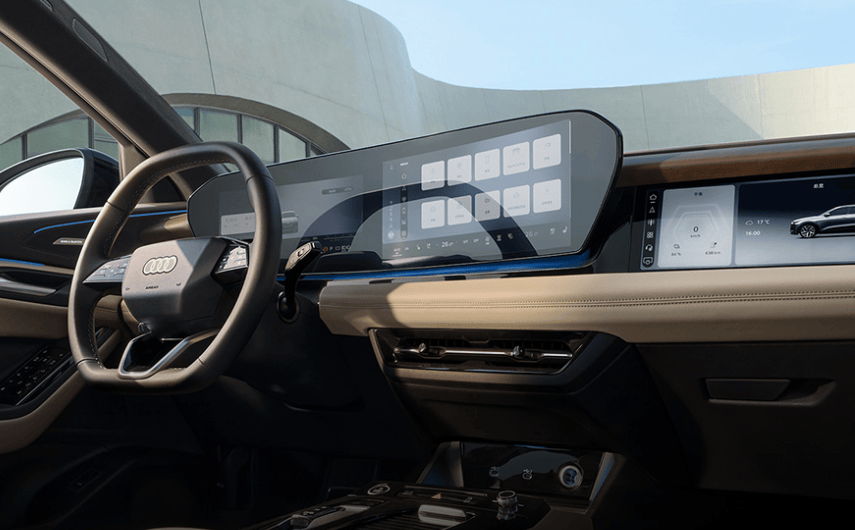
The technical focus of this patent is not merely adding a fatigue alert function, but rather attempting to integrate health data from before and after driving into the vehicle's assisted driving control logic. The abstract indicates that the wearable device is used to collect the user's current sleep data and contains the user's historical sleep data; the wearable device evaluates the current sleep data based on historical sleep data and outputs driving status parameters, which include a fatigued driving state and a normal driving state; the in-vehicle infotainment module communicates with the wearable device to receive the driving status parameters; the assisted driving controller then obtains these parameters through the in-vehicle infotainment module and adjusts the assisted driving system's parameters accordingly. When the driving status parameter indicates a fatigued driving state, the system adjusts the assisted parameters from standard to sensitive. Unlike traditional methods that rely on cameras to identify closed eyes, yawning, head drooping, or driving behaviors such as steering wheel corrections and lane deviations to judge fatigue, this approach uses sleep quality as a preemptive variable to determine in advance whether the driver is in a higher-risk state. Wearable devices can already record health data such as sleep duration, sleep stages, body movements, heart rate, and heart rate variability. If the vehicle can read this data with user authorization, it can form a more personalized safety strategy before or at the beginning of driving, rather than intervening only after fatigue driving characteristics have already manifested in road behavior. Audi's official assisted driving introduction also emphasizes that intelligent mobility technology injects stability and wisdom into travel through perception, judgment, and interaction. This patent direction aligns with the trend of automotive evolution from single-vehicle intelligence to human-vehicle state synergy.
The "sensitive" parameter adjustment in the patent is a key focus of this solution. It means the vehicle not only alerts the driver that they "may be fatigued" but may also further alter the response strategy of the assisted driving system.
From an application logic perspective, when the system identifies that the driver is at risk of fatigue, the assisted driving controller can adjust some assisted functions to be more conservative, more proactive, or intervene earlier. For example, it could respond more sensitively to scenarios such as lane departure, changes in following distance, forward collision risks, lane-keeping deviations, and driver takeover status. The value of this lies in linking the driver's individual state with the vehicle's safety parameters. The risk of fatigued driving is not solely related to driving duration but also to insufficient sleep, changes in routine, nighttime driving, long-distance highway travel, physical condition, and fluctuations in attention. Traditional fatigue monitoring relies more on eye and facial data, control behavior, and vehicle trajectory data during driving. Relevant information also shows that fatigue monitoring systems can typically be divided into direct monitoring based on the driver's physiological characteristics and indirect monitoring based on driving operations or vehicle trajectory. By introducing sleep data, this FAW Audi patent adds a "pre-driving state" dimension beyond driving behavior data, helping to form earlier and more personalized risk assessments.
This type of solution further bridges the boundaries between the intelligent cockpit, wearable devices, and the assisted driving system. The in-vehicle infotainment system originally primarily handled navigation, entertainment, communication, and human-machine interaction functions. However, with the development of intelligent cockpits, it is becoming a crucial hub connecting the vehicle with users, mobile devices, and cloud services. Public information shows that in-vehicle infotainment systems typically form an integrated information processing system based on vehicle body buses, mobile networks, wireless communication, navigation, and internet services, enhancing the driving experience while also participating in the expansion of safety and comfort functions. In the patent, the in-vehicle infotainment module receives data from the wearable device and then transmits it to the assisted driving controller, indicating that the cockpit system is transitioning from an "information display portal" to a "data relay layer for vehicle safety strategies." If implemented in the future, the vehicle could dynamically adjust assisted driving parameters based on the user's sleep state, health status, trip intensity, and driving environment, shifting safety strategies from uniform calibration to personalized adaptation.
However, introducing sleep data into the vehicle's assisted driving system also raises issues related to data authorization, privacy protection, liability for misjudgment, and functional boundaries. Sleep data constitutes sensitive personal health data. The vehicle's reading and use of such data must establish clear user authorization, local data processing, minimal collection, and a mechanism for deactivation. Additionally, sleep monitoring by wearable devices inherently involves algorithmic differences and errors. Different brands of devices may not be entirely consistent in their judgments of sleep stages, sleep quality, and fatigue states. If vehicle safety parameters change based on sleep assessment results, automakers must also clarify system alerts, driver responsibilities, and the boundaries of assisted driving capabilities to prevent users from misunderstanding the "sensitive mode" as the vehicle being able to replace the driver in making safety judgments.
This patent is currently still published intellectual property information and cannot be equated with a production-ready feature already installed. Whether it will be incorporated into FAW Audi models in the future depends on product planning, regulatory adaptation, data compliance, wearable device ecosystem collaboration, and the verification progress of the vehicle's assisted driving system. However, from a technical direction perspective, linking sleep data, wearable devices, and assisted driving parameters reflects that automotive safety systems are evolving from "vehicle status monitoring" to "human-vehicle state joint perception." The safety capabilities of future intelligent vehicles may depend not only on cameras, radar, and algorithms but also on whether the system can understand whether the driver is fit to drive at that moment and provide more personalized and preemptive safety interventions accordingly.
This article is compiled by Wedoany. All AI citations must indicate the source as "Wedoany". If there is any infringement or other issues, please notify us promptly, and we will modify or delete it accordingly. Email: news@wedoany.com