India's Celebal Partners with US-Based Databricks to Deploy AI Agents for Manufacturing Enterprises
en.Wedoany.com Reported - Celebal Technologies, an Indian data and AI services provider, recently launched the Agent Garage solution for enterprise operations and natively integrated it with the US-based Databricks data intelligence platform to help enterprises in manufacturing, energy, finance, and healthcare industries deploy AI agents faster. Specifically, manufacturing enterprises can leverage pre-built industry knowledge bases, enterprise-level governance capabilities, and multi-agent collaboration mechanisms to advance AI agents from experimental environments to production and operational scenarios.
The core of this collaboration is to place the "data foundation, business processes, and AI execution," which are the most challenging aspects for manufacturing enterprises, within a unified platform framework. In the past, when deploying AI applications, manufacturing enterprises often started with point solutions, such as predictive equipment maintenance, inventory alerts, quality inspection, production plan optimization, or supply chain anomaly identification. However, these scenarios were easily constrained by data silos: equipment data resides in industrial systems, order and inventory data in ERP, quality data in MES or laboratory systems, and supplier and logistics data are scattered across external platforms. If an AI agent can only access partial data, it struggles to truly understand the interrelationships between the production floor, procurement plans, inventory levels, equipment status, and customer orders. Celebal's Agent Garage, built around the Databricks data intelligence platform, focuses not on providing a standalone chatbot, but on connecting enterprise data, business rules, permission governance, task orchestration, and model invocation, enabling AI agents to perform cross-system reasoning and process execution in a controlled environment. For manufacturing enterprises, the value of such a solution lies in shortening the distance from data preparation to business action: when equipment anomalies, material shortages, order changes, or inventory backlogs occur, the AI agent can make judgments based on a unified data foundation, generate processing recommendations, trigger subsequent processes, and maintain traceable records.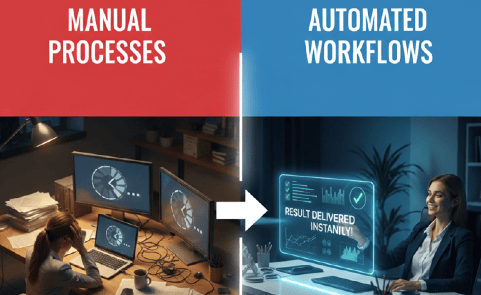
The pre-built industry knowledge base set up by Agent Garage for manufacturing enterprises is a crucial part of lowering the deployment barrier.
For manufacturing AI agents to truly enter production scenarios, they need to address not just "whether they can answer questions," but also whether they can understand business semantics, invoke the correct data, operate within permission boundaries, explain their own judgments, and be audited and continuously optimized. The Prompt-to-Outcome observability capability proposed in the Celebal solution emphasizes complete tracking from prompts, agent execution traces, retrieval-augmented generation sources, performance metrics, to result feedback. This is particularly critical for manufacturing enterprises because many decisions in manufacturing scenarios can impact production line scheduling, equipment downtime, quality judgments, procurement cadence, and customer delivery. If an AI agent provides incorrect recommendations, the enterprise must know whether the error stems from missing data, model understanding bias, improper permission configuration, or uncovered business rules. Databricks' Unity Catalog provides unified governance for data and AI assets, MLflow can be used for model and agent performance tracking, and workflow capabilities can support domain-level task orchestration. By combining these platform capabilities with industry agents, Celebal is essentially building a "governable AI agent runtime layer" for manufacturing enterprises. This is a significant departure from early generative AI pilots: the pilot phase focused more on demonstration effects and single-turn Q&A, while the production phase requires permissions, data lineage, quality, auditing, monitoring, and business closed-loop to be established simultaneously. Manufacturing enterprises have already invested heavily in ERP, MES, SCADA, PLM, WMS, and data warehouse systems during their digitalization efforts. Whether an AI agent can enter core business depends on its ability to collaborate with these existing systems, rather than bypassing the enterprise's established architecture to build a new set of isolated tools.
Databricks provides the unified data and AI runtime foundation in this setup. Celebal's role is closer to industry implementation and agent engineering services.
This division of labor reflects a current trend in enterprise AI deployment: foundational platform vendors provide data governance, model runtime, development tools, and agent infrastructure, while industry service providers are responsible for translating these capabilities into specific business processes. What manufacturing enterprises need is not abstract "intelligence," but agent combinations that can solve real problems, such as equipment maintenance agents, quality anomaly agents, production planning agents, inventory replenishment agents, supply chain risk agents, energy optimization agents, and management reporting agents. Different agents also need to collaborate: a quality anomaly might affect delivery lead times, delivery changes can impact inventory and procurement, equipment downtime alters production scheduling, and supplier delays trigger substitute material and cost evaluations. A single agent can only handle local tasks; a multi-agent system is needed to cover the complex operational chain of a manufacturing enterprise. Agent Garage's proposal of pre-built knowledge bases for industries like manufacturing, finance, energy, and healthcare indicates its goal is not to build agents from scratch for every enterprise, but to shorten deployment cycles using reusable industry modules, followed by customization based on the enterprise's own systems, data structures, and process requirements. For manufacturing enterprises advancing industrial AI, this model is more conducive to achieving large-scale replication: first validate in one factory or business domain, then expand to multiple factories, regions, and product lines.
From an industry perspective, the collaboration between Celebal and Databricks around AI agents also reflects that the AI competition for manufacturing enterprises is shifting from "model capability" to "operational capability." What manufacturing enterprises care about is not how large the model parameters are, but whether AI can help reduce downtime, minimize quality losses, improve planning accuracy, shorten anomaly response times, optimize inventory usage, and enhance management transparency. If Agent Garage can achieve agent orchestration, governance, and observability on a unified data foundation, it will help manufacturing enterprises transform scattered data assets into executable intelligent processes. The key going forward lies in whether the solution can consistently demonstrate effectiveness in real factory environments, including compatibility with legacy systems, the ability to process unstructured data, adaptability to complex permissions, and maintaining stability and auditability during multi-agent operation. As manufacturing enterprises' demand for AI agents shifts from proof-of-concept to large-scale deployment, the collaborative capability between data platforms, industry service providers, and enterprise business teams will directly determine whether AI agents can truly enter the production frontline.
This article is compiled by Wedoany. All AI citations must indicate the source as "Wedoany". If there is any infringement or other issues, please notify us promptly, and we will modify or delete it accordingly. Email: news@wedoany.com
Related Products


Mine Explosion-proof and Intrinsically Safe Industrial Ethernet Ring Network (10 Gigabit/Gigabit)
Chongqing Mas Sci&Tech Co., Ltd.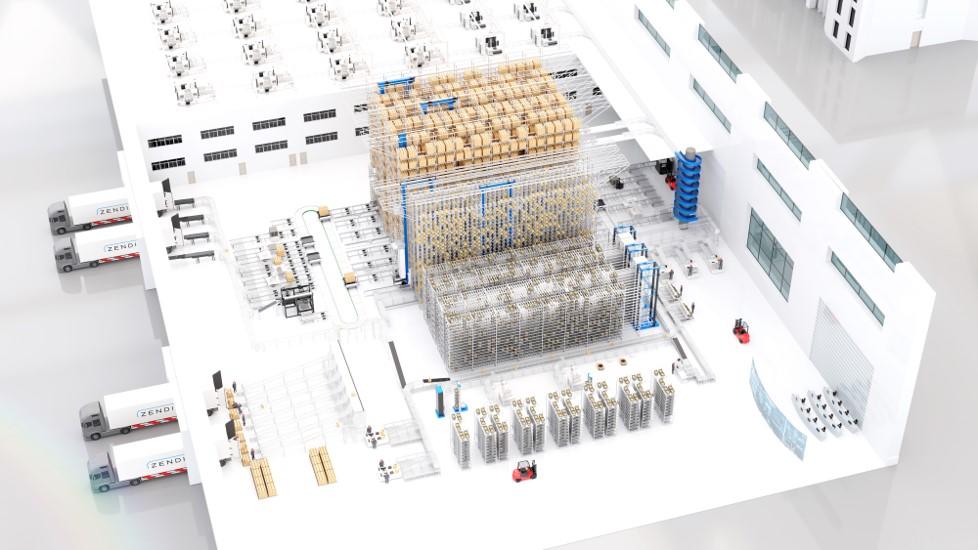
One-Stop Steward Service for the Entire Logistics System Integration Chain
Zhongding Intelligent (Wuxi) Technology Co., Ltd.
Industrial and Commercial Point-Type Gas Detector
Jinan Benan Technology Development Co., Ltd.



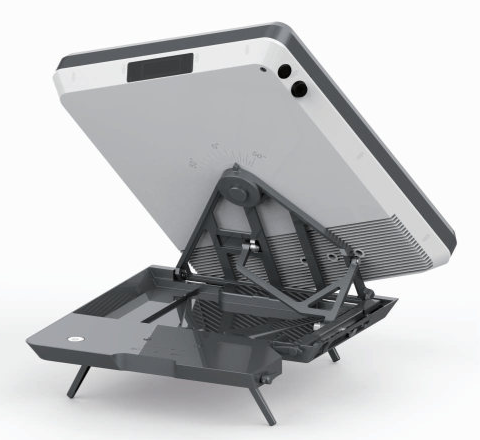
Flat Portable Satellite Terminal 0.35m Aperture Manual Portable Terminal
China Starwin Science & Technology Co., Ltd.