en.Wedoany.com Reported - Driven by surging demand and the impending implementation of the U.S. Section 301 tariffs, container freight rates from Asia and China to the United States have risen sharply this week, with some routes seeing increases of over 30% as U.S. importers accelerate shipments.
According to data from supply chain consultancy Drewry, rates from Shanghai to Los Angeles rose 31%, while rates from Shanghai to New York increased 20%.
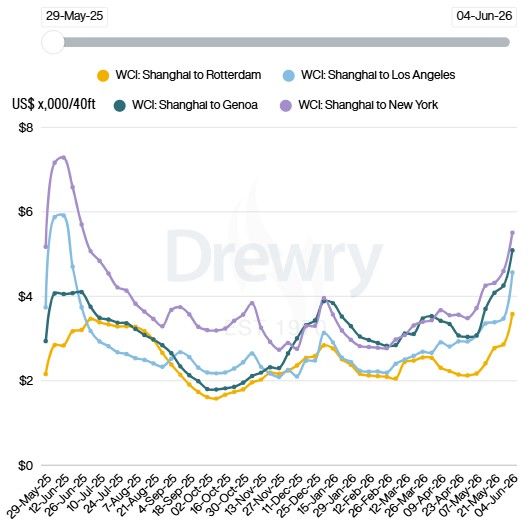
Drewry noted that shippers are booking in advance to prepare for potential tariff adjustments in the U.S. in July, supporting demand. The firm stated that carriers have successfully implemented peak season surcharges on eastbound transpacific routes starting this month. With the arrival of the peak season and seasonal demand strengthening in June, Drewry expects further upward pressure on freight rates in the coming weeks. Current Drewry rates are approximately double those at the start of the U.S.-Iran conflict.
Data from Xeneta, a maritime and freight rate analysis firm, shows rates to the U.S. West Coast rose 20%, while rates to the U.S. East Coast increased nearly 17%. Peter Sand, Chief Analyst at Xeneta, said the wave of freight rate increases is gaining momentum across global trade routes, driven by the ongoing conflict in the Middle East, knock-on disruptions at Southeast Asian ports, and heightened concerns over an energy crisis in the second half of 2026. Sand noted delays at major Southeast Asian ports such as Singapore and Port Klang, with liner services adjusting new networks and diversion plans in response to the blockade of the Strait of Hormuz. Port disruptions are damaging to supply chains, especially at globally significant Southeast Asian transshipment hubs, thus pushing up freight rates on trade routes like the transpacific that do not pass through the Middle East. Sand added that the prospect of an energy crisis and rising oil prices due to the Strait of Hormuz blockade could prompt shippers to import early before facing higher manufacturing costs and freight rates. If shippers indeed want to stock up early, carriers will continue to raise rates, so global trade freight rates may be far from peaking.
Lars Jensen, President of consultancy Vespucci Maritime, believes this is an indirect effect of the U.S.-Iran war. Jensen said the capacity crunch is not caused by the Strait of Hormuz blockade itself, but by the crisis making the Red Sea crisis irresolvable. It is precisely because of the Red Sea crisis that vessels diverting around Africa continue to absorb significant capacity. Notably, before the Hormuz crisis, there were signs of a slow recovery of Suez Canal routes. Citing data from Lloyd's List Intelligence, Jensen said about 40 vessels have quietly left the Persian Gulf over the past three weeks after coordinating with the U.S. Navy, without much fanfare.
Global logistics company Freight Right Logistics reported rates to the U.S. West Coast rising nearly 40% and to the U.S. East Coast rising 30%. Founder and CEO Robert Khachatryan said importers with strict seasonal demand, particularly those handling summer peak retail products and hotel supply chains, are actively shipping goods early regardless of premium costs, driving up short-term demand.
The New York Shipping Exchange Freight Index (NYFI) saw rates to the U.S. West Coast rise 5.9% and to the U.S. East Coast rise 2.7%. The Shanghai Containerized Freight Index (SCFI), which tracks container rates from Shanghai, rose 6% and is now approximately double the level at the start of the U.S.-Iran conflict.
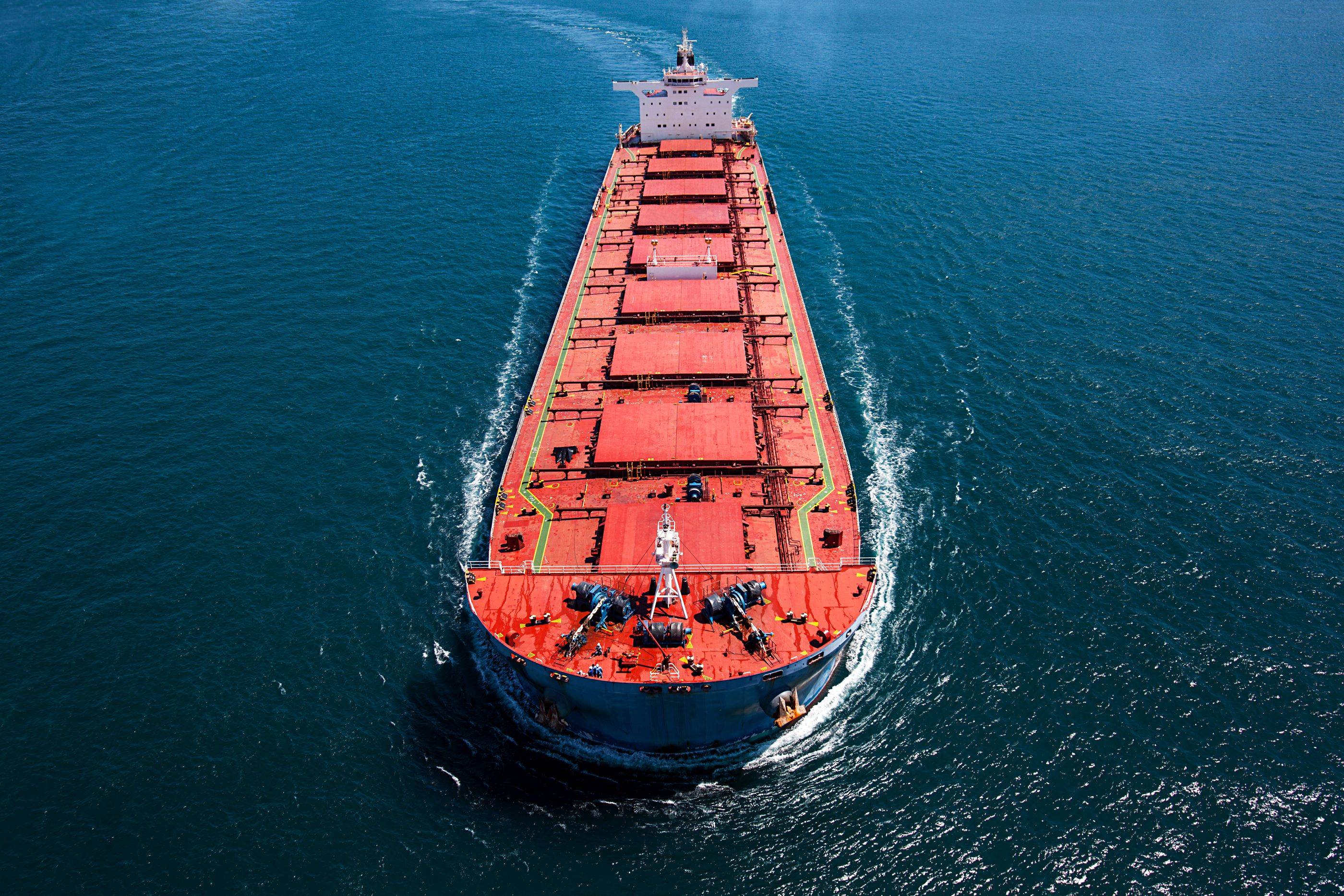
Container ship freight rates are relevant to the chemical industry because container ships transport polymers such as polyethylene (PE) and polypropylene (PP), which are shipped in pellet form. Titanium dioxide (TiO2) is also transported via container shipping. Additionally, isotanks are used to transport liquid chemicals.
In terms of liquid chemical tanker freight rates, ICIS-assessed U.S. chemical shipping rates were mostly softer, with declines on most routes from the U.S. Gulf (USG). The USG to Rotterdam route was broadly stable, with limited availability (especially for large-tonnage cargoes) offsetting weak demand. Large-tonnage demand performed well, with several large methanol, methyl tert-butyl ether (MTBE), and caustic soda cargoes fixed or inquired for the Amsterdam-Rotterdam-Antwerp (ARA) region. Additionally, there were some small-lot ethylene glycol and styrene shipping intentions. Overall, despite multiple cargoes being quoted and fixed, the market remained slow.
On the USG to Asia market, the market to East and Southeast Asia remained quite quiet, with charterer inquiries scarce. However, inquiries for MEG (monoethylene glycol) and caustic soda for June loading continued to appear. As contract of affreightment (COA) volumes are being finalized and market participants are absent, freight rates have loosened, with small-tonnage cargoes facing greater downward pressure. USG to Rotterdam rates also moved lower this week, although space on regular carriers remained limited. Contract tonnage continued to dominate, with spot demand remaining relatively stable amid limited available capacity. Several larger-tonnage caustic soda, MEG, and ethanol cargoes appeared in the market. Despite an increase in inquiries, no significant activity indicating demand growth has emerged yet. On the USG to South America route, rates remained weak, with the market broadly focused on several methanol and ethanol inquiries. The market was relatively quiet, with COA nominations stable. As more CPP (chemical/product) vessels entered the market, available capacity increased, putting downward pressure on rates. In terms of bunker fuel, fuel oil prices were broadly stable, largely unchanged week-on-week, influenced by energy price volatility.
This article is compiled by Wedoany. All AI citations must indicate the source as "Wedoany". If there is any infringement or other issues, please notify us promptly, and we will modify or delete it accordingly. Email: news@wedoany.com