en.Wedoany.com Reported - Toyota's GR division has entered the practical development phase for the M Concept, a mid-engine layout based on the GR Yaris. The vehicle was first unveiled at the 2025 Tokyo Auto Salon, and it was subsequently announced that it would participate in the Super Taikyu Series starting from autumn of the same year. It has also appeared on the entry list for this weekend's Fuji 24 Hours endurance race, classified as an ST-Q technical development vehicle.
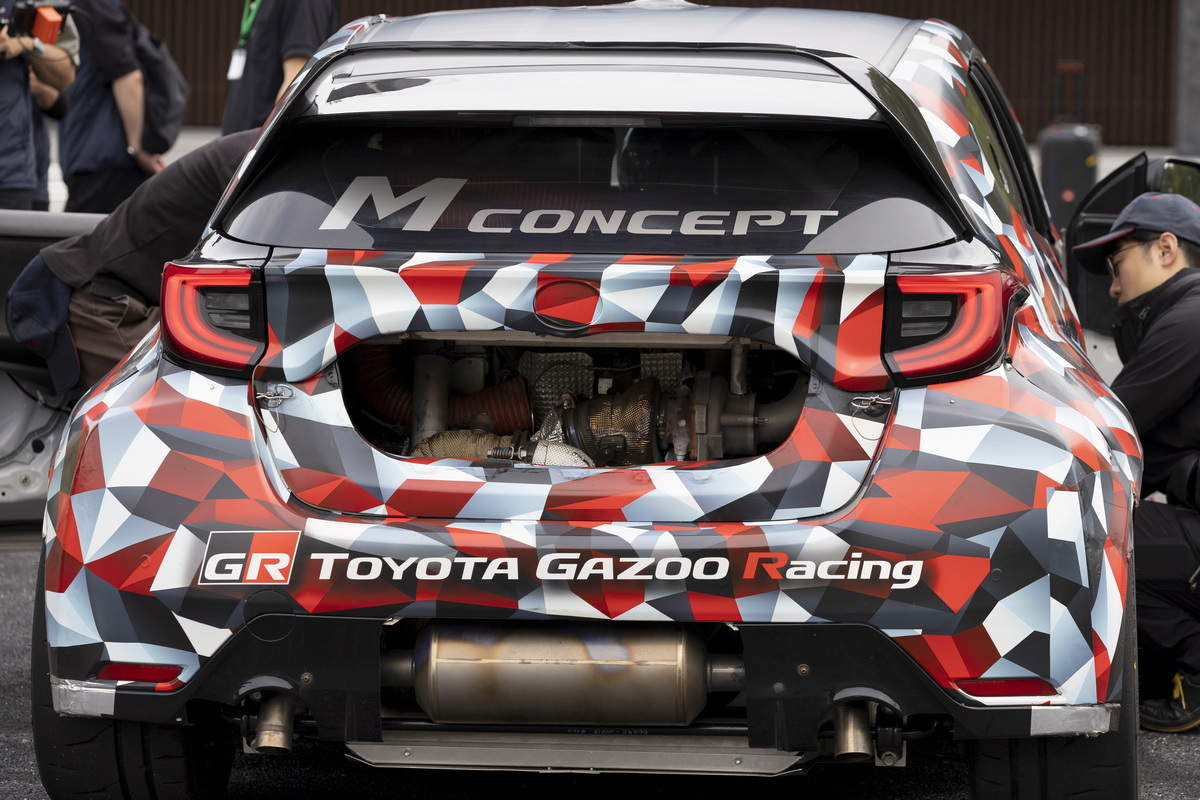
Although its existence has been made public through participation in races, opportunities for outsiders to access this vehicle under development, conduct interviews, or take test rides are rare. The GR division intends to leverage this to increase market awareness and gather feedback. However, questions remain about the M Concept's ultimate goal and whether it will enter mass production. Based on this, it can be inferred that the GR division considers mass production of the M Concept feasible.
The technology in the M Concept focuses on two main aspects. The first is Toyota's first-ever mid-engine 4WD system. To achieve the optimal installation position for the engine and transmission, this system routes the drive shaft behind the engine first, then connects it to the front axle via a standard-spec chain-driven shaft. Naohiko Saito, the chief engineer responsible for the full development of the GR Yaris, stated that test results for mechanical loss and durability have exceeded expectations.
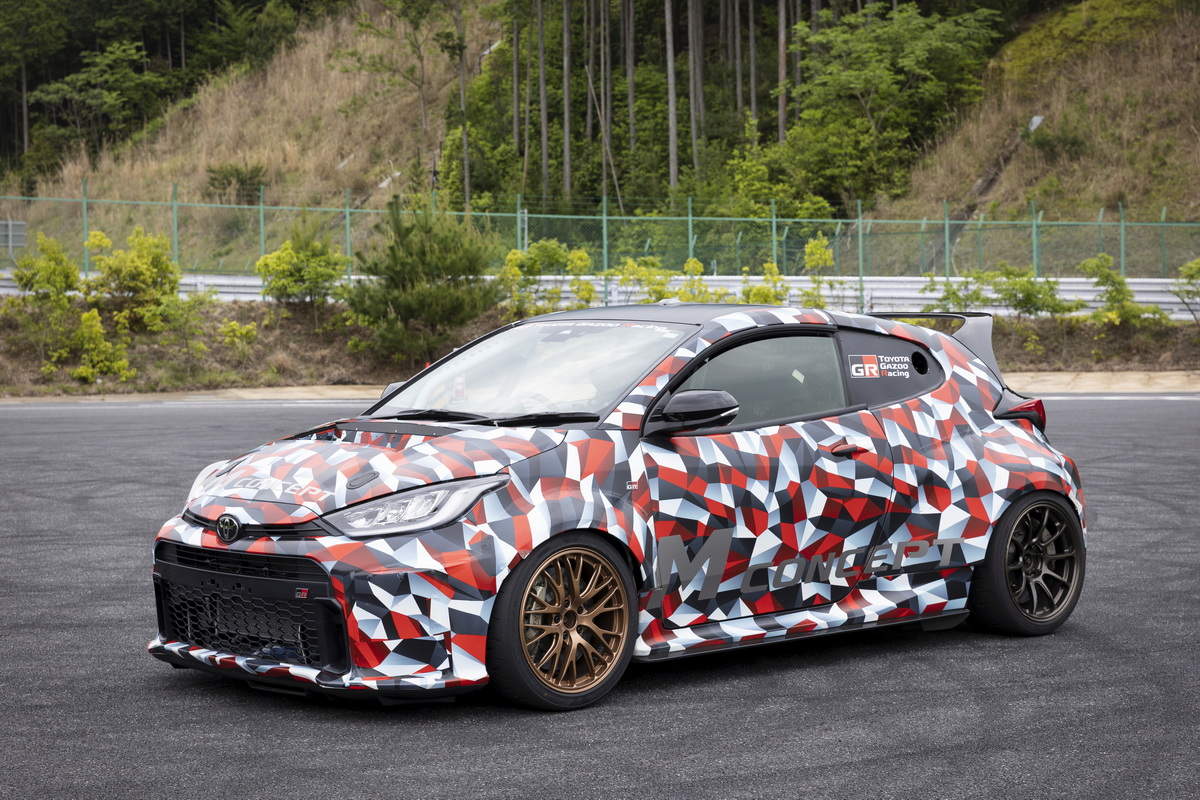
The second aspect is the currently equipped G20 series four-cylinder engine. This is Toyota's next-generation internal combustion engine announced in 2024, featuring a short-stroke design and exhaust convergence within the cylinder head. Its volume and height are approximately 10% lower than the conventional T24 series 2.4-liter turbocharged engine, with an expected power output of up to 600 ps. The engine body, particularly its height reduction, is speculated to be reserved as an option for future integration with a compact front nose architecture developed exclusively for BEVs. On the other hand, shortening the stroke makes it difficult to reduce the bore diameter side, i.e., the width. To position it lower inside the rear axle, the front axle drive transmission also employs the aforementioned clever design.
This article is compiled by Wedoany. All AI citations must indicate the source as "Wedoany". If there is any infringement or other issues, please notify us promptly, and we will modify or delete it accordingly. Email: news@wedoany.com