en.Wedoany.com Reported - The U.S. Department of Energy (DOE) has launched a testing platform called Agora to simulate the impact of connecting hyperscale artificial intelligence (AI) campuses to an already strained power grid. The platform replicates the electrical behavior of large data centers, particularly the volatile, high-density power demands that are reshaping electricity planning across the United States. Beyond procurement and grid interconnection, Agora also focuses on the specific performance of these facilities once they come online.
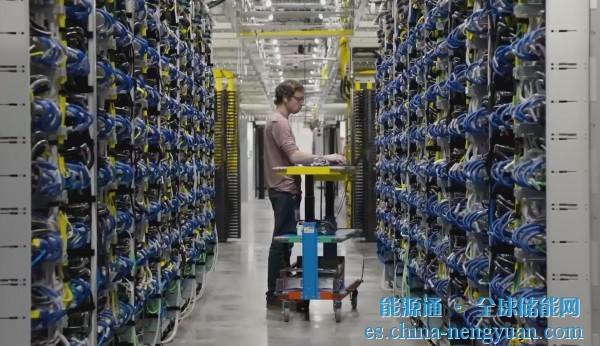
For about two years, the electricity discussion surrounding AI has primarily focused on the supply side. Power companies are scrambling to acquire gas turbines, developers are seeking to restart nuclear plants, regulators are debating transmission queue issues, and hyperscalers are scouring for gigawatt-scale power everywhere. Agora points to a different challenge: preventing volatile AI power behavior from causing cascading effects on the grid. Power companies are increasingly concerned that the behavior of hyperscale AI campuses may not resemble traditional data centers, but rather industrial loads capable of surging demand almost instantaneously. GPU clusters can ramp from near-idle to full load in seconds. Operators are increasingly deploying on-site batteries, local generation, and complex power electronics within facilities, making it difficult for power companies to model accurately.
The Electric Reliability Council of Texas (ERCOT) has already begun modeling AI loads. This concern has appeared in the engineering plans of grid operators. ERCOT has initiated a dedicated modeling effort for what it calls "large electronic loads," releasing a simulation framework and technical study focused on AI data centers and other power electronics-intensive facilities. ERCOT warns that these loads "behave differently from traditional loads and are large enough to affect grid stability."
This work follows broader concerns within ERCOT regarding the forecasting and planning of large AI-related loads. A new modeling handbook jointly released by ERCOT and Texas A&M University goes further. The 105-page report describes AI data centers as "highly dynamic power electronic loads" that pose "significant challenges to power system operation and stability." The report models them as tightly coupled electrical systems, combining grid interconnection equipment, power converters, energy storage systems, computing loads, and cooling loads. The document reads more like a power systems engineering manual than a traditional data center planning guide. ERCOT and Texas A&M modeled grid-forming inverters, coordinated battery systems, dynamic reconnection behavior, voltage and frequency ride-through, converter controls, fault recovery, and transient stability behavior, aiming to study disturbance ride-through behavior, post-fault recovery, grid control interactions, subsynchronous oscillations, and system stability.
Power companies are preparing for rapid power fluctuations. Steven Carlini, Chief Advocate for AI and Data Centers at Schneider Electric, stated that the interaction of large AI loads with a grid containing an increasing share of low-inertia renewable generation presents growing challenges for power companies. Carlini noted that AI training workloads generate rapid, nearly instantaneous load fluctuations. GPU clusters can jump from near-idle to full load in an instant, causing grid stress that results in voltage and frequency variations if the grid or power supply is not designed for this scenario. Carlini said technologies such as fault ride-through systems, battery energy storage, supercapacitors, and AI load smoothing controls are becoming critical for grid stability. At the hyperscale level, multi-gigawatt facilities containing synchronized GPU infrastructure could generate massive demand swings during fault recovery. The ERCOT/Texas A&M note indicates that for rectifier reconnection, power ramp rates must be limited. Carlini stated that power companies are increasingly requiring hyperscalers to mitigate "synchronous periodic oscillations" caused by extreme power fluctuations and to share more operational data to help protect grid infrastructure.
The convergence of the grid and the computing stack is driving power companies, regulators, and operators toward a new model in which large AI facilities participate more actively in grid operations. The National Resilient Infrastructure Laboratory stated in the Agora announcement that the future grid must support large energy users becoming good grid citizens. This idea has already appeared in power company documents and regulatory proceedings. The U.S. Federal Energy Regulatory Commission (FERC) has initiated discussions on large load interconnection reform, and ERCOT has explored controllable load structures for major customers. Power companies in multiple states are studying demand flexibility, curtailment protocols, and grid-aware operational models for hyperscale campuses. Carlini believes that with the addition of backup power systems, power smoothing systems, and primary power systems, data centers will become part of the power ecosystem. Agora, ERCOT's large electronic load initiative, and Texas A&M's modeling work all point in the same direction: grid operators are building new operational frameworks before the massive influx of gigawatt-scale AI campuses.
This article is compiled by Wedoany. All AI citations must indicate the source as "Wedoany". If there is any infringement or other issues, please notify us promptly, and we will modify or delete it accordingly. Email: news@wedoany.com