en.Wedoany.com Reported - Chile's copper industry faces growth constraints, prompting the government to implement two legislative reforms between September 2025 and April 2026 aimed at optimizing permitting timelines and fiscal stability. Chile, the world's largest copper producer, has an annual output of approximately 5.3 to 5.43 million tonnes, accounting for 23% to 24% of global mine supply. Mining constitutes 59% of the country's total exports, with 80% coming from copper, and copper mining contributes 10% to 14% of GDP. However, the industry's production growth faces bottlenecks due to declining ore grades, increasing mining depths, and rising processing volumes.
A May 2026 presentation by Fitzroy Minerals (TSXV: FTZ | OTCQX: FTZFF) cited forecasts indicating that capital inflows into Chile are expected to reach $105 billion by 2034, with approximately 90% directed toward copper. However, the Chilean Copper Commission's 2025 report (covering 2024-2033) projects only a 100,000-tonne increase in production during this period, reaching about 5.5 million tonnes. This suggests that most new capital is being used to sustain existing output rather than increase net supply. Data from BHP's late-2024 site visit presentation also indicates that the capital intensity gap between brownfield and greenfield projects in Chile is narrowing, weakening the cost advantage of brownfield development.
The two legislative reforms constitute Chile's evolving permitting environment. The Permitting Law, enacted by the previous government in September 2025, aims to reduce permitting timelines by 30% to 70% through streamlined, standardized, and digitalized approval processes. The Economic and Social Reconstruction and Development Act, promulgated by President Karst in April 2026, introduces 25-year stability agreements and reduces the corporate income tax rate by 1 percentage point annually, reaching 23% by 2029. The actual benchmark for environmental impact statement approval timelines comes from Marimaca Copper's oxide copper deposit, which obtained an environmental permit within 12 months.
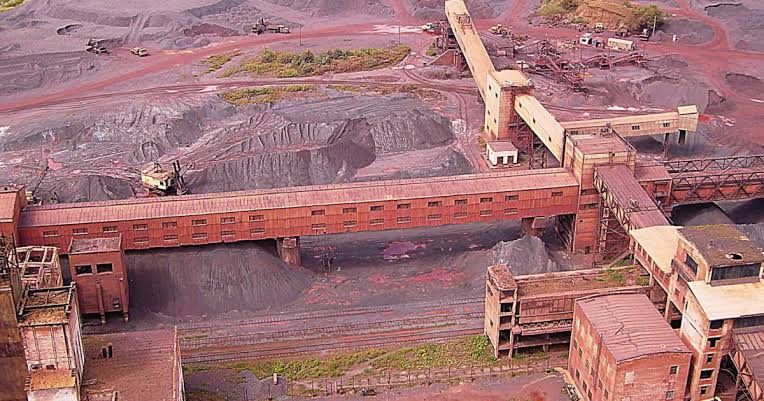
The Buen Retiro iron oxide copper-gold system, located near Copiapó in northern Chile, demonstrates how the reformed permitting environment translates into project-level production timelines. The site is a brownfield asset with historical open-pit workings. Recent definition drilling revealed a 78-meter section grading 1.70% copper and a 75-meter section grading 0.82% copper, including high-grade sub-intervals of 40 meters at 3.02% copper and 8 meters at 3.77% copper. Fitzroy Minerals has structured its development plan based on the reformed permitting timeline, planning to submit an environmental impact statement in the third quarter of 2026, with a target for production by late 2027 or early 2028.
Fitzroy Minerals President and CEO Merlin Marr-Johnson directly cites the Marimaca precedent as the basis for this expectation, stating that the company will strive to obtain an environmental permit within 12 months. The capital efficiency of this path depends on the availability of existing processing infrastructure. Fitzroy Minerals has signed a letter of intent to form a heap leach joint venture utilizing Pucobre's nearby underutilized Planta Biocobre solvent extraction-electrowinning facility. Marr-Johnson noted that this will generate non-operating cash flow and very low capital intensity, describing it as a low-cost path to production.
Chile's political environment has shifted to the center-right, with both the Senate and the Chamber of Deputies now controlled by center-right factions. Multiple analysts and forecasting agencies anticipate a structural copper supply deficit driven by electrification, electric vehicle adoption, and data center expansion. Marr-Johnson describes the supply situation as a consensus among the analytical community, arguing that metal prices must rise amid strong demand. For Fitzroy Minerals, this consensus shapes the supply conditions underpinning Buen Retiro's production decision.
This article is compiled by Wedoany. All AI citations must indicate the source as "Wedoany". If there is any infringement or other issues, please notify us promptly, and we will modify or delete it accordingly. Email: news@wedoany.com