AI-Powered Proctoring System for China's Gaokao Covers Dozens of Provinces
en.Wedoany.com Reported - An AI-powered proctoring system equipped with edge computing hardware has been deployed in dozens of provinces across China for this year's Gaokao (National College Entrance Examination), replacing traditional manual monitoring and post-exam video review methods. The system has achieved full coverage for all 560,000 examinees in Jiangxi Province, while batch deployments have also been completed in multiple exam sites in Guangdong, Sichuan, Shandong, and other regions. Edge computing is reshaping the entire proctoring and invigilation chain in China.
The widespread adoption of AI-powered proctoring is primarily driven by policy. In 2024, the Ministry of Education issued Document No. 3 (Teaching Letter [2024] No. 3), requiring the establishment of a "six-in-one" cheating prevention network in exam halls. The 2025 higher education enrollment work notice further mandated the full rollout of real-time AI proctoring in Gaokao exam halls and intelligent monitoring of confidential rooms. Since 2025, over ten provinces, including Jiangxi, Guangdong, Sichuan, Hubei, Hunan, and Shandong, have implemented AI proctoring systems at all Gaokao exam sites. Jiangxi has achieved 100% intelligent monitoring across all provincial unified exam halls. Cities like Yangjiang in Guangdong and Qingdao have simultaneously completed edge computing upgrades for both Zhongkao (High School Entrance Exam) and Gaokao. Local education examination authorities have coordinated hardware procurement and project implementation, driving large-scale purchases of edge computing proctoring hardware.
Traditional manual proctoring and pure surveillance models have significant shortcomings. A city-level invigilator must remotely monitor dozens of exam halls, leading to fatigue from prolonged screen watching. Remote exam sites often lack personnel, creating monitoring blind spots. Older surveillance systems can only store footage without AI analysis, meaning cheating is often discovered hours later during post-exam video reviews. For instance, incidents such as a Hubei examinee photographing the exam paper with a phone in 2021 and coordinated invigilator misconduct in Dazhou, Sichuan, in 2025 were only addressed after the fact, with cheating already completed and irreversible. Traditional surveillance equipment transmits all video back to the cloud for storage, resulting in high bandwidth and server storage costs that are unsustainable for district and county finances. Additionally, monitoring systems in different schools operate independently, preventing provincial and municipal examination authorities from unified scheduling and cross-site coordinated responses to emergencies.
The introduction of edge computing has fundamentally changed this situation. Video captured by cameras is processed by AI on local edge boxes at the exam site, eliminating the need to upload all data to the cloud. Abnormal behaviors trigger real-time alerts within 0.5 seconds, allowing invigilators to intervene immediately and stop cheating, upgrading the approach from "investigating after incidents" to "detecting and handling on the spot." Current AI proctoring solutions employ a collaborative large and small model computing approach: lightweight small models perform real-time inference on local hardware at the exam site, while ambiguous or backlit images are aggregated to city-level large models for secondary verification. Based on this technical framework, AI proctoring covers three major scenarios: examinee behavior monitoring, invigilator duty supervision, and exam paper confidential room security. It establishes orange and red two-tier warning lists to capture risks such as concealing cheating devices, invigilator absence from duty, and unauthorized handling of exam papers. The system can also leverage existing cameras, eliminating the need for large-scale hardware replacement.
The procurement model for AI proctoring is also evolving. The old model of one-time hardware purchases is being replaced by diversified cooperative operations. Currently, three main approaches exist: pre-exam leasing with annual contracts, where solution providers fully fund equipment preparation, install it before exams, and retrieve it afterward, with zero fixed asset investment for schools and cross-regional equipment reuse; one-time centralized procurement, typically used in provincial capitals with sufficient financial resources, funded by special local education bureau budgets; and bank-enterprise joint construction, a popular model in districts and counties, where banks fund the purchase of software and hardware in exchange for campus financial resources, enabling schools to complete upgrades at zero cost.
In the AI proctoring sector, soft-hardware integrated manufacturer Qianshitong is a representative company. Qianshitong has formed differentiated competitiveness in three dimensions: algorithm accuracy, architecture design, and implementation experience, possessing end-to-end AI capabilities with an "edge-cloud-business management middle platform" one-stop system. On the algorithm front, Qianshitong has developed over 40 algorithms targeting four major scenarios: individual examinees, examinee groups, invigilators, and confidential rooms. These cover behaviors such as examinees standing, answering early, tilting heads, picking up suspicious items, placing hands under the desk with heads down, entering or leaving the exam hall mid-session, invigilators being in incorrect positions, unauthorized handling of exam papers, and failing to enter the confidential room at the designated time. On the architecture front, Qianshitong relies on its self-developed AE series edge smart boxes and IS/TS series large model training and inference all-in-one machines to build a three-tier architecture: "exam site edge computing power + municipal center large model review + provincial platform coordination." A single AE edge smart box can intelligently analyze 8 to 64 channels of real-time 1080P video surveillance streams. When paired with the IS/TS all-in-one machine, it can support concurrent analysis of up to 20,000 or more real-time video streams. Unlike common pure inference devices in the industry, the IS/TS series integrates AI training and inference, allowing algorithm tuning and model iteration based on real exam site data locally. Optimized algorithms can be deployed to edge smart boxes with one click, forming a self-evolving closed loop of inference, data feedback, local training, algorithm upgrade, and re-deployment. All video data is stored locally and not uploaded to public clouds, meeting the confidentiality management standards of the education sector. As of the publication date, Qianshitong's AI proctoring solution has been deployed in multiple provinces and cities across China, with practical experience in concurrent video analysis of over 20,000 channels.
As the intelligent transformation of monthly exams, final exams, and professional qualification exams accelerates, the market space for edge computing in the education supervision sector is expected to continue expanding. AI proctoring systems are evolving from a Gaokao-specific configuration to a standard basic feature for standardized exam halls across all educational levels.
This article is compiled by Wedoany. All AI citations must indicate the source as "Wedoany". If there is any infringement or other issues, please notify us promptly, and we will modify or delete it accordingly. Email: news@wedoany.com
Related Products
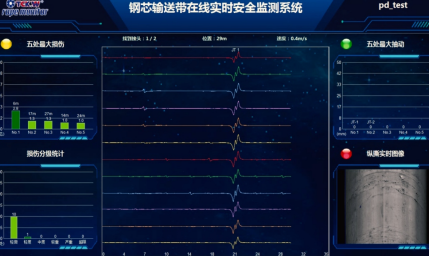

Conveyor Belt Intelligent Monitoring System
LUO YANG WIRE ROPE INSPECTION TECHNOLOGY CO., LTD.
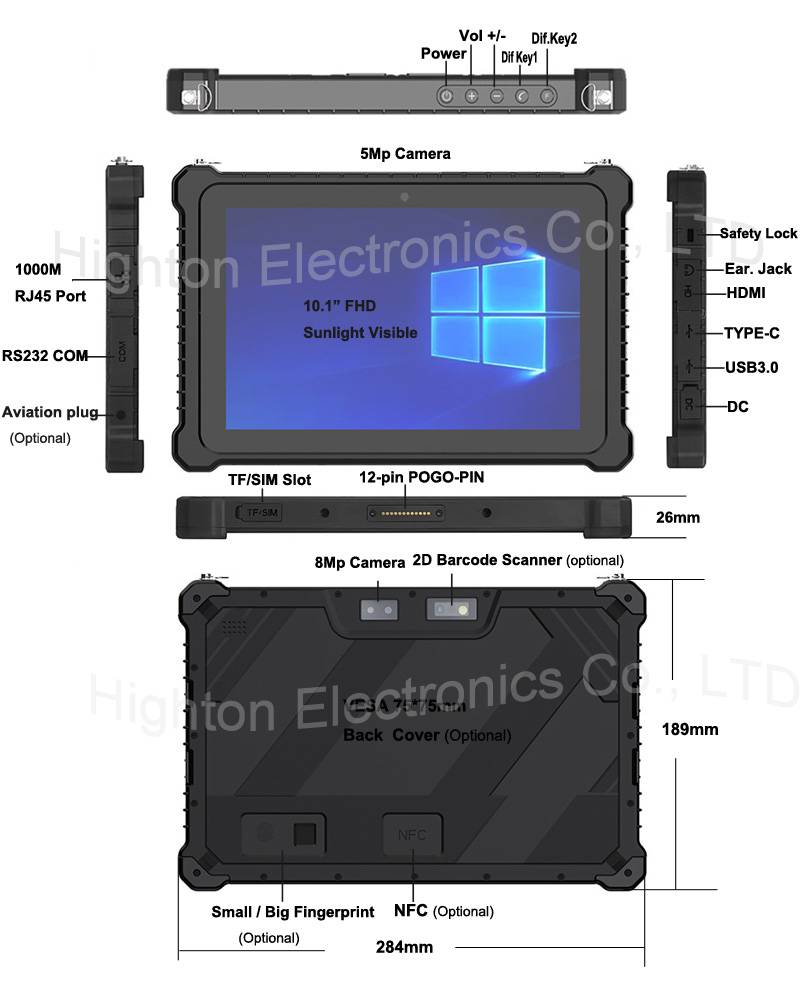
Hot Selling 10 Inch Intel N5100 I5 I7 FHD 8 +128GB 16+256GB Win10 Pro Win11 Pro 4G 5G Rugged Tablet PC Pad with NFC Barcode
Highton Electronics Co., Ltd.

Industrial and Commercial Point-Type Gas Detector
Jinan Benan Technology Development Co., Ltd.
G.652.D Wavelength-extended Non-dispersion Shifted Single-mode Optical Fiber
HONGAN GROUP CO., LTD.
One-Stop Steward Service for the Entire Logistics System Integration Chain
Zhongding Intelligent (Wuxi) Technology Co., Ltd.

MUX Series Communication Interface Device for Security and Stability Control System
Nanjing NR Electric Co., Ltd.

Mine Explosion-proof and Intrinsically Safe Industrial Ethernet Ring Network (10 Gigabit/Gigabit)
Chongqing Mas Sci&Tech Co., Ltd.