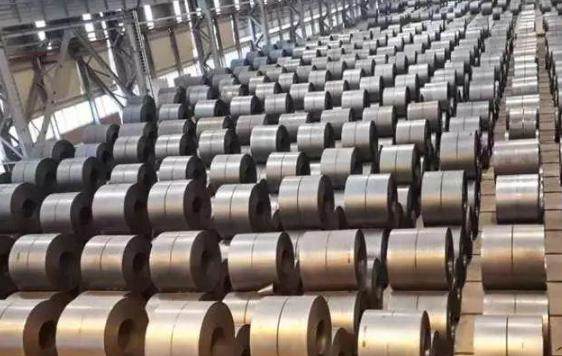
en.Wedoany.com Reported - A new report from the Organisation for Economic Co-operation and Development (OECD) shows that global steel overcapacity continues to grow and is expected to reach 745 million metric tons by 2028, more than double the total steel output of all OECD countries, which stands at 319 million metric tons.
The report, released by the Paris-based OECD, indicates that despite measures taken by the United States and other countries to reduce steel imports, capacity growth is still driven by increasing subsidies from major non-OECD steel-producing economies. The OECD stated that efforts to restore fair competition are increasingly undermined by the circumvention of trade measures. The comprehensive and high tariffs imposed by the United States can be seen as an exception, as this policy has led to a rebound in U.S. steel production and steel mill capacity utilization.
Data from the OECD's "Steel Outlook 2026" report shows that China exported over 131 million metric tons of steel in 2025, an increase of 13.8% from the total export volume of over 115 million metric tons in 2024. The chart indicates that compared to lower export volumes in Europe, North America, South America, and Asia outside China, China was the only country with an upward export trend in 2025.
China's steel exports surge may be welcomed by manufacturers using this metal to produce goods, but steel producers in almost every region of the world have already complained about it. The Association of Southeast Asian Nations (ASEAN) region appears to be China's primary steel export destination, with some of the metal being resold to buyers in other countries. The OECD report states that China's exports of products such as hot-rolled plates and hot-rolled wide coils to Southeast Asia have increased significantly, while exports of similar products from Southeast Asia to OECD markets have also risen. The report clearly notes that China's exports of semi-finished steel to Southeast Asia surged by 300% in 2025, suggesting that such products may be processed in third countries before being re-exported to OECD markets, potentially circumventing current trade measures.
The OECD emphasized that Chinese government support remains a source of tension. Part of a 2024 research paper shows that the median subsidy for Chinese steel companies relative to their total assets in 2024 was 15 times higher than that of producers in other regions, up from 10 times in 2023.
OECD Secretary-General Mathias Cormann stated that steel overcapacity distorts global markets, undermines economic security and resilience, and stifles innovation and sustainability. He believes it is necessary to address root causes, including harmful subsidies and other non-market practices, and to strengthen international cooperation to create a level playing field for steel producers everywhere.
The 74-page report also addresses recycled steel, finding that 42 national governments are currently restricting scrap steel exports. The OECD stated that its Steel Committee and the Global Forum on Steel Excess Capacity are developing a coordinated framework, planning to cooperate with 28 major steel-producing economies, which account for nearly 70% of global steel imports.
This article is compiled by Wedoany. All AI citations must indicate the source as "Wedoany". If there is any infringement or other issues, please notify us promptly, and we will modify or delete it accordingly. Email: news@wedoany.com