en.Wedoany.com Reported - As the official telecommunications services sponsor of the 2026 FIFA World Cup, Verizon's network infrastructure will support the upcoming tournament in North America, covering everything from broadcast transmission to in-stadium connectivity, shaping the overall experience for fans, organizers, and host communities.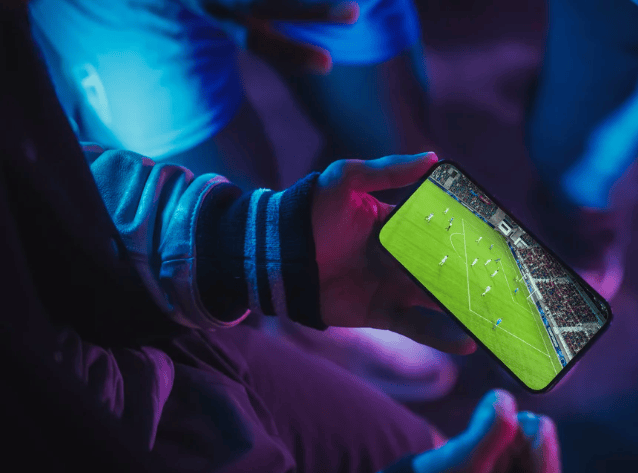
The operator's deployment begins inside the stadiums. With data usage expected to exceed 50TB per match, Verizon is increasing network capacity at host venues by up to five times through expanded 5G spectrum, and installing antennas and directional coverage solutions under thousands of seats to ensure stable performance even in the upper decks. Fans can access real-time statistics, stream highlights, and use mobile payments without interruption; the same infrastructure also supports in-venue operational systems such as ticketing and security. Nacho Fresco, FIFA's Chief Technology Officer, stated that the partnership with Verizon is crucial to realizing the tournament's vision, and the deployment of advanced technology not only enhances the fan experience but will also leave a lasting digital legacy for host communities.
Outside the stadiums, Verizon has deployed small cells and temporary sites to extend network coverage to transportation networks and fan zones, ensuring service continuity within host cities. Its fiber optic and dedicated 5G network form the backbone of tournament operations, with the Broadcast Contribution Network supporting high-definition video capture and distribution, as well as real-time match data processing. The dedicated 5G network also enables new broadcast formats such as referee body cameras, which rely on low-latency and secure connections. The infrastructure extends to FIFA Fan Festival venues and temporary sites, where 5G fixed wireless access can quickly deploy connectivity for retail, logistics, and media operations; network slicing can also prioritize critical applications during peak demand. Verizon has also integrated security systems to protect the digital infrastructure of all venues.
The World Cup's footprint extends far beyond match days. Verizon's investment in local infrastructure aims to create a lasting digital legacy, improving high-speed internet access in surrounding communities. These upgrades support public services such as healthcare, education, and emergency response; Verizon Frontline (the public safety network) has been collaborating with host cities for over two years to prepare dedicated communication systems for first responders. Through the Small Business Digital Ready programme, the company provides local small businesses with connectivity tools and training to meet increased demand during the tournament. Kyle Malady, CEO of Verizon Business, stated that the 2026 FIFA World Cup is a moment where technology and community converge, with advanced 5G and fiber networks creating a seamless experience for fans, and the related investments will leave a lasting digital legacy for host cities.
In stadium deployments, Verizon has not relied on traditional macro cell coverage but instead implemented a dense network of small cells and under-seat antennas to bring capacity closer to users. This architecture mitigates the risk of network congestion caused by tens of thousands of spectators simultaneously uploading, streaming, and interacting in a confined space. Directional antennas include equipment installed in the upper decks to ensure uniform coverage. The network simultaneously supports consumer and operational traffic, integrating ticketing systems, security infrastructure, and media workflows into a single design. Broadcasting the World Cup globally requires broadcast infrastructure capable of processing massive amounts of data in real time; Verizon's fiber optic and wavelength services connect stadiums to the International Broadcast Center, forming the Broadcast Contribution Network. This network can transmit high-definition video streams and data flows such as player tracking and match analysis, which are centrally processed and distributed to broadcasters worldwide. Applications like referee body cameras rely on ultra-low latency connections to provide real-time on-field perspectives; the infrastructure is built with redundancy and security measures to prevent technical failures and cyber threats.
This article is compiled by Wedoany. All AI citations must indicate the source as "Wedoany". If there is any infringement or other issues, please notify us promptly, and we will modify or delete it accordingly. Email: news@wedoany.com