Brazil's Sabesp invests 56.4 million reais in São Paulo state's first seawater desalination plant
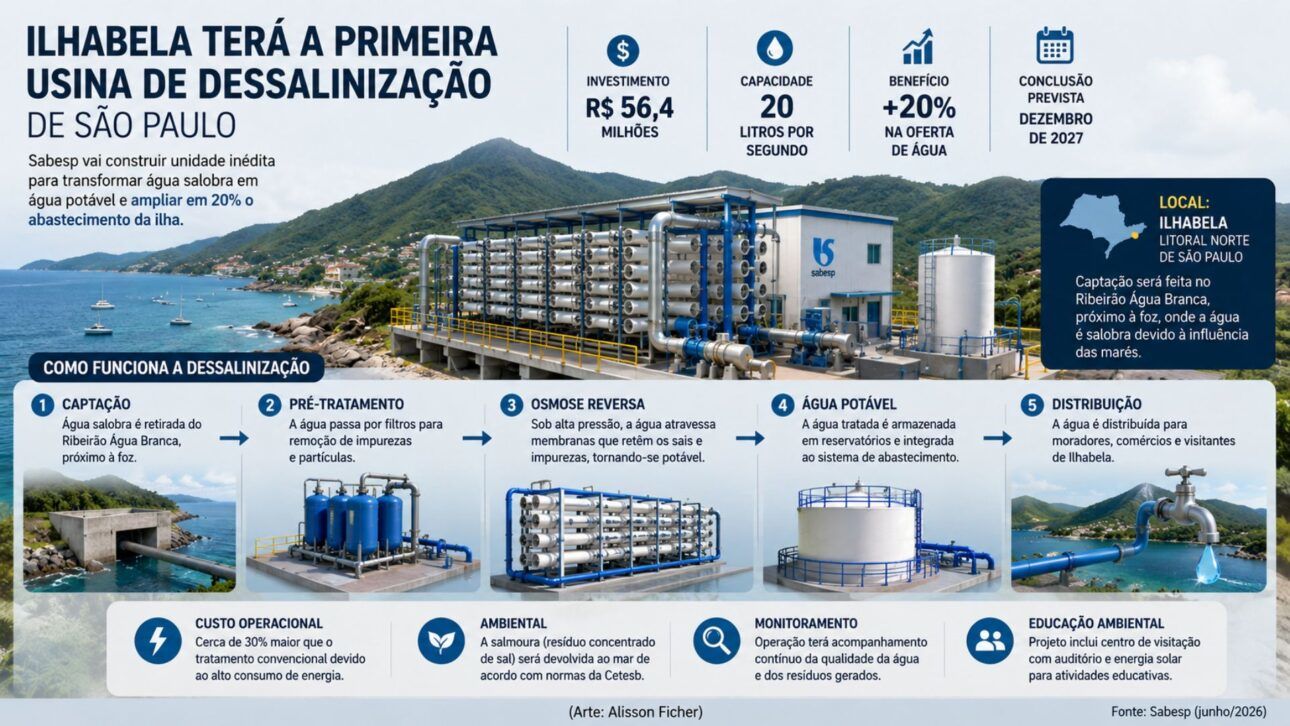
en.Wedoany.com Reported - Sabesp, the basic sanitation company of São Paulo state, will build the state's first public seawater desalination plant for human water supply in Ilhabela on the north coast. The project is expected to cost 56.4 million reais and, once completed, will add 20 liters per second to the municipal water system, increasing available water for residents, tourists, and essential activities by 20%.
The new facility is expected to be completed by December 2027 and will be integrated into the Água Branca system, aiming to strengthen the city's water supply. The city faces technical, territorial, and environmental obstacles in its traditional freshwater extraction. The choice of Ilhabela is related to its geographic and environmental characteristics. Expanding water supply is more difficult due to island conditions that limit extraction options. Most of the territory lies within an environmental protection area, imposing specific restrictions on new freshwater sources, and deep well drilling is technically unfeasible.
Roberval Tavares, Sabesp's Director of Engineering and Innovation, stated that the combination of growing demand and limited water sources led the company to adopt a solution uncommon in Brazil's public water supply. Seasonal pressure from tourism was also considered in the company's studies; long holidays and summer increase water consumption, requiring greater operational margins to reduce the risk of supply instability. Demand calculations took into account the current population and growth projections for the next decade, with the plant serving as a permanent supplement to the system.
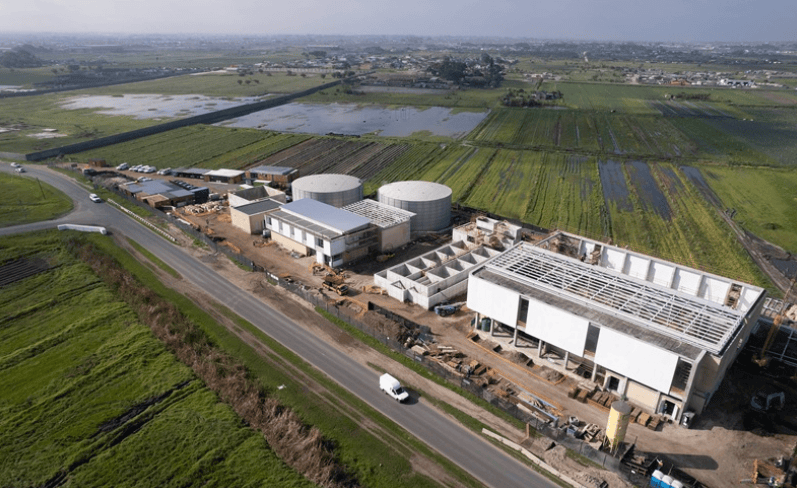
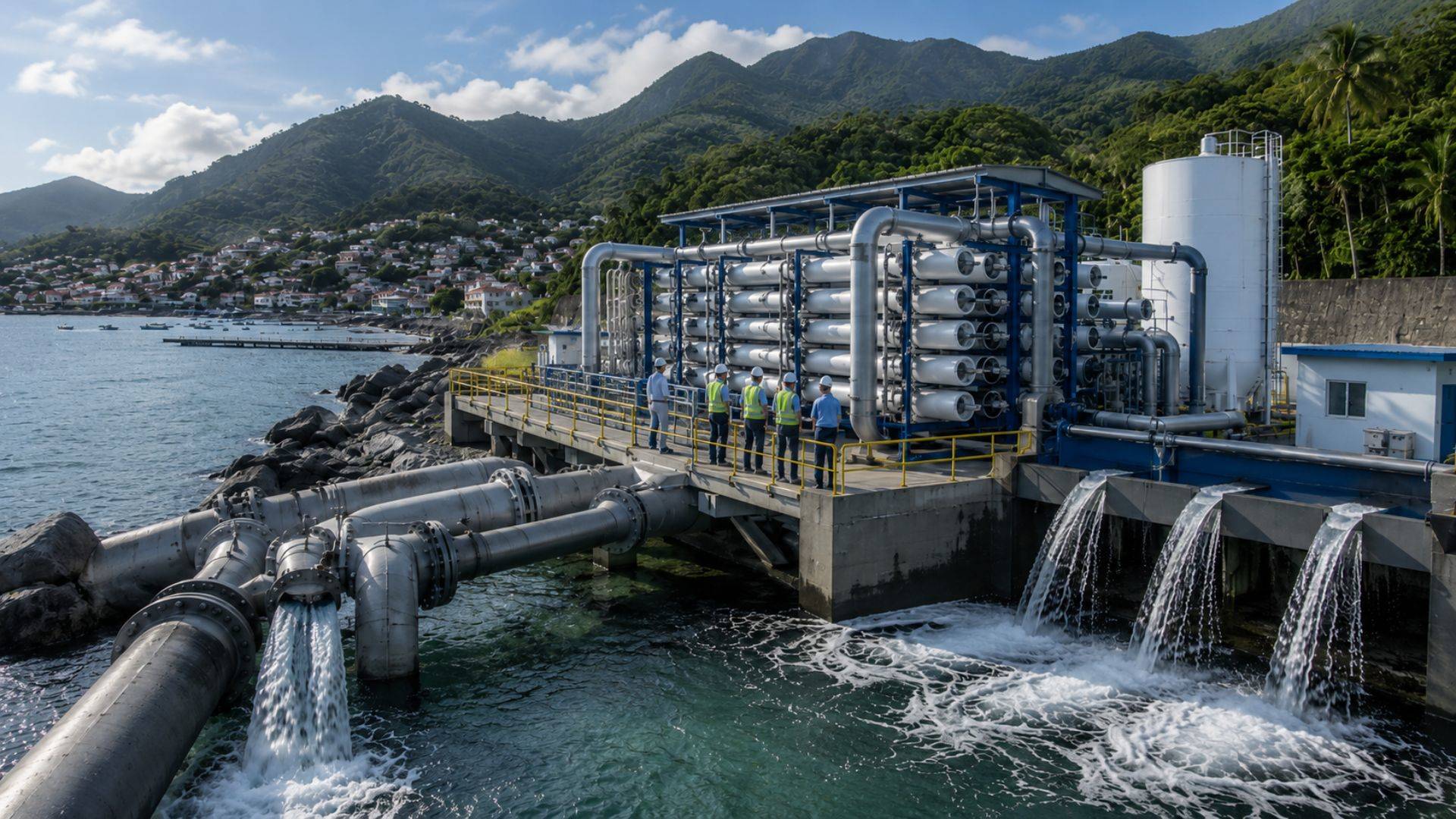
The project uses reverse osmosis technology to treat saltwater. Water intake will not occur directly at sea but in a section of the Água Branca River near its mouth, where contact with tides makes the water brackish. The principle of reverse osmosis involves water passing under high pressure through special membranes, where dissolved salts and other impurities are separated, making the treated water suitable for human consumption. Roberval Tavares noted that this is the first time in the state that membranes have been used to produce drinking water from saltwater for public supply. The project also includes facilities for water intake, pumping, storage, and integration with the existing system.
Seawater desalination is still used on a limited basis in Brazil's public water supply, mainly due to its high electricity consumption during operation, which typically makes costs higher than conventional freshwater treatment systems. In Ilhabela, the future facility's costs will be about 30% higher than those of a conventional water production system. Sabesp stated that the impact will be absorbed by the company's operational structure and should not lead to rate increases for consumers in the local water system. Similar initiatives have emerged in the states of Ceará, Espírito Santo, and Pernambuco, but the solution has not yet become a widespread tool for large urban networks.
The disposal of brine from the desalination project is a major concern. These substances will be discharged back into the sea according to parameters defined in the environmental licensing conducted by Cetesb, the São Paulo state environmental company. The company has carried out environmental studies before project approval, including assessments of potential impacts on marine animals and ecosystems. Operations will include continuous monitoring of the produced water quality and waste generated during the process. Sabesp also noted that over 50 years of historical rainfall data show a decrease in precipitation over the past decade, and the project's implementation is also related to adapting to the impacts of climate change. The project also plans to build an environmental education center open to the public, equipped with an auditorium and photovoltaic panels.
This article is compiled by Wedoany. All AI citations must indicate the source as "Wedoany". If there is any infringement or other issues, please notify us promptly, and we will modify or delete it accordingly. Email: news@wedoany.com
Related Products



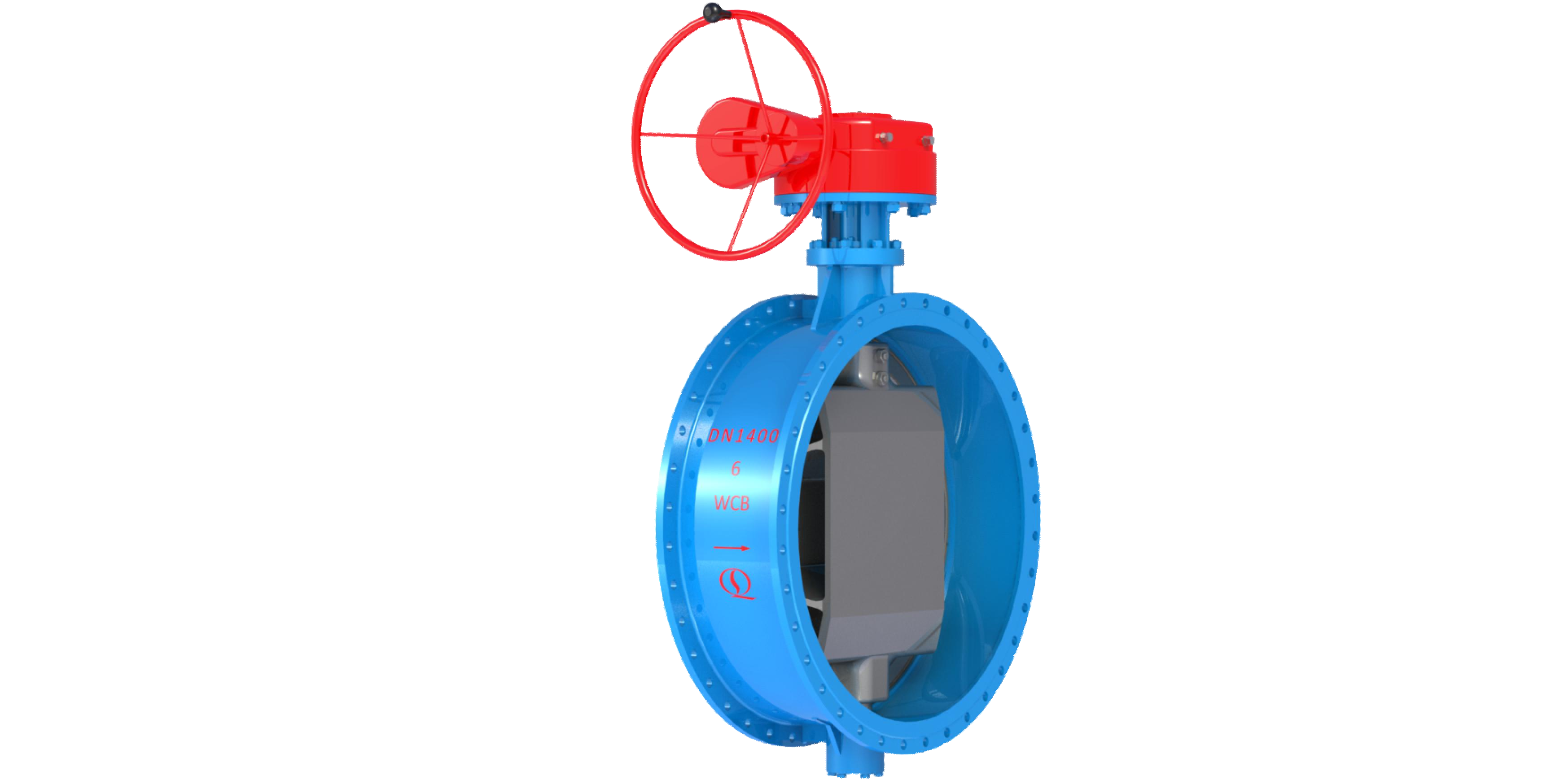
Bidirectional Metal Hard Sealed Seawater Butterfly Valve
Henan Quanshun Flow Control Science & Technology Co., Ltd.



Industrial and Commercial Point-Type Gas Detector
Jinan Benan Technology Development Co., Ltd.
145kV Porcelain Column Type Sulfur Hexafluoride Circuit Breaker
TBEA ZONFA Shanghai High Voltage Switchgear Co., Ltd.
West China Xiamen Hospital of Sichuan University
Wuhan Huakang Century Clean Technology Co., Ltd.