About 68% of Russian households still use 2.4 GHz band for Wi-Fi routers
en.Wedoany.com Reported - Approximately 68.2% of Russian household Wi-Fi routers still operate on the 2.4 GHz band, according to data from network quality assessment and optimization company Vigo. A significant portion of these devices are older models that have been in use for several years.
By region, the highest share of routers using the 2.4 GHz band is found in the Chechen Republic, Republic of Ingushetia, Republic of Dagestan, and Karachay-Cherkess Republic, exceeding 80%; the lowest shares are in Moscow, Saint Petersburg, Khanty-Mansi Autonomous Okrug, and Murmansk Oblast, at approximately 54% to 55%.
Analytical data shows that since the end of 2025, the share of Wi-Fi in total user internet traffic has increased by 6 percentage points, reaching 65%. Against the backdrop of intermittent restrictions on mobile communications, users' reliance on home wireless networks continues to rise.
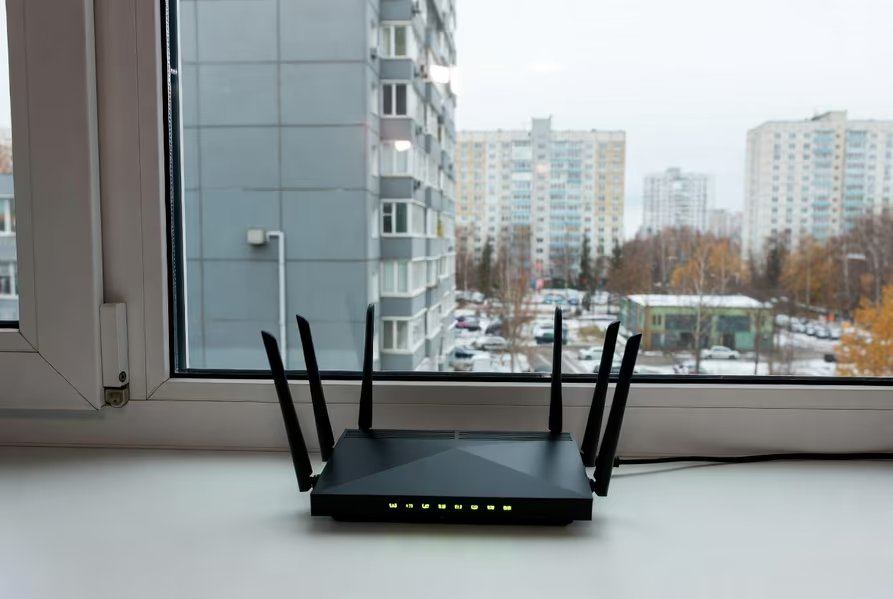
Experts point out that the 2.4 GHz band is currently the most congested Wi-Fi band. It offers wide coverage and strong wall penetration, but a large number of neighboring networks can interfere with each other, degrading connection quality, especially in multi-apartment buildings. Therefore, users are advised to switch to dual-band routers that support Wi-Fi 5, Wi-Fi 6, and newer standards, which can also operate on the 5 GHz band, providing higher speeds and being less prone to overload.
Major Russian operators report a more optimistic situation among their user bases. Rostelecom states that the proportion of customers using routers exclusively on the 2.4 GHz band does not exceed 10%. Since the end of 2025, the company has begun deploying its own Wi-Fi 6 standard routers produced at the Moscow "Elektra" factory. Dom.ru reports that two-thirds of its customers already use their own devices supporting Wi-Fi 6, and the operator plans to begin deploying Wi-Fi 7 standard equipment by the end of 2026, aiming to migrate all users to dual-band routers by 2030. Beeline data shows that about 40% of routers on its network still operate on the 2.4 GHz band, while up to 60% of customer devices belong to the Wi-Fi 5 generation; the company is gradually migrating users to Wi-Fi 6. MegaFon notes that modern routers typically support both the 2.4 GHz and 5 GHz bands, with the former suitable for basic tasks and smart home devices, and the latter for video streaming, video conferencing, and online gaming. MTS reminds that it has been providing users with dual-band routers supporting speeds of up to 1 Gbit/s for over a decade, and its data shows that gigabit internet now covers over 90% of Moscow households and about 70% of households in the Moscow region.
This article is compiled by Wedoany. All AI citations must indicate the source as "Wedoany". If there is any infringement or other issues, please notify us promptly, and we will modify or delete it accordingly. Email: news@wedoany.com
Related Products



G.652.D Wavelength-extended Non-dispersion Shifted Single-mode Optical Fiber
HONGAN GROUP CO., LTD.
MUX Series Communication Interface Device for Security and Stability Control System
Nanjing NR Electric Co., Ltd.
Conveyor Belt Intelligent Monitoring System
LUO YANG WIRE ROPE INSPECTION TECHNOLOGY CO., LTD.
Flat Portable Satellite Terminal 0.35m Aperture Manual Portable Terminal
China Starwin Science & Technology Co., Ltd.




GYTA Type Non-Self-Supporting Aerial/Duct Optical Cable
TONGDING INTERCONNECTION INFORMATION CO., LTD.