UK Should Lead on Maritime Nuclear Power, Paper Says
 Wedoany.com Report-Mar 1, A recent paper, jointly released by Core Power, NorthStandard, and Lloyd’s Register, outlines how the UK can utilize its expertise in nuclear technology and maritime innovation to lead the transition to nuclear-powered shipping globally. Titled *Advanced Maritime Nuclear: A Unique Opportunity for the UK*, the document emphasizes the potential for the nation to develop a multi-billion-pound industry through strategic investments and policies.
The report notes that 95% of goods reach the UK via shipping, while the International Maritime Organization aims for net-zero greenhouse gas emissions from the sector by 2050. It states: “Advanced nuclear reactor technologies, including advanced small modular reactors, offer a transformative opportunity to decarbonise shipping and bolster the UK’s position as a clean energy superpower.” Floating Nuclear Power Plants are also highlighted as a means to supply clean energy to ports, their facilities, and visiting vessels, addressing challenges related to port grid connectivity.
Government action is deemed essential to overcome regulatory, economic, and public perception challenges. The report suggests updating the Department for Transport’s Clean Maritime Plan, originally expected in 2022 but delayed due to a government change in July 2024, to incorporate nuclear power. It explains: “Nuclear technology has advanced since 2019 and there is also an increased level of ambition for decarbonising shipping from the IMO, which may not be achievable without including nuclear-powered ships.”
Commercial insurance is another critical factor. The document stresses that operators of nuclear-powered vessels will require sufficient maritime liability coverage for potential accidents. It states: “It is highly unlikely that nuclear liabilities will be capable of being insured at commercially competitive rates until the safety regulations are in place and the liability for nuclear risks is clearer.” Paul Jennings, managing director of NorthStandard, reinforces this, saying: “The ability to commercially insure nuclear propelled ships will be vital to the success of bringing nuclear to maritime.”
The report offers several recommendations. Short-term actions include expanding the Office for Nuclear Regulation’s scope to cover floating nuclear applications with adequate funding. Longer-term steps involve fostering cooperation between regulators like the Maritime Coastguard Agency and local authorities to support the construction and operation of nuclear-powered ships and plants. It also advises government support for domestic supply chains and risk-reduction funding for qualifying nuclear projects.
Andy McKeran of Lloyd’s Register notes: “As nuclear technology advances toward maritime applications including floating nuclear power plants, global regulatory alignment is crucial.” Mikal Bøe of Core Power adds: “The UK has been at the centre of global shipping for centuries, and this report reinforces that maritime nuclear power is not only necessary to improve the energy effectiveness of shipping dramatically but also a GBP2.5 trillion economic opportunity.”
The paper concludes by highlighting London International Shipping Week in September 2025 as a key moment for the UK to promote collaboration and advance maritime nuclear solutions on an international stage.
Related Products

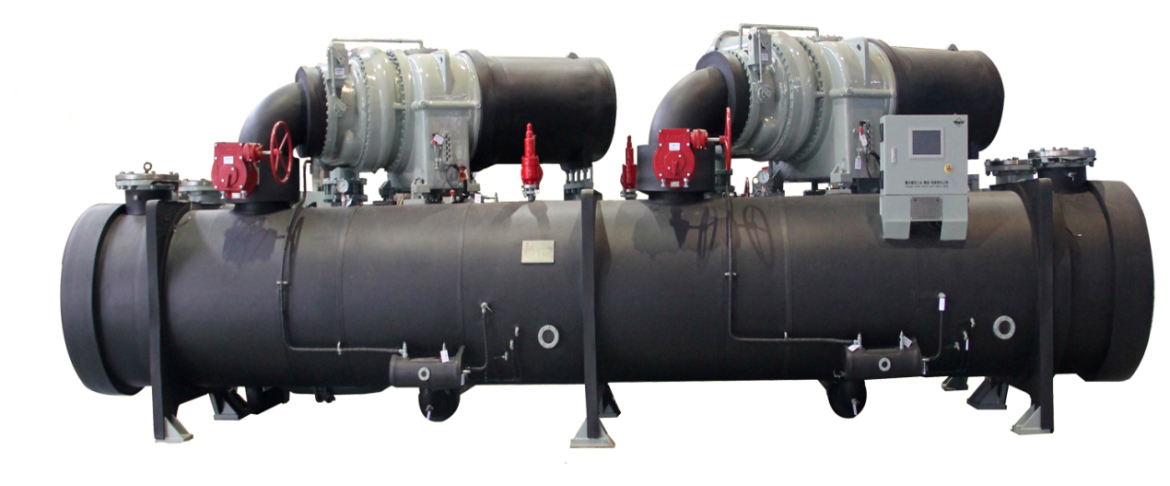
Centrifugal chiller for third generation nuclear power AP/CAP series
Chongqing General Industry (Group) Co., Ltd.
Jin Haiyan® Nuclear Island Special Glass Wool (JHY-NW)
BBMG ENERGY SAVING MATERIAL & TECHNOLOGY (DACHANG)CO., LTD.

Safe, efficient, intelligent energy storage, creating smart homes and making life more convenient# Home Energy Storage # Supercapacitors # Energy Storage # Wall Mounted # Safe Electricity Use
Gonghe Power Co.,LTD
CAP1400 main feedwater flow nozzle flowmeter.
Jiangsu Hongda Instrument Technology Co., LTD.