U.S.-Japan HPC Centers Discuss Scientific AI Platform Challenges at TPC26
en.Wedoany.com Reported - AI is bringing a new set of demands to HPC centers, as researchers are no longer focused solely on model training; many are now seeking inference services and AI agents as part of their daily research. For HPC centers, this means figuring out how to provide these services at scale and make them work seamlessly with existing HPC infrastructure.
These issues were the main focus of the TPC26 session, "Scientific AI Platforms: Inference, Agents, and AI Services for HPC Facilities." The discussion brought together speakers from national laboratories, supercomputing centers, industry, and research institutions to share how they are building and operating AI services for researchers. Participants included Dr. İlkay Altıntaş, Chief Data Science Officer at the San Diego Supercomputer Center and Principal Investigator of the National Data Platform; Dr. Venkat Vishwanath, AI Lead at the Argonne Leadership Computing Facility; Dr. Jason Haga from the National Institute of Advanced Industrial Science and Technology (AIST) in Japan; Samantha Sury from HPE; Dr. Paola Buitrago from the Pittsburgh Supercomputing Center; Dr. Shoaja Fan; and Dr. Dan Stanzione, Executive Director of the Texas Advanced Computing Center (TACC).
Dr. Altıntaş kicked off the discussion with an overview of the National Research Platform, which provides researchers with access to AI models through shared services. Dr. Altıntaş stated that the platform must be viewed as three distinct layers, including an infrastructure layer involving compute, storage, and everything around it, similar to HPC services but considering tokens instead of core hours. The National Research Platform currently offers nine open models, aiming to give researchers AI capabilities without needing to deploy and manage their own infrastructure. This theme recurred throughout the session, with speakers discussing how HPC centers are adapting to the growing demand for inference services and AI tools.
Building these services also requires infrastructure specifically designed for inference. Dr. Haga's presentation focused on outlining Japan's efforts to evaluate a range of AI accelerators and inference technologies through a national testbed initiative. Dr. Haga stated that the initiative evaluates a diverse set of cutting-edge AI accelerators and develops technologies to provide high-performance inference services and practical methods for accessing these different computing resources. For researchers, the hardware itself is often secondary; what matters is whether the service is available, performs well, and integrates into their work without requiring them to become experts. The project aims to help researchers try different AI hardware platforms and provides a framework for deploying inference services, studying how a broader portfolio of accelerators can support future scientific AI workloads.
The presentations highlighted the challenge for HPC facilities: researchers do not care what hardware is running underneath, but increasingly expect AI services to be available on demand.
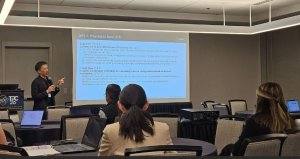
Although the discussion focused primarily on infrastructure and technology, Dr. Stanzione argued that economic issues may ultimately pose a greater challenge. Dr. Stanzione noted that tokens actually cost money, and as people use them heavily, many labs have discussed abandoning their use over the past few months. As AI services become more widely available, usage rises rapidly, bringing a different set of pressures compared to traditional HPC workloads, especially as institutions try to balance growing demand with limited budgets. According to Dr. Stanzione, the long-term challenge may not be building inference platforms, but finding sustainable ways to operate them. He stated that among the many technical issues, the financial aspect may drive actions more than any other factor in the long run.
The discussion showcased how HPC facilities are adapting to the next phase of AI applications. While much of the industry's attention remains on models and hardware, the speakers repeatedly returned to the practical and inevitable realities of providing AI as a service. From shared inference platforms and accelerator testbeds to the economics of token consumption, the challenges discussed in the presentations suggest that the future of scientific AI may depend as much on operations and infrastructure as on advances in the models themselves.
This article is compiled by Wedoany. All AI citations must indicate the source as "Wedoany". If there is any infringement or other issues, please notify us promptly, and we will modify or delete it accordingly. Email: news@wedoany.com
Related Products


GYTA Type Non-Self-Supporting Aerial/Duct Optical Cable
TONGDING INTERCONNECTION INFORMATION CO., LTD.
Automatic Aiming Laser Remote Obstacle Removal Robot
Pinggao Group Weihai High-Voltage Apparatus Co., Ltd.
Multi-function Marine Monitoring Low-altitude Detection Radar Sea-air Boundary Ocean Dynamic Environment Measurement
Chengdu Dixin Technology Co., Ltd.



Industrial and Commercial Point-Type Gas Detector
Jinan Benan Technology Development Co., Ltd.
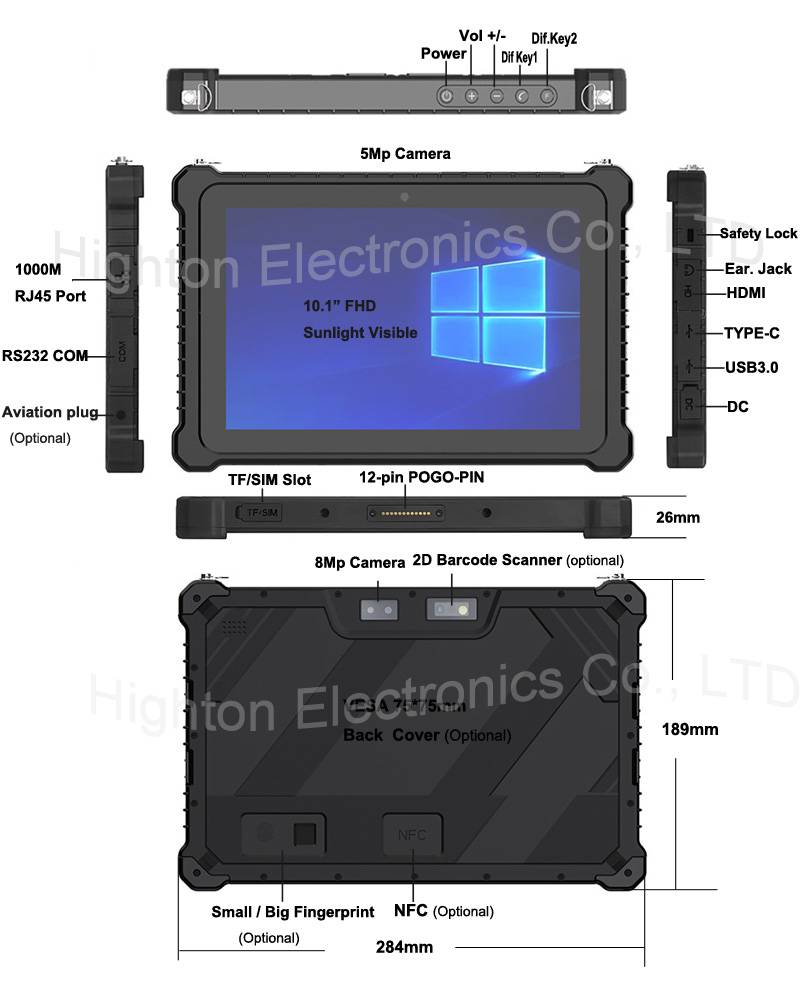
Hot Selling 10 Inch Intel N5100 I5 I7 FHD 8 +128GB 16+256GB Win10 Pro Win11 Pro 4G 5G Rugged Tablet PC Pad with NFC Barcode
Highton Electronics Co., Ltd.