en.Wedoany.com Reported - Recently, at the Sodium-Ion Battery Energy Storage Industry Technology and Application Research Activity hosted by the News and Publicity Center of the Ministry of Industry and Information Technology, Lin Jiubiao, CTO of China Energy Storage Solutions at CATL, revealed that the company will deliver its first batch of sodium-ion battery energy storage systems to customers in September this year, achieving GWh-level shipments for the full year.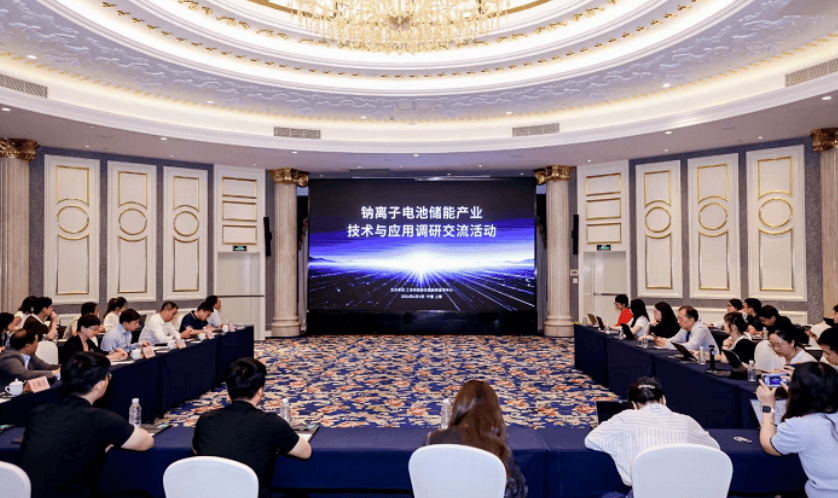
Over the past three years, the sodium-ion battery industry chain has achieved continuous breakthroughs in multiple areas, including material systems, manufacturing processes, system integration, and application scenarios. Now, as companies such as CATL, Hyperstrong, HiNa Battery, Hithium, and EVE Energy progressively drive commercial deployment, this signifies for the entire industry that sodium-ion batteries have finally moved from the laboratory to the market, and from demonstration and validation to large-scale application.
2026 has finally become the true "Year One of Sodium-Ion Battery Large-Scale Production."
From "Lithium Price Backup" to an Independent Technology Pathway
Sodium-ion batteries first truly entered the industry's field of vision in 2021. At that time, due to the rapid development of the new energy vehicle industry, global lithium resource supply remained tight, and lithium carbonate prices kept rising, subsequently surging to a high of 600,000 RMB per ton over the following two years. Faced with escalating raw material costs, the entire battery industry chain was seeking alternatives beyond lithium resources. Against this backdrop, sodium-ion batteries, with their abundant resource reserves, wide distribution, and controllable costs, quickly became a market focus.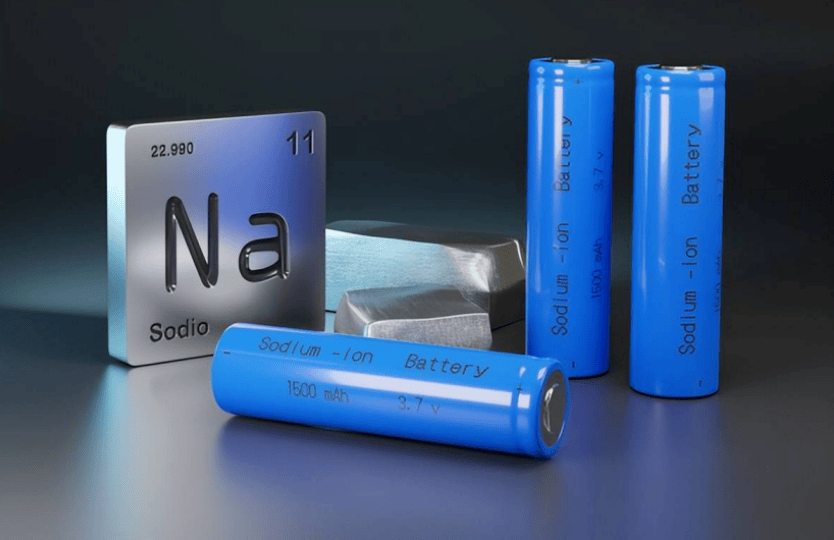
In July 2021, CATL released its first-generation sodium-ion battery, achieving a cell energy density of 160 Wh/kg, capable of charging to over 80% in 15 minutes at room temperature, and maintaining over 90% capacity retention at -20°C. This launch not only formally brought sodium-ion batteries into the mainstream spotlight but was also regarded by the industry as a crucial starting point for the industrialization of sodium-ion batteries.
Over the following two years, sodium-ion batteries became one of the hottest topics in the capital market, with numerous companies announcing plans for sodium-ion battery projects, and the phrase "Year One of Sodium-Ion Battery Industrialization" frequently appeared. However, reality soon poured cold water on the industry. As lithium carbonate prices rapidly declined, the lithium iron phosphate (LFP) industry chain continued to reduce costs through mature manufacturing systems and economies of scale, with energy storage cell prices constantly hitting new lows. In comparison, sodium-ion batteries still had significant gaps in energy density, supply chain maturity, and production scale, and their cost advantages failed to materialize.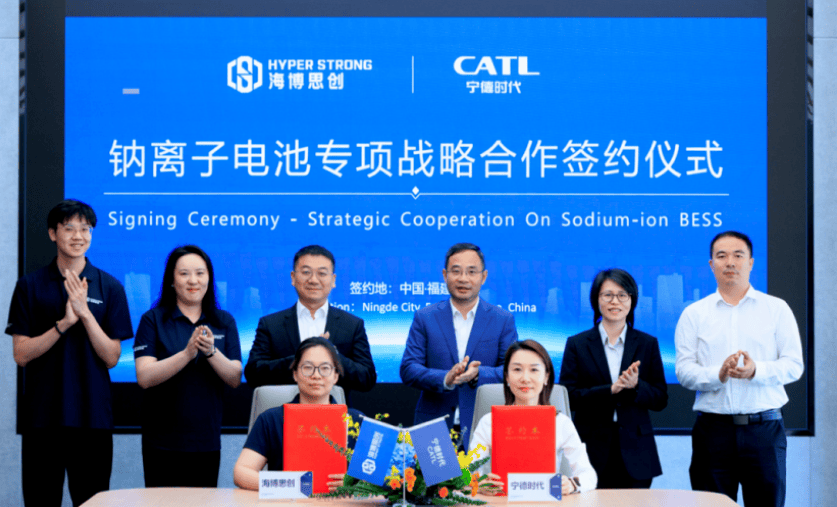
For energy storage owners, what has always mattered is not technological concepts, but system price, safety, cycle life, delivery capability, and long-term returns. Since the mature LFP system held an absolute advantage in these metrics, sodium-ion batteries gradually shifted from being a "lithium battery replacement" star technology to a realistic positioning as a "lithium battery supplementary route."
At the same time, the industry has also come to realize that the value of sodium-ion batteries should never be based on rising lithium prices, but rather on their own unique advantages. Low-temperature performance, high safety, long cycle life, and resource security are the true core competencies of sodium-ion batteries.
CATL Propels Sodium-Ion Batteries into the GWh Era
What truly changed industry expectations was a series of actions by CATL since 2026.
At the Super Technology Day held in April 2026, CATL officially launched the Sodium New battery and announced mass production by the end of 2026. Shortly thereafter, CATL signed a three-year strategic cooperation agreement for sodium-ion batteries with Hyperstrong, with a cooperation scale of 60 GWh. This not only became the world's largest sodium-ion battery energy storage order to date but was also widely regarded by the industry as a significant milestone for sodium-ion battery commercialization. Subsequently, on June 4, CATL announced that it would deliver its first batch of sodium-ion battery energy storage systems to customers in September this year, achieving GWh-level shipments for the full year.
More notably, CATL has successfully resolved the most critical technical challenges in the mass production of sodium-ion batteries. For example, to address the lattice distortion issue in polyanionic cathodes during long cycles, CATL used high-entropy doping and other technical means to reduce the lattice change amplitude by 70%. To tackle the gas generation problem caused by the pore structure of hard carbon anodes, optimization was achieved through angstrom-level pore size control technology.
At the same time, CATL's dedicated production lines for sodium-ion batteries have been built and put into operation, adopting a "one shell, dual cell" platform design that ensures dimensional compatibility with existing lithium battery products. This indicates that sodium-ion batteries are no longer stuck in the laboratory sample stage but truly possess the capability for large-scale manufacturing and system delivery.
Material System Breakthroughs Become Key to Industrialization
If the 60 GWh order showed market demand, the maturity of the material system determines whether sodium-ion batteries can truly achieve large-scale production.
The fundamental competition in the battery industry has always been about materials. In the past few years, the biggest bottlenecks for sodium-ion batteries have been concentrated on the cathode and anode materials. Insufficient conductivity and low compaction density of cathode materials, along with high costs and immature supply chains for hard carbon anodes, have long constrained the commercialization process of sodium-ion batteries.
Entering 2026, the sodium-ion battery industry chain has experienced systemic breakthroughs. On the cathode side, Ronbay Technology has achieved large-scale production of sodium-ion cathode materials, simultaneously laying out both polyanionic and layered oxide technology routes. By independently developing specialized processes and equipment adapted for sodium-ion batteries, Ronbay Technology has reduced the processing cost of polyanionic materials by 30%-50%. Its base in Xiantao, Hubei, has built a capacity of 6,000 tons, with plans to expand to 28,000 tons in 2026, and to build a new 300,000-ton dedicated sodium-ion battery production line in 2027.
On the anode side, Wanhua Chemical is promoting the upgrade of hard carbon anodes from natural biomass routes to engineered routes. Previously, the industry commonly used imported coconut shells as raw materials, which not only had limited supply but also significant cost fluctuations. Now, Wanhua Chemical has developed two engineered routes: coal-based and resin-based. The coal-based route has a clear cost advantage, while the resin-based route offers better product consistency. With the advancement of large-scale production, the cost of hard carbon is expected to drop from 60,000 to 70,000 RMB per ton in 2024 to 35,000 to 40,000 RMB per ton in 2026, with the potential to further decrease to below 25,000 RMB per ton in the future.
For the sodium-ion battery industry, these breakthroughs in materials are far more important than orders. Because what determines the long-term viability of a technology is never short-term market sentiment, but a continuously declining cost curve.
Energy Storage Becomes the Largest Commercial Entry Point for Sodium-Ion Batteries
Compared to the power battery market, energy storage is considered the area where sodium-ion batteries are most likely to explode first. The reason is that the core metrics for energy storage systems differ from those for new energy vehicles. Power batteries pursue high energy density, while energy storage systems focus more on full lifecycle returns, safety, and operational lifespan. It is precisely in these aspects that sodium-ion batteries have inherent advantages.
First is low-temperature performance. At -20°C, the capacity retention rate of sodium-ion batteries still exceeds 90%, far higher than that of LFP batteries, making them highly suitable for energy storage projects in cold regions such as Northeast and Northwest China.
Second is safety performance. The polyanionic system has extremely high thermal stability, making thermal runaway highly unlikely even under extreme conditions, offering a clear advantage for large-scale energy storage power stations.
Third is cycle life. Currently, industry-leading products have a cycle life of 15,000 or even over 20,000 cycles, capable of supporting energy storage power station operation for more than 15 years, significantly reducing the levelized cost of electricity over the full lifecycle.
Finally, there is resource security. Compared to the lithium industry chain, which is highly dependent on overseas resources, sodium resources are virtually inexhaustible and hold significant strategic value.
For these reasons, large-scale independent energy storage power stations, computing-power synergy projects, virtual power plants, high-frequency frequency regulation energy storage, and 4-8 hour long-duration energy storage scenarios will become important directions for the initial deployment of sodium-ion batteries.
Parallel Sodium-Lithium Development May Become the Mainstream Future Pattern
As commercialization accelerates, the industry's perception of sodium-ion batteries is also changing. In the past few years, the market has always debated whether "sodium-ion batteries can replace lithium batteries." Now, more and more companies are beginning to explore "lithium-sodium synergy." For example, Hyperstrong has proposed building lithium-sodium integrated energy storage power stations, Hithium has launched grid-forming lithium-sodium hybrid energy storage systems, and CATL has adopted a "one shell, dual cell" platform design to achieve flexible switching between lithium and sodium.
The logic behind this is very simple. Lithium batteries have high energy density, suitable for long-duration discharge; sodium batteries have good power performance and high safety, suitable for high-frequency regulation and rapid response. Therefore, the two technology routes are not a zero-sum competition but a complementary relationship.
The future new energy storage market will likely not be dominated by a single technology route but will form a pattern where multiple technologies coexist, including lithium batteries, sodium batteries, flow batteries, and compressed air energy storage. Whoever is more suitable for the scenario will win the market.
Conclusion: Global Sodium-Ion Battery Market Expected to Reach 500 GWh by 2030
In the coming years, the new power system will require not just more energy storage, but more diverse, safer, and more resource-secure energy storage technologies. In this global energy revolution, sodium-ion batteries have already secured their ticket to entry.
According to forecasts by CSC Financial, the global sodium-ion battery market size is expected to approach 500 GWh by 2030, with energy storage demand reaching 323 GWh, occupying an absolutely dominant position. With the continued growth of new energy installations, accelerated construction of computing power centers, and the release of long-duration energy storage demand, sodium-ion batteries are entering their golden window of opportunity.
At the same time, challenges for sodium-ion batteries persist. Costs have not yet fully fallen below those of LFP, the standard system still needs improvement, and supply chain maturity requires further enhancement. However, compared to a few years ago, today's sodium-ion batteries have real orders, real production lines, and real projects. For a new technology industry, this is more important than any narrative.
Currently, amid frequent fluctuations in lithium carbonate prices, non-lithium technology routes are facing a critical development window. Over the next three years, through further technological innovation to achieve better and faster cost reduction and efficiency improvement, as well as large-scale application in areas such as energy storage, start-stop power supplies, backup power supplies, and electric vehicles, sodium-ion batteries are expected to achieve rapid growth in the global market.
This article is compiled by Wedoany. All AI citations must indicate the source as "Wedoany". If there is any infringement or other issues, please notify us promptly, and we will modify or delete it accordingly. Email: news@wedoany.com