en.Wedoany.com Reported - DP World, an international logistics company based in the UAE, has launched a techno-economic feasibility study to explore how small modular reactor (SMR) technology can meet the long-term energy needs of the Port of Constanța in eastern Romania, supporting its growth and decarbonization.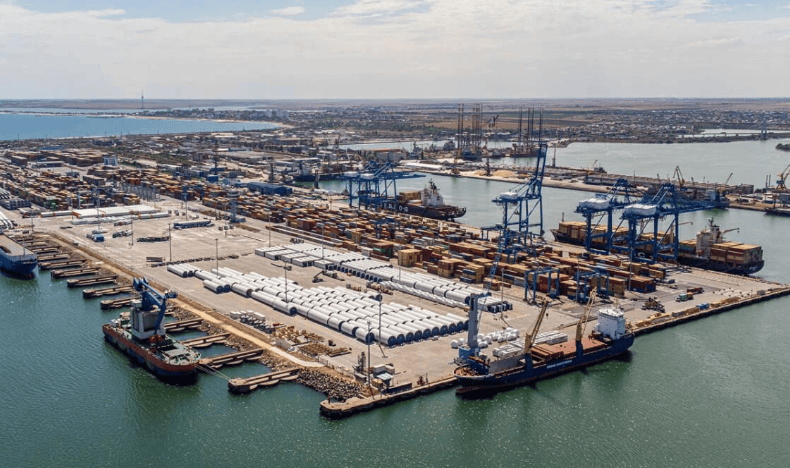
"As the port electrifies and its business grows, DP World believes that access to reliable, low-carbon energy will be critical to future competitiveness," the company stated. "Growing demand from electrified equipment, shore power systems, artificial intelligence data centers, residential heating, and industrial activities is placing increasing pressure on existing energy systems, driving the need for a stable and scalable power supply. Nuclear energy, including SMRs, has the potential to provide stable, low-carbon electricity for port operations and broader industrial applications." DP World has signed agreements with the French Alternative Energies and Atomic Energy Commission (CEA) and the TerraWater Institute to launch a feasibility study on the application of SMRs at the Port of Constanța. Located at the mouth of the Danube-Black Sea Canal, the port connects to maritime routes leading to Eastern and Central Europe and provides deep-water access for large vessels.
The study will simulate the port's projected energy demand from 2030 to 2050, assess an integrated low-carbon energy system, and explore the technical, strategic, and economic feasibility of nuclear-based solutions. It will also review safety standards and issues related to surrounding residential areas, leveraging CEA's expertise in SMR design and nuclear safety. DP World stated that the study aims to inform future decisions on how best to meet the long-term energy needs of the port and the broader economy. The company noted that any future development would require further technical assessments, regulatory analysis, and stakeholder engagement.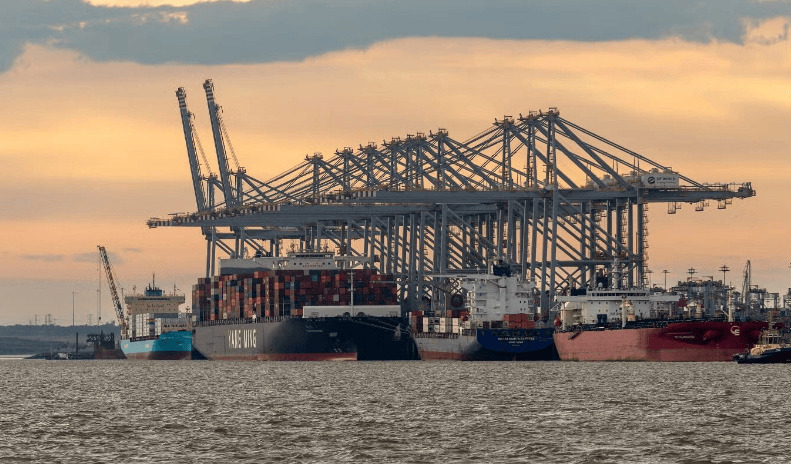
"DP World sees the transition to a net-zero economy not only as an environmental imperative but also as a driver of future growth in global trade," said Nicolas Mazey, Vice President of Sustainability for Europe at DP World. "Nuclear-powered small modular reactors for our ports are more than just energy projects—they are an infrastructure competitive advantage. This study will help us better understand how nuclear energy can enhance operational resilience and help meet growing demand. Across Europe, nuclear energy is increasingly recognized as a reliable and cost-effective solution with the potential to become the cornerstone of next-generation industrial activity and supply chains."
"Ports sit at the intersection of industry, energy systems, and local communities," added Dr. Mirto Tripathi, Executive Director of the TerraWater Institute. "This study aims to understand how to design future low-carbon energy systems that meet complex and evolving needs while maintaining high standards of safety and environmental performance. In energy, as in all other fields, supply should not dictate demand but rather offer possibilities without imposing conditions. We must understand, assess, and meet industrial needs while achieving decarbonization. This is the only energy paradigm we should pursue, and through this study, we aim to demonstrate it with nuclear energy."
"This study brings together expertise in nuclear technology and energy systems to assess how SMRs can be integrated into a real port environment," said Stéphane Sarrade, Director of Energy Programs at CEA. "By collaborating with DP World and TerraWater, we are applying advanced modeling and analysis methods to better understand how these solutions can provide reliable, low-carbon energy for ports."
Last September, DP World signed a memorandum of understanding with U.S. microreactor developer Last Energy to build the world's first port-based micro nuclear power plant at the London Gateway port in the UK. The proposed PWR-20 microreactor is planned to be operational by 2030, providing 20 megawatts of electricity to support the London Gateway logistics hub, with surplus power exported to the grid.
This article is compiled by Wedoany. All AI citations must indicate the source as "Wedoany". If there is any infringement or other issues, please notify us promptly, and we will modify or delete it accordingly. Email: news@wedoany.com