en.Wedoany.com Reported - Affected by the Middle East situation, tin prices have been oscillating upward since April, exceeding 450,000 yuan per ton and gradually approaching the historical high of 470,000 yuan per ton. Recently, the decline in the semiconductor sector of the stock market has dampened sentiment in tin futures, coupled with a broader pullback in the non-ferrous metals sector, leading to long capital exiting and a significant reduction in tin positions. From a fundamental perspective, both supply and demand sides of tin have certain bullish drivers, including the slow resumption of tin mining in Wa State, Myanmar, changes in Indonesia's mining policies, and the epidemic in the Democratic Republic of the Congo (DRC). Meanwhile, sustained rapid growth in AI hardware investment is contributing incremental demand, and given the relative scarcity of tin resources, the central price of tin still has room to rise.
The elemental symbol for tin is Sn. It is one of the traditional five metals—gold, silver, copper, iron, and tin—and has a long history of human application. Like most metals, tin has two sources: mined and recycled. Recycled tin accounts for about 30% of total tin supply. In developed economies such as Europe, the United States, Japan, and South Korea, the proportion of recycled tin is relatively high, exceeding 45%; in resource-rich regions like Southeast Asia, South America, and Africa, recycled tin accounts for less than 20%; in China, recycled tin accounts for about 25% of total tin supply. Electronic scrap and tinplate are the main raw materials for recycled tin production. Mined tin is smelted from tin ore, whose main component is tin dioxide, with pyrometallurgy being the primary smelting method. Tin has an abundance of only 0.004% in the Earth's crust, making it a scarce minor metal. The reserve-to-production ratio (ratio of proven reserves to annual production) can be used to describe its scarcity. The latest reserve-to-production ratio for tin is 21 years, ranking fifth among the six major industrial metals—copper, aluminum, lead, zinc, tin, and nickel—higher than zinc but slightly lower than lead. From 2013 to 2024, the reserve-to-production ratio for tin once fell below 18 years. Since 2021, the long-term central price of tin has significantly risen. Stimulated by profits, investment in tin mine exploration and development has accelerated, and the reserve-to-production ratio has rebounded somewhat in 2025, but it remains at a relatively low level, and the resource scarcity situation has not changed. The scarcity of tin resources in China is more acute than the global average, with the reserve-to-production ratio once falling as low as 10 years. It has slightly recovered in the past three years but remains below the global average.
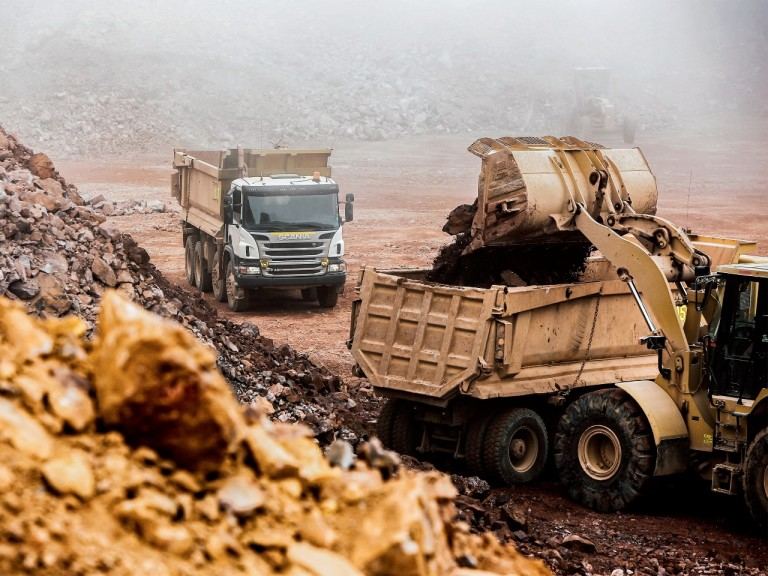
China is the world's largest producer of tin ore, accounting for one-quarter of global tin ore production; followed by Indonesia, which accounts for one-fifth of the global total. Indonesia has a shortage of domestic tin processing capacity, so most of its refined tin is exported. The output situations in Myanmar and the Democratic Republic of the Congo (DRC) are also noteworthy. Due to the suspension of tin mining in the Wa State region of Myanmar from 2023 to 2025, its global share has dropped from 11% to 4%. Tin mines in Wa State began resuming production in 2025, and output is currently recovering slowly. The DRC, benefiting from the capacity ramp-up of the Bisie tin mine, has seen its share increase to 9%, but the recent Ebola epidemic poses a certain threat to the stable production of the Bisie mine.
In the current semiconductor supercycle, tin, along with several other minor metals, is referred to as "computing power metals," playing indispensable roles in different segments of the semiconductor industry. Tin is primarily used as solder, earning the nickname "glue of the electronic world," as it connects chips, motherboards, components, and wiring harnesses into an integrated whole. Tin's excellent properties are key to its use as electronic solder: First, its low melting point. Pure tin has a melting point as low as 232 degrees Celsius, and tin alloys have even lower melting points, balancing soldering reliability with the heat resistance limits of components. Electronic components, PCB boards, and plastic encapsulation materials generally have a temperature tolerance below 260 degrees Celsius; using materials with higher melting points as solder would damage components and substrates. Liquid tin has good wettability for common semiconductor metal coatings such as copper, nickel, gold, and palladium, resulting in fewer solder voids and strong bonding, ensuring electrical continuity and mechanical fixation. Second, its excellent plasticity allows it to buffer the stress caused by the difference in thermal expansion between silicon wafers and substrates, preventing solder joint cracking and improving the reliability of chips under high and low temperature cycling. Additionally, tin's properties such as resistance to oxidation at room temperature, good electrical and thermal conductivity, excellent corrosion resistance, and lower cost compared to precious metals are also crucial.
In terms of the supply-demand landscape, the supply side is experiencing multiple points of disruption. The resumption of tin mining in Wa State, Myanmar, is slow. Customs data shows that from January to April, China's tin ore imports increased by 88% year-on-year, with imports from Myanmar increasing by 178% year-on-year. Wa State in Myanmar announced the resumption of production in the first half of 2025, but it has only recovered to 50% of pre-suspension levels. Factors such as severe damage to underground mine hardware, water accumulation, lack of explosives, low willingness to resume production after tax increases, and the rainy season are hindering the pace of recovery. Indonesia is the world's largest exporter of refined tin, and changes in its mining policies are impacting exports. On one hand, Indonesia is continuously cracking down on illegal mining, such as through license system reforms and customs anti-smuggling efforts; on the other hand, it plans to significantly increase the mining royalty tax rate, proposing to raise the current "10% applicable when tin prices exceed $40,000 per ton" to "20% applicable when tin prices exceed $50,000 per ton," which would significantly increase production costs for local mining companies. However, this policy is a slow variable and will not have a major new impact on Indonesia's refined tin export volume in 2026, as the country's production quota for 2026 is increasing year-on-year. The epidemic in the DRC is affecting the operation of major mines and the transportation of ore. The Bisie tin mine is the world's third-largest tin mine, accounting for about 6% of global tin ore output. The Walikale area in North Kivu province, where the mine is located, is adjacent to the core epidemic area of the current Ebola outbreak. Goma is its only traditional external transport hub, and taking a detour would significantly increase freight costs. Additionally, the epidemic panic has led to a decline in the attendance rate of Bisie miners, passively reducing capacity utilization. The mine is currently still operating, but if the epidemic worsens, the mine may trigger force majeure and completely shut down.
On the demand side, tinplate, tin chemicals, photovoltaic ribbons, and tin solder used in traditional consumer electronics (mobile phones, personal computers) are performing moderately, with some increases and some decreases, generally stable but weak. The standout highlight on the demand side is AI hardware investment, which is growing rapidly and has a relatively high tin consumption per unit. It is still difficult to accurately estimate the proportion of tin consumption in the entire AI industry chain relative to total demand. An optimistic estimate suggests that AI tin consumption will account for 11% in 2026, surpassing tinplate to become the second-largest application area for tin. A more conservative estimate suggests that the incremental demand brought by AI can cover the decline in traditional demand, providing strong support for total demand.
Overall, the long-term central price of tin is on an upward trend. The recent decline in the semiconductor sector of the stock market has curbed sentiment in tin futures, and capital outflows have triggered market adjustments. However, from a fundamental perspective, both supply and demand sides have bullish drivers. The supply side is affected by multiple disruptions, including the slow resumption of tin mining in Wa State, Myanmar, policy disturbances in Indonesia, and the epidemic in the DRC. The demand side shows uneven performance, with sluggish growth in traditional sectors but incremental contributions from AI hardware investment. Tin inventories, both domestically and internationally, are at moderately low levels, with no inventory pressure. For a long time, the scarcity of tin resources, insufficient investment in new mine exploration and development, unstable production in mineral-rich countries, coupled with sustained demand increments from AI investment, are expected to continue pushing up the long-term central price of tin. Currently, factors with a significant direct impact on tin prices, besides the technology sector in the stock market, include the epidemic situation in the DRC. If the epidemic is well controlled and the capacity utilization and mineral transportation of the Bisie tin mine recover, tin prices may face short-term downward pressure, but it will be difficult to change the long-term trend.
This article is compiled by Wedoany. All AI citations must indicate the source as "Wedoany". If there is any infringement or other issues, please notify us promptly, and we will modify or delete it accordingly. Email: news@wedoany.com