en.Wedoany.com Reported - The Mexican government is advancing its domestic electric vehicle project, the "Olinia Uno," with plans to begin production in 2027 at a starting price of $8,400. The goal is to create a cost-effective "people's car" for the country, reducing transportation costs and driving the development of the local industrial chain.
The concept of this project can be traced back to the positioning of the Volkswagen Beetle nearly a century ago. According to project leader Roberto Capuano, the Olinia project has initiated negotiations with ten domestic and international organizations to establish public-private partnerships, thereby securing industrial capital, operational expertise, and after-sales infrastructure. The project aims to achieve an initial annual production volume of 50,000 vehicles by 2029.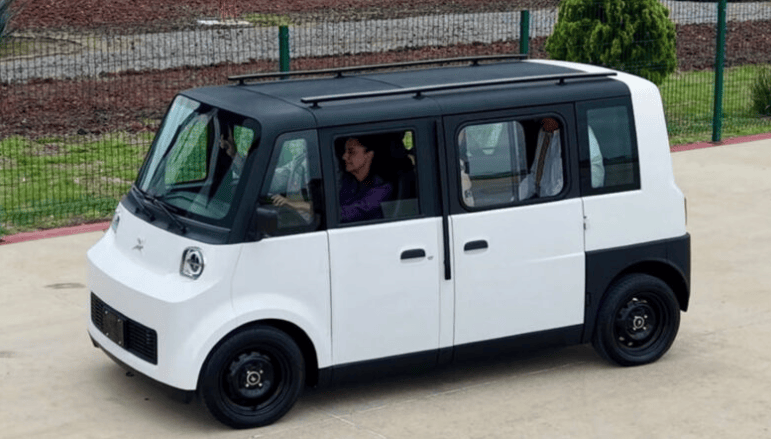
The Olinia Uno is primarily designed for commercial transport and taxi services. It is equipped with a 14.7 kWh battery, offering a range of 125 kilometers, a top speed of 50 km/h, and seating for up to six passengers. The vehicle can be charged using a standard household power outlet. The project team notes that the cost per kilometer for this vehicle is approximately one-fifth that of a traditional gasoline car and half that of a motorcycle, as it consumes no energy while idling.
Localization is a priority for the project, with a target of achieving 75% domestic content for components. According to Chief Technology Officer Rafael Garayoa, battery cells will initially be imported from overseas while Mexico develops its local cell manufacturing capabilities; processes such as battery pack integration and battery management systems will be completed domestically.
For low-speed urban driving scenarios, the federal government is developing a specific regulatory category, drawing on existing standards for microcars in the European Union, the United States, and China.
Regarding the construction of the Olinia project, the production facility is scheduled to begin construction in September of this year, with an initial annual production capacity of 20,000 vehicles, increasing to 50,000 within four years, and a long-term target of reaching 100,000 vehicles per year. For charging infrastructure, 2,000 charging points will initially be installed in Mexico City, the State of Mexico, and Puebla. The project also plans to launch a dedicated cargo version for urban freight and last-mile delivery in July 2027.
This article is compiled by Wedoany. All AI citations must indicate the source as "Wedoany". If there is any infringement or other issues, please notify us promptly, and we will modify or delete it accordingly. Email: news@wedoany.com