en.Wedoany.com Reported - Stellantis has integrated Factorial Energy's solid-state battery cells into a Dodge Charger Daytona development vehicle and begun road testing the technology, marking a critical step toward applying solid-state batteries in production vehicles. This is the first time Factorial Energy's FEST (Factorial Electrolyte System Technology) solid-state cells have been installed in a Stellantis vehicle, and the two companies will evaluate their performance, reliability, and safety under real-world driving and charging conditions.
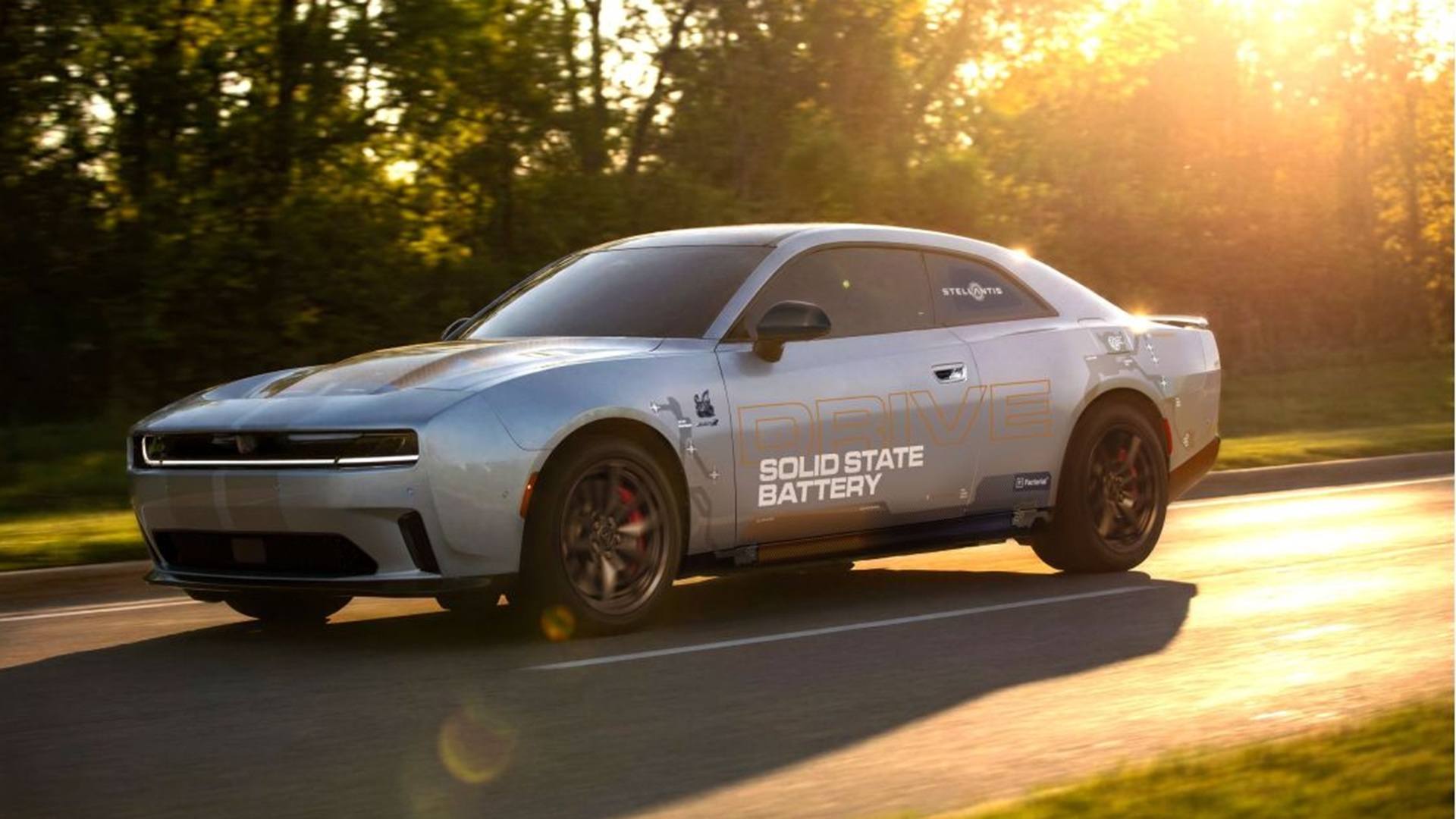
This progress builds on laboratory validation completed in 2025, when Stellantis and Factorial demonstrated automotive-grade FEST cells with an energy density of 375 Wh/kg. The cells can charge from 15% to 90% in 18 minutes and operate within a temperature range of -22°F to 113°F. Transitioning from lab testing to on-road vehicles required engineers to redesign certain components of the battery system. Stellantis developed a patented mechanical architecture that enables solid-state cells to fit into existing battery packs while maximizing performance. Engineers also improved battery controls and pack design to meet automotive requirements for durability and safety, ensuring consistent performance across various driving and charging conditions.
Based on Stellantis' STLA Large platform, this battery pack is the first vehicle in a previously announced multi-phase development plan. Ned Curic, Stellantis' Chief Engineering and Technology Officer, stated that battery development is a balancing act—one cannot optimize a single metric alone; what is needed is a system that delivers real-world benefits in an actual vehicle. He emphasized that this milestone brings solid-state batteries closer to customers, with potential advantages including longer range, faster charging, and lower costs, and that FEST's high compatibility with lithium-ion manufacturing processes provides a critical path to scale.
Solid-state batteries replace the liquid electrolyte used in traditional lithium-ion batteries with solid materials, promising higher energy density, enhanced safety, and shorter charging times. However, mass production and integration of cells into vehicles remain major challenges for automakers and battery developers. With the battery now installed in a working vehicle, Stellantis and Factorial have launched a testing and calibration program to evaluate charging behavior, vehicle safety, and long-term reliability. The results will also be used to optimize the battery management system and pack-level controls. Factorial CEO Siyu Huang stated that what both parties have built together—from cell chemistry to battery pack architecture to achieving real-world road testing—is precisely the deep, full-stack collaboration that solid-state batteries have always needed.
Factorial, backed by Stellantis, Mercedes-Benz, Hyundai, and Kia, is one of several companies racing to commercialize solid-state batteries. This milestone advances its technology from cell-level testing to vehicle validation, a critical phase before potential large-scale market adoption.
This article is compiled by Wedoany. All AI citations must indicate the source as "Wedoany". If there is any infringement or other issues, please notify us promptly, and we will modify or delete it accordingly. Email: news@wedoany.com