en.Wedoany.com Reported - The cross-border railway project Rail Baltica, connecting Estonia, Latvia, and Lithuania, has released the first edition of its Network Statement, providing a comprehensive overview of the technical, operational, and access conditions of the line for future operators.
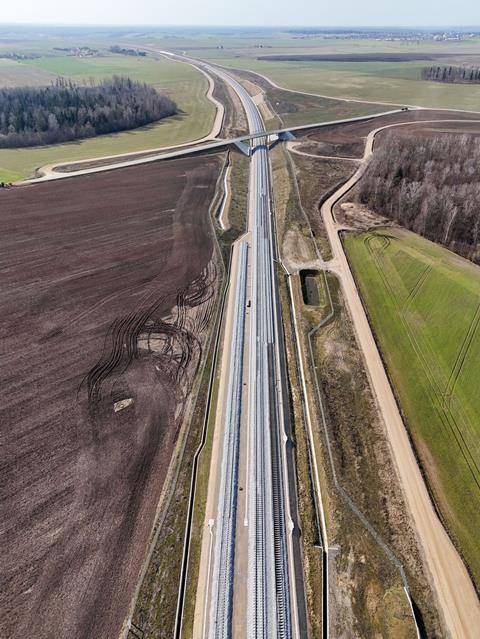
The document was jointly prepared by the future infrastructure managers Rail Baltic Estonia, Eiropas Dzelzceļa līnijas, and LTG Infra, in cooperation with the coordinating body RB Rail AS. This release is considered a key milestone, marking the project's transition from large-scale construction to operational readiness, while also initiating a structured dialogue with railway undertakings, freight operators, and other transport stakeholders.
Compiled in accordance with the common structure of the RailNetEurope Network Statement, this document provides, for the first time, a unified reference framework for the entire Rail Baltica Global Project, covering infrastructure characteristics, operational principles, and access conditions. It consolidates information previously scattered across different project sources, offering greater transparency for future operators planning passenger and freight services.
Rail Baltica is constructing a 1,435 mm standard gauge railway connecting Tallinn, Pärnu, Riga, Panevėžys, Kaunas, Vilnius, and the Lithuanian-Polish border. The line is part of the Trans-European Transport Network (TEN-T) North Sea-Baltic Corridor and the Baltic Sea-Black Sea-Aegean Sea Corridor. Designed for a maximum operational speed of 249 km/h, the railway will be equipped with the European Rail Traffic Management System Level 2 (ERTMS Level 2) and the Future Railway Mobile Communication System (FRMCS) to support interoperable passenger and freight operations and ensure compatibility with the wider European rail network.
Julien Pellerin of the project stated that this publication provides a transparent basis for future operators and freight customers to plan their connections with Rail Baltica, and demonstrates the close cooperation among the infrastructure managers of the three Baltic States in creating a unified railway system. The current version of the Network Statement primarily serves as a reference document and does not yet provide a formal basis for capacity allocation requests. Future versions will gradually supplement details on capacity allocation processes, charging structures, operational procedures, and railway service information. The complete formal Network Statement for the first phase of operations will be published later in accordance with European railway legislation requirements.
Rail Baltica is considered one of Europe's largest railway infrastructure projects, expected to enhance regional connectivity, promote economic development, improve military mobility, and facilitate integration with the wider European transport network. The project stakeholders believe that this railway will significantly reduce travel times in the Baltic region while creating new opportunities for passenger transport, freight services, and international trade.
This article is compiled by Wedoany. All AI citations must indicate the source as "Wedoany". If there is any infringement or other issues, please notify us promptly, and we will modify or delete it accordingly. Email: news@wedoany.com