en.Wedoany.com Reported - A research team at the International Institute of Information Technology Hyderabad (IIIT-H) has identified a systemic flaw in current AI-powered traffic enforcement cameras when detecting motorcycle riders, rooted in the shape of the bounding boxes used for target identification. To address this, the team proposed a trapezoidal bounding box, improving helmet detection accuracy from 66.25% to 97.08% and overload detection accuracy from 36.70% to 78.34%.
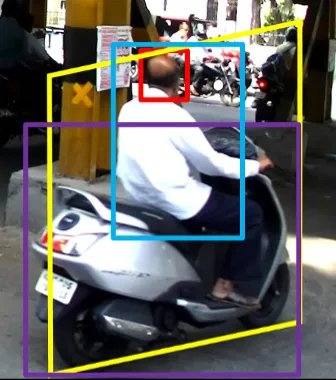
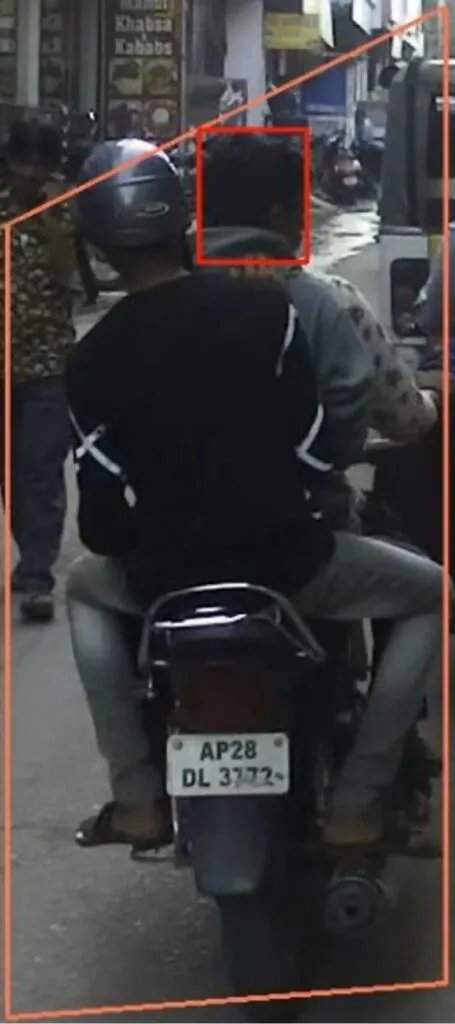
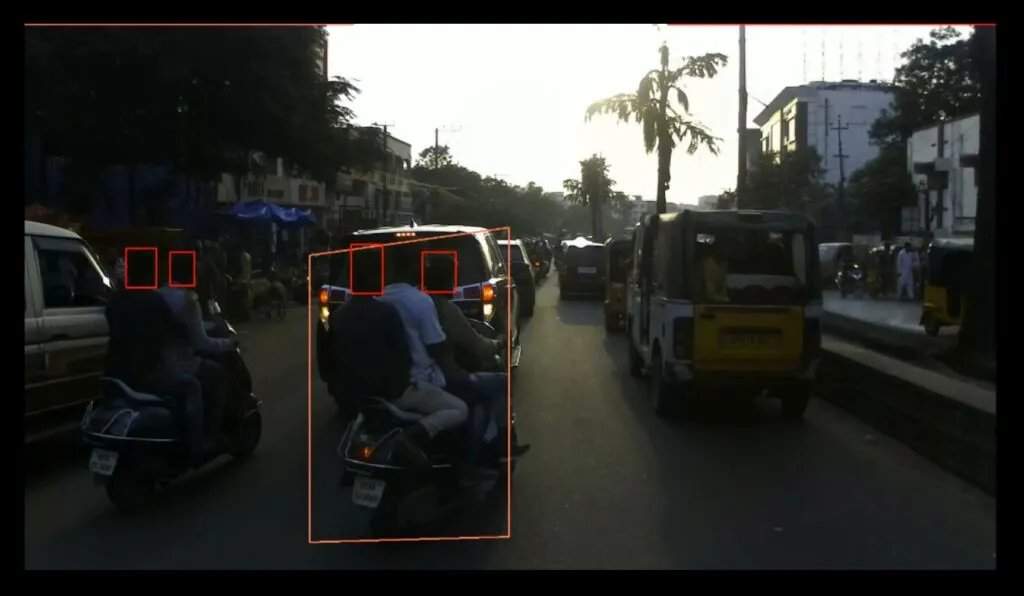
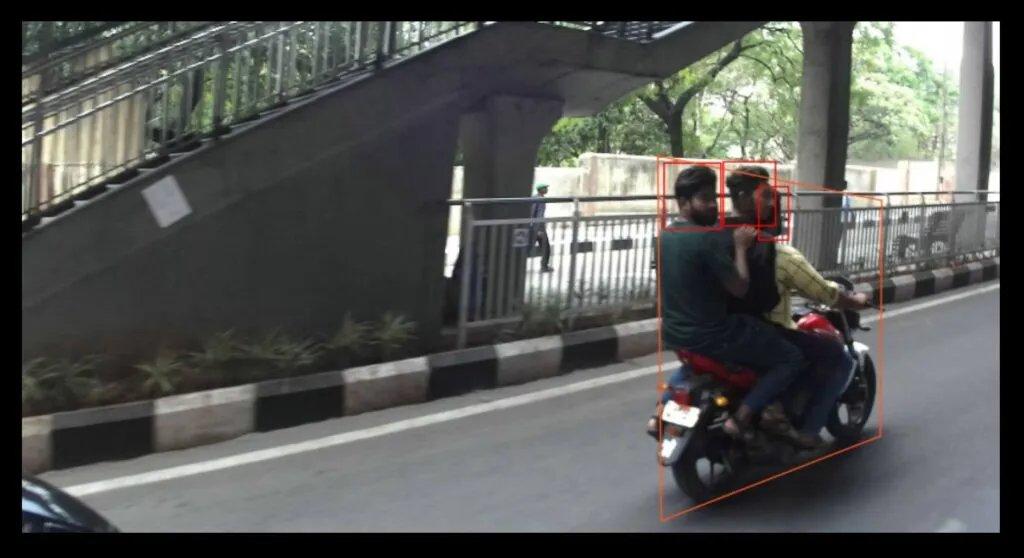
Traditional computer vision object detection systems rely on rectangular bounding boxes, which are effective for conventional vehicles like cars and trucks. However, for motorcycles, especially when viewed from the common top-down angle of traffic cameras, the combined profile of the rider and motorcycle exhibits a trapezoidal shape—wider at the bottom and narrower at the top. Using a rectangular box, if too tight, it can crop out the handlebars or the rider's head—critical areas for determining helmet use; if too loose, it tends to include background elements, causing the model to confuse adjacent vehicles. This failure mode, known as "false non-maximum suppression," is particularly pronounced in dense, chaotic traffic scenes with many motorcycles.
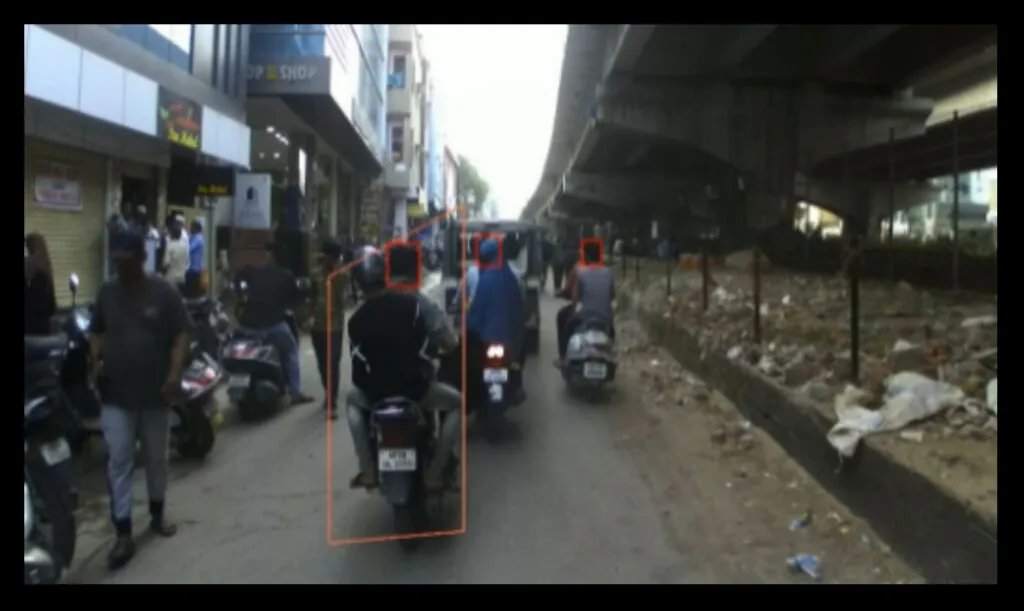
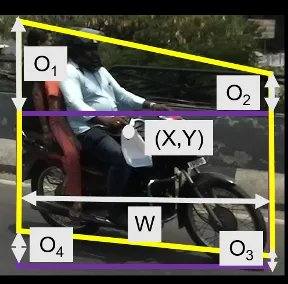
Led by Aman Goyal, the research team includes Dev Agarwal, Anbumani Subramanian, C.V. Jawahar, and Ravi Kiran Sarvadevabhatla from IIIT-H, as well as Rohit Saluja from IIT Kharagpur and IIT Mandi. The study, presented at the 2022 CVPR Workshop on Perception in Uncontrolled Environments, introduced a new geometric primitive called the "Trapezoidal Driving Instance Boundary" to replace rectangular boxes. This trapezoid is defined by four offset parameters, allowing its boundaries to conform to the actual physical contour of a motorcycle as observed from the camera's perspective. This innovation has been granted a U.S. patent (USPTO US 12,315,264, awarded in May 2025) and is assigned to the iHub-Data Research Center at IIIT Hyderabad.
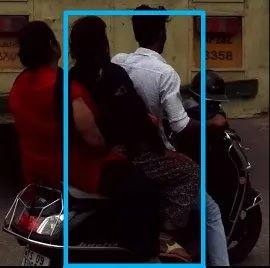
The system is trained on an expanded version of the Indian Driving Dataset (IDD), annotated with three categories: helmet-wearing, non-helmet-wearing, and trapezoidal driving instance boundaries. To address the issue of obscured rear passengers, the team adapted the "amodal regressor" technique from pedestrian detection research, applying it for the first time to a motorcycle pipeline. This regressor generates complete predicted boundaries for the rider-motorcycle unit, reliably inferring the number of passengers even when partially visually occluded. The training also employed a "curriculum learning" approach, tackling class overlap issues by progressing from easier to harder examples.
The team's pipeline has been covered by industry media and is currently being developed as part of the automatic ticket issuance process for Indian city police. India's Smart Cities Mission includes over 100 cities with Integrated Command and Control Centers (ICCCs), which are candidate deployment sites for automated traffic enforcement systems. According to World Bank analysis, road accidents cost India 3% to 7% of its GDP annually, and in 2022, the World Bank specifically committed $250 million for Indian road safety infrastructure.
The significance of this research extends beyond India. The study notes that global traffic management computer vision systems are primarily built based on Western road and traffic patterns, whereas high-density, mixed traffic patterns are more common in developing countries worldwide. The team's follow-up work is expanding the system from fixed elevated cameras to dashcams. Their 2025 paper, "DashCop," demonstrates automatic electronic ticket generation based on dashcam video to enable enforcement across the entire road network.
The research team believes that the engineering bottleneck—making detection accurate enough to be trustworthy—has been resolved for motorcycle violation detection and similar high-density scenarios. What requires further exploration is how the legal and regulatory frameworks surrounding AI-generated evidence will evolve.
This article is compiled by Wedoany. All AI citations must indicate the source as "Wedoany". If there is any infringement or other issues, please notify us promptly, and we will modify or delete it accordingly. Email: news@wedoany.com