en.Wedoany.com Reported - Brazil's telecommunications and broadcasting ecosystem had 540,000 formal jobs at the end of 2025, accounting for approximately 1% of the country's total formal employment. The telecommunications segment contributed 284,000 of these jobs.

A report released this Friday (12) by the National Telecommunications Agency (Anatel) disclosed the above data. The study, based on data from the Annual Social Information Report (Rais), marks Anatel's resumption of systematic tracking of employment in the telecommunications and broadcasting sectors.
The survey analyzed the evolution of the employment landscape between 2021 and 2025, covering segments such as telecommunications, broadcasting, infrastructure, equipment trade, industry, and support and maintenance services.
The study shows that the number of formal jobs in the ecosystem grew from 518,000 in 2021 to a peak of 544,000 in 2024. There was a slight contraction in 2025, with a year-end stock of 540,000 active positions.
The telecommunications segment remains the main employer within the ecosystem, with 284,558 jobs in 2025, compared to 260,856 in 2021.
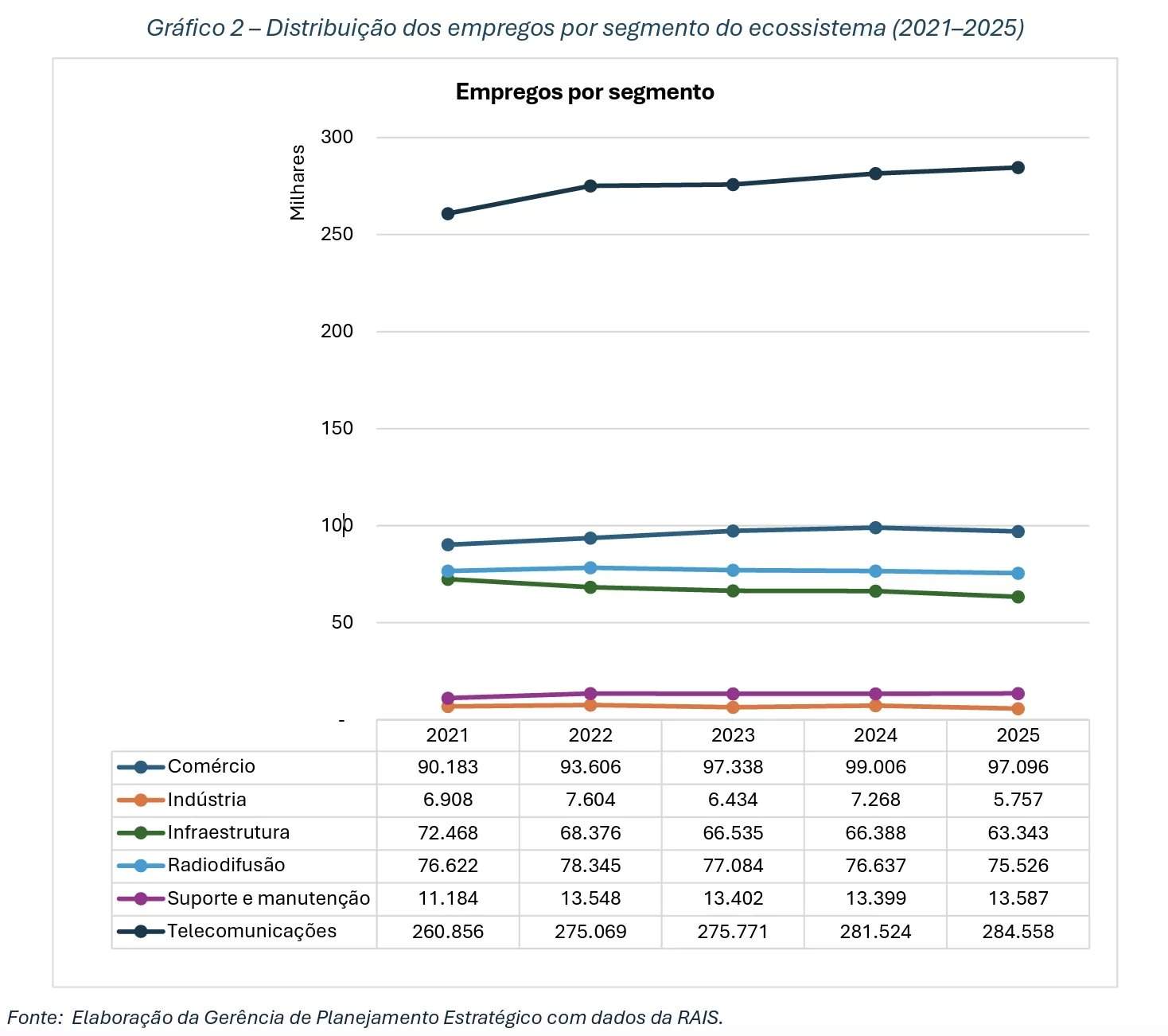
Employment figures for other segments are: equipment trade (97,096 jobs), broadcasting (75,526), infrastructure (63,343), support and maintenance services (13,587), and industry (5,757).
Within the telecommunications segment, fixed broadband was the service with the largest expansion during the analyzed period. Its jobs increased from 96,219 in 2021 to 132,612 in 2025. Wireless telecommunications services declined between 2022 and 2024 compared to 2021 levels, ending 2025 with 42,621 jobs. Fixed telephony continued to shrink, with positions falling from 47,714 in 2021 to 34,546 in 2025.
By gender composition, men held 65% of formal jobs in the ecosystem, totaling 349,882 positions; women accounted for 35% of total jobs, totaling 189,985. In the telecommunications segment, the gender ratio was similar, with 186,029 men and 98,529 women.
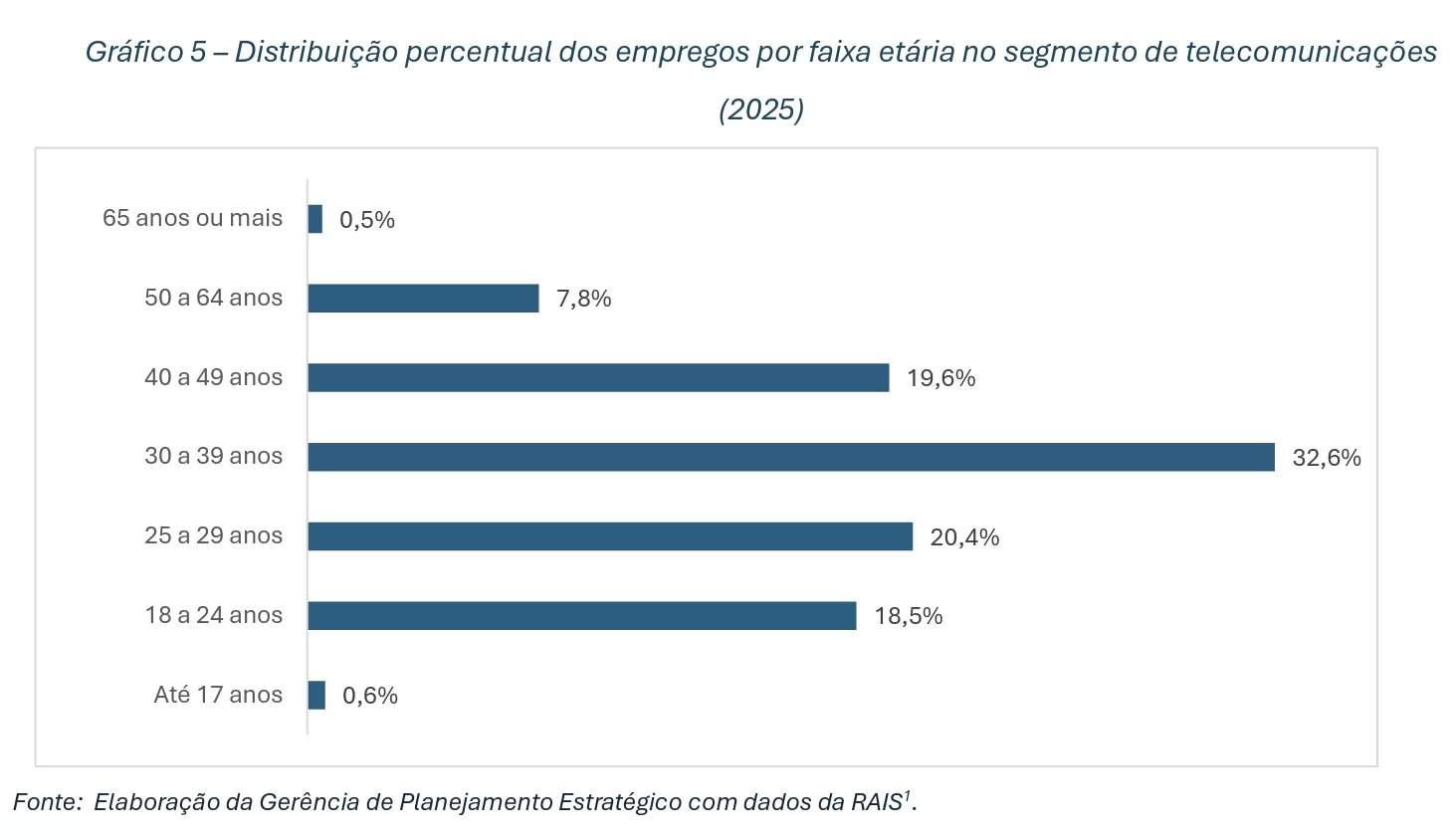
The study also provides an age profile of the sector's workforce. In telecommunications, 72.2% of professionals are under 39 years old. In broadcasting, the age distribution is more concentrated in older age groups: 53.1% of workers are between 30 and 49 years old, while 28.8% are aged 50 or older.
This article is compiled by Wedoany. All AI citations must indicate the source as "Wedoany". If there is any infringement or other issues, please notify us promptly, and we will modify or delete it accordingly. Email: news@wedoany.com