en.Wedoany.com Reported - South African platinum group metals mining and marketing company Valterra Platinum emphasized at its inaugural Sustainability Day event that sustainability is central to the future of mining, with responsible mining driving competitiveness and long-term value creation. The company held this event after releasing its first sustainability report in March, further establishing sustainability as a strategic priority across all operations.
Valterra Platinum supplies platinum group metals that support cleaner technologies, including hydrogen systems and emission reduction solutions. Listed on the Johannesburg Stock Exchange and the London Stock Exchange, the company's business is closely tied to the transition to a low-carbon global economy.
With growing demand from emerging areas such as clean mobility, industrial decarbonization, energy security, and artificial intelligence, sustainability is having an increasingly significant impact on operational performance, market access, customer relationships, and future growth. Valterra CEO Craig Miller stated that the cleaner, more electrified, and more connected future the world is building depends on the metals it mines, and these metals need to be produced responsibly, resiliently, and trustworthily. He believes sustainability should not be merely a compliance exercise but a driver of operational excellence, an enabler of innovation, and a source of resilience.
Valterra's sustainability strategy is guided by two mutually reinforcing principles: value protection and value creation. Value protection focuses on securing the license to operate, managing regulatory and social risks, and delivering reliably to communities and stakeholders; value creation focuses on strengthening operational resilience, achieving cost efficiency and energy security, supporting long-term growth, and building lasting customer relationships. The strategy is also based on three interconnected priorities.
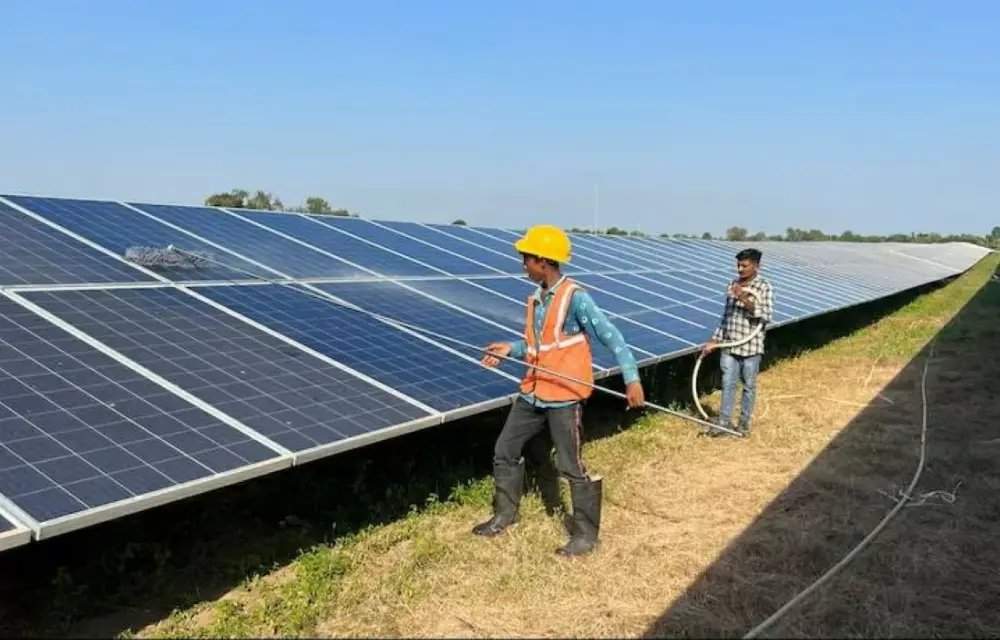
The first priority is climate and environment, involving advancing decarbonization, resource management, and climate resilience. This year, Valterra and Envusa Energy announced the commercial operation of the 240 MW Mooi Plaats solar PV project in South Africa's Northern Cape province. Upon completion of the Koruson 2 project later in 2026, it will reach up to 520 MW of renewable energy, with 79% allocated to operations. This will meet approximately one-third of Valterra's electricity needs, strengthen the pathway to a 30% reduction in greenhouse gas emissions by 2030, ensure operational energy security, save approximately ZAR 300 million annually in costs, and is expected to reduce approximately 2.2 million tonnes of CO2 equivalent per year.
Additionally, Valterra's smelting operations comply with minimum emission standard regulations and are equipped with sulfur dioxide reduction systems that convert emissions into sulfuric acid. In water management, 68.7% of water used in its operations was recycled and reused in 2025. In technological innovation, the deployment of Jameson flotation cell technology has improved processing efficiency by enhancing mineral recovery while reducing energy consumption and reagent usage; its compact design results in lower water consumption per tonne processed, reducing the environmental footprint.
The second priority is building resilient local communities, involving promoting inclusive development, economic participation, and lasting social stability. Valterra's approach focuses on achieving sustainable livelihoods, strengthening local economies, and investing in infrastructure. During 2025, the company contributed ZAR 83 billion to society through taxes and broader economic participation, including ZAR 859 million in social investment programs and ZAR 7 billion in local community procurement.
The third priority is an ethical value chain, involving promoting responsible mining and procurement, transparency, and strong governance. All of Valterra's own mining operations have now been independently assessed against the Responsible Mining Assurance Initiative standard. The company also maintains an MSCI AA rating and continued inclusion in the FTSE/JSE Responsible Investment Index. Its compliance framework covers key risks such as anti-corruption, fair competition, and data privacy, while an inclusive procurement program strengthens local participation in the mining value chain.
The company stated that these priorities position sustainability as a core driver. With growing demand for responsibly produced platinum group metals, the company is well-positioned to deliver sustainable value while supporting a low-carbon, more inclusive economy. The company mines, smelts, and refines platinum group metals and related by-products in its operations in South Africa and Zimbabwe, and leverages its integrated value chain and marketing centers in London, Singapore, and Shanghai to provide solutions to customers.
Hydrogen Council CEO Ivana Jemelkova noted that it is time to shift gears and accelerate to unlock the full potential of hydrogen to build cleaner, safer, and more resilient energy systems. The "Hydrogen for a Resilient World" initiative has been launched, a CEO-led call to action urging governments to accelerate hydrogen deployment. The Hydrogen Council stated that hydrogen can help countries diversify energy supplies, enhance industrial competitiveness, and unlock the value of domestic resources.
Investment in green hydrogen has grown tenfold over the past five years, with over 510 projects globally committing more than USD 110 billion. The Hydrogen Council pointed out that the energy crisis triggered by the Middle East conflict cost importing countries in Europe and Asia over USD 100 billion in just two months. South Korea has 46,834 hydrogen fuel cell electric vehicles, 481 hydrogen refueling stations, and 1,453 MW of fuel cell power generation, with its hydrogen-powered trains potentially achieving a range of over 1,200 km on a single tank of hydrogen.
French utility company Engie and Denmark's European Energy have joined forces to advance a development project to produce green hydrogen in Denmark and supply it to Germany. The facility will be connected to the Denmark-Germany hydrogen pipeline expected to be operational around 2030, with Engie retaining the right to sell over 20,000 tonnes of green hydrogen annually from the plant. German steel company Salzgitter has signed a green hydrogen offtake agreement with external supplier EWE to purchase approximately 10,000 tonnes of clean hydrogen per year. Japan has launched a green hydrogen-powered vessel that uses onboard solar panels to produce fuel from seawater, capable of sailing for up to 90 days without port refueling. South Africa's Saldanha Bay Freeport hosted a delegation from the Dutch Embassy in Pretoria for a site visit, focusing on practical cooperation opportunities in the green hydrogen sector within the port.
This article is compiled by Wedoany. All AI citations must indicate the source as "Wedoany". If there is any infringement or other issues, please notify us promptly, and we will modify or delete it accordingly. Email: news@wedoany.com