en.Wedoany.com Reported - SpaceX (SPCX.US) surged over 19% on its first day of trading, pushing its market capitalization above $2 trillion. Elon Musk also became the world's first trillionaire, thanks to his combined holdings in SpaceX and Tesla.
SpaceX's IPO was priced at $150 per share, giving the rocket company a price-to-sales ratio of 94.7 times. The company reported revenue of $18.67 billion in 2025, with a restated net loss of $4.94 billion after merging with xAI. The IPO raised at least $75 billion, 2.9 times the $25.6 billion base raised by Saudi Aramco in 2019. No standard valuation model can explain this price, but the market generally believes that buying SpaceX is essentially placing three bets on the future.
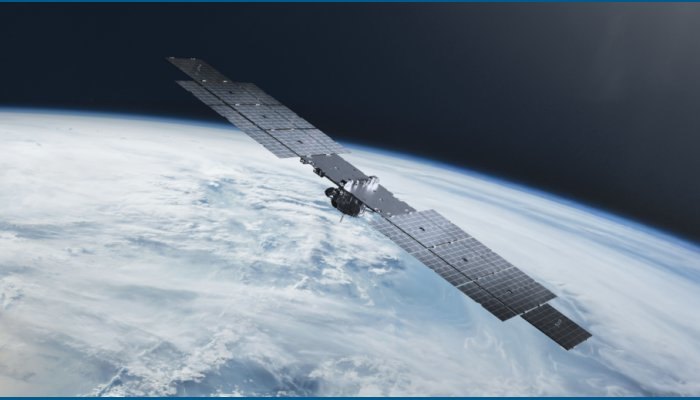
Musk holds six business cards, spread across four battlefields. The space layer consists of SpaceX rockets and over 10,300 Starlink satellites. The terrestrial layer includes Tesla's 6 million electric vehicles and the ramp-up of Optimus robots. The data layer comprises the xAI Colossus supercomputer and the Grok large model. The biological layer is the Neuralink brain-computer interface, which has yet to generate significant revenue and represents the longest-term bet—human-machine integration. These businesses are connected into a single entity by three interdependent pipelines.
In terms of energy flow, Tesla installed $375 million worth of Megapack energy storage systems for the xAI Memphis supercomputing center, supporting nearly 2 gigawatts of power demand, equivalent to the electricity consumption of a medium-sized city. The massive energy consumption of xAI and SpaceX, in turn, provides an industrial-scale scenario for Tesla Energy, transforming it from a single product division into the energy backbone of the entire empire. Without Tesla's batteries, xAI's supercomputer couldn't hold up; without xAI's computing demands, Tesla Energy's scaling would be years slower. This is a transaction executed by the same decision-maker, offering high synergy efficiency but also concentrated risk.
In terms of data flow, Tesla's global fleet of 6 million vehicles, each equipped with 8 cameras, forms a physical world sensor network. FSD has accumulated 10 billion miles of driving data, with 29 million new miles added daily. This data is fed into the over 200,000 GPUs of the Colossus supercomputer to train better FSD, Grok, and Optimus models, which are then deployed back to the fleet via OTA, generating more data and scenarios. Each turn of this flywheel widens the gap with competitors. What Waymo and Cruise have always lacked is not algorithms, but the data generated by 6 million vehicles running 24/7 on real roads.
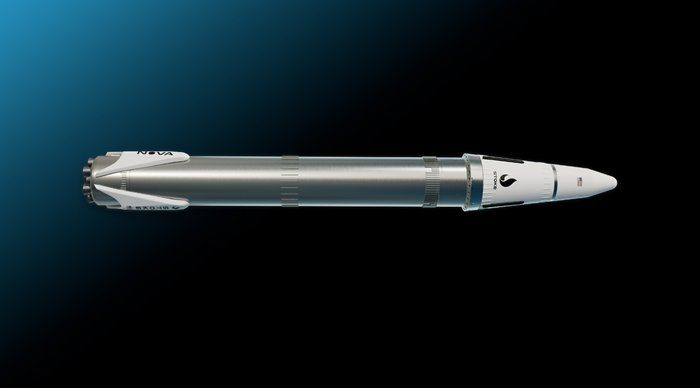
In terms of cash flow, the Falcon rocket's launch cost is $1,500 per kilogram, less than one-third of the industry average of $5,000, capturing 80% of the global launch market. Starlink covers 164 countries with over 12 million subscribers, generating annual revenue of $11.4 billion and an operating income of approximately $4.4 billion. These profits are reinvested into the development of the Starship next-generation rocket and space AI data centers, forming a self-sustaining cycle. Lowering rocket costs enables more satellite launches; satellite constellations generate subscription fees; and the profits from those fees fund the construction of even larger rockets.
Morningstar assigns SpaceX a fair value of $780 billion, only 44% of the IPO price, citing xAI's persistent losses and terminable AI computing contracts as insufficient to support a trillion-dollar valuation. Valuation authority Aswath Damodaran anchors the fair value at $1.3 trillion, arguing that SpaceX's estimate of a $26 trillion AI market size is overly aggressive. Goldman Sachs' bullish model projects revenue reaching $474 billion by 2030. The bull-bear divide remains, with neither side able to convince the other. Financial reports cannot answer what SpaceX is worth; the real variables lie in three unexercised options.
The first option is Starlink, which has become a quasi-monopoly in space-based internet. Starlink's EBITDA margin is 63%, with annualized profits near $5 billion, making it the company's only reliably profitable business and the cash engine for its entire space ambition. The exclusivity of low-earth orbit spectrum resources and orbital slots will continue to amplify its moat over time. Competitors not only need to build satellites but also must compete for orbital positions that are already occupied.
The second option is the AI infrastructure super-cycle. Two weeks before the IPO, SpaceX signed AI computing contracts with Anthropic for $1.25 billion per month and Google for $920 million per month, totaling $26 billion annually, already exceeding Starlink's full-year revenue. The Colossus supercomputer, with 220,000 GPUs, was built in 122 days. This business, which didn't exist 18 months ago, now contributes the largest revenue increment and is the core engine of valuation expansion. SpaceX holds Tesla's energy base and its own engineering capabilities, giving it a unique cost structure in this arena. Vertical integration in the AI era means pricing power.
The third option is the space data center revolution. Orbital solar radiation intensity is about 36% higher than on the ground, and continuous power generation is possible without the effects of day/night cycles or weather. The FCC has accepted SpaceX's spectrum application for orbital data centers and initiated public comment. The market has priced this option at $30 to $50 billion. If realized, the global geography of computing power and energy will be rewritten. After SpaceX's listing, Musk, with 42% economic interest and 85% voting rights, became humanity's first trillionaire. He holds three betting tickets to different futures, but whether these three options can be realized ultimately depends on a single variable: one person's judgment, energy, and mental state.
Musk is fifty-four years old this year. He adheres to "first principles thinking," reducing rocket launch costs to one-tenth of the original; he is also a micromanager, modifying the Model S's body design three weeks before delivery. In the winter of 2008, after SpaceX's first three launches all failed and Tesla was on the brink of bankruptcy, he bet his last $35 million on both companies simultaneously. If the fourth launch failed again, the cash on hand would only last a few days. Fourteen years later, he acquired Twitter for $44 billion, completing the most controversial gamble in business history. In 2025, his political move to lead DOGE in pushing for a $2 trillion cut in government spending caused Tesla's brand recommendation score to plummet from 8.2/10 in 2023 to 4.0/10 in 2025, with brand value shrinking by 36% and the stock price falling accordingly. A single tweet in 2020 wiped $14 billion off Tesla's market cap in one day. Creativity and destructiveness have always come from the same brain. Musk has publicly acknowledged having Asperger's syndrome: social difficulties, hyperfocus, and the ability to immerse himself in a single problem for dozens of hours. Genius and madness are packaged together—this is the part of the $1.77 trillion that is hardest to value and impossible to hedge.
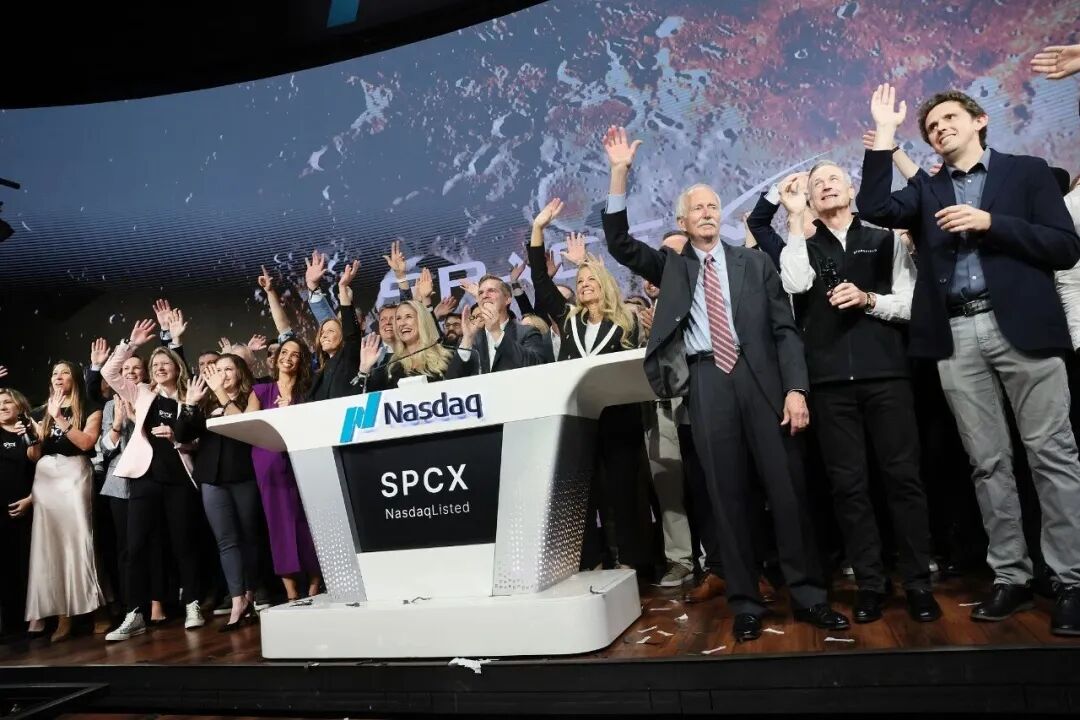
From founding SpaceX in 2002 to the listing of his trillion-dollar empire in 2026, Musk took twenty-four years. In those twenty-four years, every brush with bankruptcy, every market disruption, and every political crossover ultimately failed to end the system, instead making the machine run faster. At the moment the Nasdaq bell rang, what was being priced was never the financial statements. What was truly worth that $1.77 trillion was a narrative about how humanity can escape Earth's cradle, and a stubborn soul—repeatedly proven to survive no matter how many times it teeters on the brink of collapse.
This article is compiled by Wedoany. All AI citations must indicate the source as "Wedoany". If there is any infringement or other issues, please notify us promptly, and we will modify or delete it accordingly. Email: news@wedoany.com