en.Wedoany.com Reported - PureVPN recently launched the ChatGPT VPN Co-Pilot, integrating VPN server selection, connection configuration, and scenario-based usage processes into the ChatGPT conversational environment. Users can invoke PureVPN within ChatGPT to specify their goals using natural language for needs such as streaming, gaming acceleration, travel connectivity, public Wi-Fi protection, and troubleshooting. The system then recommends suitable servers and connection methods, and users can jump to the PureVPN application via secure deep links to establish the connection.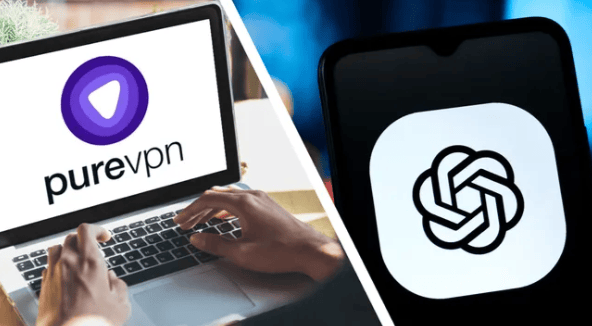
This feature targets the configuration barriers in VPN usage. Although traditional VPN services have formed a mature market, ordinary users still need to repeatedly choose between regions, protocols, server loads, purposes, and device settings. For non-technical users, common questions include "Which region should I connect to?", "Can it be used for travel networks?", "How to set it up more securely on public Wi-Fi?", and "Why did the connection fail?". By moving these operations to a conversational interface, PureVPN allows users to directly describe their goals without needing to understand technical parameters step by step, with the AI assistant translating their needs into connection suggestions and application invocation actions.
The VPN industry is advancing AI from customer service functions to the product entry layer. In the past, VPN providers primarily used AI in help centers, ticket responses, and network status explanations; PureVPN's Co-Pilot is more akin to a usage scenario navigator. It does not handle encrypted transmission within ChatGPT but focuses on understanding user intent, matching servers or features, and generating jump buttons like "Connect Now" or "Watch Now". The actual encryption, tunnel establishment, and traffic routing are still completed on the user's local device and within the PureVPN application. PureVPN emphasizes that OpenAI cannot access the PureVPN system, and PureVPN does not obtain additional information beyond the ChatGPT session content; data exchange is limited to the specific requests initiated by the user. (techradar.com)
This design also reflects that competition in online privacy products is shifting from "parameter stacking" to "ease of use and scenario orientation". VPN users may not care about the technical details of every protocol or node latency; they are more concerned about quickly obtaining a stable connection during business trips, travel, remote work, accessing overseas content, and using public networks. If an AI assistant can understand the user's location, purpose, and risk scenarios, and then compress complex configurations into a single step, it could increase the daily usage frequency of VPN products. For service providers, this can also reduce the likelihood of user churn due to configuration failures, incorrect node selection, or unstable connections.
Privacy boundaries remain a core issue for such features. VPNs are inherently privacy and security tools; when combined with AI assistants, third-party application directories, and deep link processes, users naturally care about how request content, location preferences, connection purposes, and device information are handled. PureVPN emphasizes that encryption and routing are still completed within the local application, with the AI component only assisting in configuration. However, actual trust still relies on clear data boundaries, auditable privacy policies, and long-term transparency reports. For privacy-conscious users, manual configuration and minimal data interaction may still align better with their habits; for ordinary users, the convenience offered by the AI assistant will be more appealing.
This update from PureVPN also indicates that VPN products are integrating with broader AI entry points. As the ChatGPT application ecosystem expands, cybersecurity, identity protection, password management, threat detection, and privacy tools all have the potential to be packaged as conversational services. In the future, users may no longer start configuring security tools from a standalone software interface but instead directly request in an AI assistant, "Help me securely connect to hotel Wi-Fi", "Select a low-latency route for gaming", or "Check if my remote work connection is secure". If VPN providers can secure a position in this entry point, they will gain new user reach pathways.
This feature still needs to be tested in real-world usage scenarios. VPN connection quality depends on node resources, network congestion, geographical distance, protocol adaptation, and application compatibility. An AI assistant can only reduce configuration complexity but cannot completely eliminate uncertainties brought by the network environment. Whether PureVPN can transform the ChatGPT Co-Pilot into a stable user experience will depend on server recommendation accuracy, jump connection success rates, privacy statement transparency, and troubleshooting capabilities. As AI enters cybersecurity tools, industry competition will no longer only compare encryption protocols and server counts but also who can turn complex security capabilities into easier-to-understand and use daily services.
This article is compiled by Wedoany. All AI citations must indicate the source as "Wedoany". If there is any infringement or other issues, please notify us promptly, and we will modify or delete it accordingly. Email: news@wedoany.com