en.Wedoany.com Reported - The exterior building housing South Korea's first research nuclear reactor, "TRIGA Mark-II," is set to be demolished, sparking discussions within the country's nuclear energy community about the preservation of historical heritage.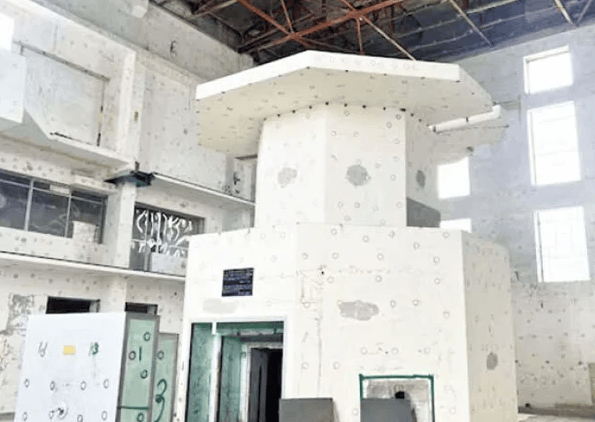
Located on the site of the Korea Electric Power Corporation's Human Resources Development Institute in Gongneung-dong, Nowon-gu, Seoul, the reactor itself has been designated as a registered cultural heritage and will be preserved. However, parts of the building surrounding the reactor are slated for demolition. The Korea Atomic Energy Research Institute plans to remove the remaining building structures while retaining the reactor core.
TRIGA Mark-II is regarded as the starting point of South Korea's atomic energy research. It was introduced with U.S. assistance during the administration of President Syngman Rhee in 1959 and officially began operation in 1962. Unlike nuclear reactors used for power generation, this research reactor primarily served purposes such as personnel training, nuclear energy research, and radioisotope production. Many researchers, university students, and industrial technicians who later contributed to South Korea's domestic nuclear power technology development and nuclear exports received training or conducted research at this facility.
After the Korea Atomic Energy Research Institute relocated to Daejeon in 1985, the Gongneung-dong site was sold to the Korea Electric Power Corporation. Following the launch of the new research reactor "HANARO" in 1995, TRIGA Mark-II ceased operations. Subsequently, a decision was made in South Korea to preserve the reactor as a cultural heritage while demolishing the building. However, as demolition approaches, external voices have begun to reassess this decision, arguing that preserving only the reactor core may fail to fully convey the historical context of South Korea's early nuclear energy research.
Some experts advocate considering the reactor and its surrounding buildings as an integrated heritage site. Yoo Seung-hoon, a professor at Seoul National University of Science and Technology, stated that to maximize the preservation of its historical symbolic significance, it is necessary to explore options for preserving both the building and the reactor, transforming them into an educational visitor facility. This perspective highlights a common dilemma in technical heritage preservation: while the core equipment holds cultural value, the architectural environment that embodies its function, space, and historical memory also influences public understanding of history.
The Korea Atomic Energy Research Institute has indicated that even if the building is demolished, protective measures will be taken to commemorate and preserve the reactor, with specific utilization plans to be decided in consultation with the Korea Electric Power Corporation. Given the interplay of factors such as site ownership, maintenance costs, safety management, and public access methods, the final decision will not only determine the fate of an old facility but also reflect how South Korea handles symbolic industrial heritage within its nuclear energy development history.
This article is compiled by Wedoany. All AI citations must indicate the source as "Wedoany". If there is any infringement or other issues, please notify us promptly, and we will modify or delete it accordingly. Email: news@wedoany.com