China's Sugon Releases 10T-Class CPU General-Purpose High-Performance Computing Platform
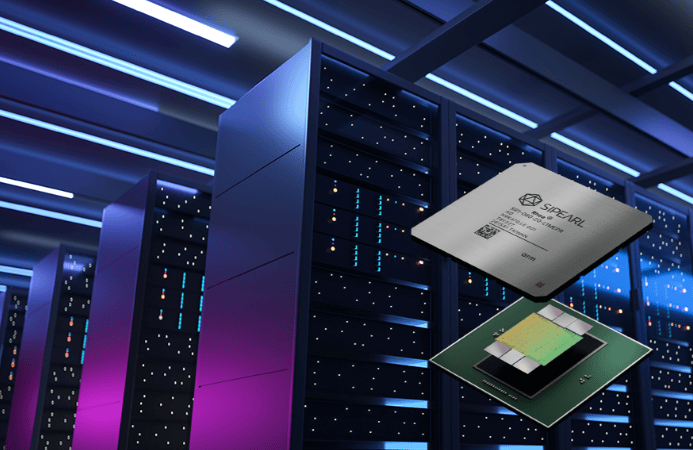
en.Wedoany.com Reported - On June 15, Sugon released a new generation general-purpose high-performance computing platform. The platform is equipped with the first domestically produced 10T-class general-purpose CPU, featuring a 128-core, 512-thread design, with single CPU FP64 double-precision computing power reaching 10T. Compared to the previous generation, the platform's HPL double-precision floating-point relative performance has improved nearly twofold, STREAM memory access performance has increased by nearly 100%, and application performance has improved by an average of nearly 100%. Its overall specifications have, for the first time, reached the flagship level of international manufacturers. This release targets high-precision computing scenarios such as scientific computing, industrial simulation, engineering design, meteorology and oceanography, energy exploration, and AI for Science, indicating that China's general-purpose high-performance computing platform has entered a new engineering phase in terms of CPU computing power, memory access, and application adaptation.
The core value of a general-purpose high-performance computing platform lies in its ability to support not just a single AI training task, but a wide range of scientific and engineering applications that rely on double-precision floating-point computation and high memory bandwidth. HPL is primarily used to measure the system's peak capability in high-precision floating-point computing, while STREAM reflects memory bandwidth and access efficiency. For climate simulation, fluid dynamics, structural simulation, materials calculation, drug screening, oil and gas exploration, and complex industrial design, the CPU's double-precision performance, memory access capability, and software ecosystem compatibility directly impact whether tasks can run stably, whether computation cycles can be shortened, and whether existing scientific and industrial software can be migrated at low cost.
The domestically produced 10T-class general-purpose CPU equipped on this platform elevates the FP64 double-precision computing power of a single CPU to the 10T level and adopts a hundred-core multi-threaded architecture. Unlike computing routes that only emphasize accelerator cards or dedicated chips, a general-purpose CPU platform places greater emphasis on ecosystem compatibility, task scheduling, complex branch processing, and the ability to run large-scale engineering software. Public information also indicates that this platform is the first domestically produced general-purpose computing platform compatible with the AVX-512 instruction set and natively compatible with the x86 ecosystem, which can reduce the cost of software application and ecosystem migration in related fields. This means that when users migrate high-performance computing applications, they do not need to completely rebuild the software environment, making it easier to continue using existing algorithm libraries, compilers, and engineering application workflows.
From a systems engineering perspective, this upgrade is not simply about replacing a single CPU, but involves platform-level collaborative optimization centered on "computing, storage, and networking." High-performance computing tasks often require a large number of nodes to run in parallel, and bottlenecks can occur in the processor, memory, interconnect network, storage I/O, or cooling system. If the computing power of a single CPU is improved, but memory access, interconnection, and cooling cannot keep pace, the actual application performance will still be difficult to unleash. Sugon's emphasis on the simultaneous improvement of HPL, STREAM, and application performance indicates that the platform optimization has covered multiple aspects including the computing core, memory access, system interconnection, and application software adaptation. This is also key for a general-purpose high-performance computing platform to transition from chip parameters to real-world engineering usability.
The cooling configurations also reflect the platform's ability to meet the deployment needs of computing centers of different scales. According to the Sci-Tech Innovation Board Daily, the platform offers computing nodes with three cooling configurations: air cooling, cold plate liquid cooling, and immersion liquid cooling, which can be adapted to computing centers of various sizes. For high-density computing systems, cooling capacity directly limits cabinet power and sustained operational stability. Air cooling is suitable for some traditional data centers and medium-to-low density deployments, while cold plate liquid cooling and immersion liquid cooling are more appropriate for high-density, high-efficiency, and large-scale cluster environments. As scientific computing and AI computing workloads grow simultaneously, computing centers need to rebalance performance, energy consumption, space, and operational complexity. Platform-level cooling solutions will become an important support for the large-scale deployment of domestically produced high-performance computing systems.
This release also indicates that the value of CPUs in high-performance computing and AI infrastructure is being re-evaluated. While GPUs and AI accelerators hold a core position in large model training and inference, a vast number of scientific computing tasks, industrial simulations, and system-level scheduling still rely on high-performance general-purpose CPUs. Especially in AI for Science scenarios, traditional numerical simulation, data preprocessing, model training, result analysis, and engineering verification often run in a mixed manner, requiring CPUs, accelerators, memory, and high-speed interconnects to form a unified platform capability. If Sugon's new generation general-purpose high-performance computing platform can be continuously validated in application migration, ecosystem compatibility, and cluster deployment, it will help enhance China's autonomous supply capability in high-end computing infrastructure.
Going forward, the platform's performance in real-world user scenarios remains to be observed. Laboratory performance indicators and launch parameters are just the starting point. Scientific computing centers, industrial simulation platforms, energy companies, research institutions, and intelligent computing centers are more concerned with long-term stable operation, software compatibility, cluster scalability, energy efficiency, delivery timelines, and operational costs. If this platform can maintain improvements in double-precision computing, memory access, and application performance in complex applications, and support large-scale deployment under different cooling configurations, it will provide a new general-purpose computing foundation for China's high-performance computing infrastructure, and offer stronger localized computing support for scientific research, advanced manufacturing, and digital engineering applications.
This article is compiled by Wedoany. All AI citations must indicate the source as "Wedoany". If there is any infringement or other issues, please notify us promptly, and we will modify or delete it accordingly. Email: news@wedoany.com
Related Products



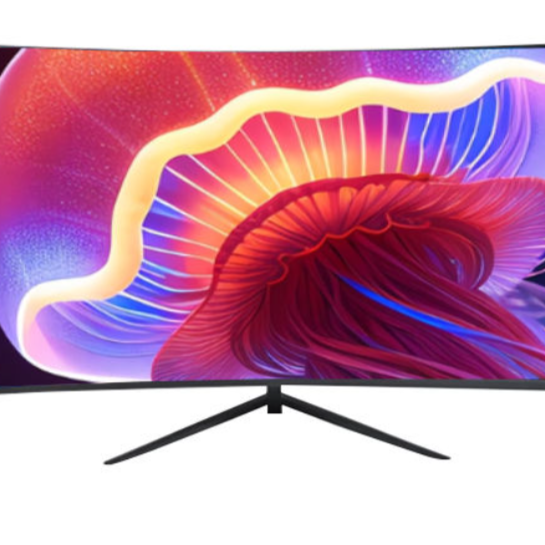
20 Inch 1600*900 Full HD 60Hz TFT LED Monitor with VGA and DP Interfaces for Desktop Computers-Business Use
Guangzhou Zanying Optoelectronics Technology Co., Ltd.
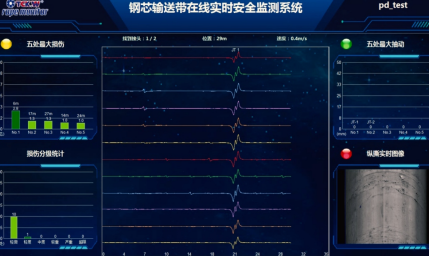
Conveyor Belt Intelligent Monitoring System
LUO YANG WIRE ROPE INSPECTION TECHNOLOGY CO., LTD.
GYTA Type Non-Self-Supporting Aerial/Duct Optical Cable
TONGDING INTERCONNECTION INFORMATION CO., LTD.

Mine Explosion-proof and Intrinsically Safe Industrial Ethernet Ring Network (10 Gigabit/Gigabit)
Chongqing Mas Sci&Tech Co., Ltd.
Flat Portable Satellite Terminal 0.35m Aperture Manual Portable Terminal
China Starwin Science & Technology Co., Ltd.