en.Wedoany.com Reported - Equipment and materials company KC Tech is commercializing a supercritical cleaning system designed for advanced semiconductor manufacturing, which has passed evaluation by SK Hynix. The system is known for its high technical difficulty in the industry, with only a few companies having achieved commercialization. Besides Japan's Tokyo Electron (TEL) and Samsung Electronics' subsidiary SEMES, KC Tech's entry is expected to reshape the current supply landscape.
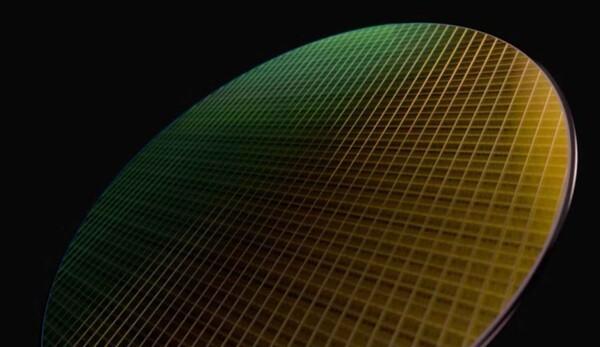
According to SK Hynix on June 15, KC Tech successfully passed the company's equipment evaluation process from late last year to early this year, and is expected to begin supplying equipment as early as the second half of this year. Industry sources indicate that large-scale orders may be concentrated at SK Hynix's Yongin Fab 1, which is scheduled to start equipment installation in February next year. Previously, SK Hynix sourced supercritical cleaning equipment exclusively from TEL. Since SEMES equipment is only available for Samsung Electronics, SK Hynix had limited alternative suppliers. It is reported that after SEMES became the first in the world to commercialize supercritical cleaning systems in 2017, SK Hynix approached SEMES regarding procurement.
KC Tech's entry is expected to reshape the supply chain structure. An industry insider stated that the emergence of a new supplier will give SK Hynix more leverage in price negotiations with TEL. It is estimated that the unit price of KC Tech's equipment is around 10 billion KRW, significantly higher than traditional equipment such as chemical mechanical polishing (CMP) and wet cleaning stations, and the company is expected to gain a new high-value revenue stream.
Supercritical refers to a physical state achieved when a substance exceeds its critical temperature and critical pressure, where it exhibits properties of both liquids and gases. Supercritical materials can dissolve residues and contaminants on wafers like a liquid, while penetrating fine patterns like a gas to remove particles within narrow structures. Traditional wafer cleaning systems dry chemicals by spinning the wafer, but as DRAM process nodes enter the 10-nanometer range, pattern spacing narrows and height differences increase, causing spinning drying to potentially bend or stick patterns in some processes. Supercritical cleaning systems use high-pressure supercritical materials to dry chemicals without spinning the wafer, enabling cleaning without damaging fine patterns.
KC Tech has spent approximately five years developing the equipment in collaboration with SK Hynix, with estimated material and R&D labor costs reaching tens of billions of KRW. Reports indicate that some early project employees hesitated due to concerns about failure, but the company ultimately decided to proceed and achieve its goals. SK Hynix is accelerating its DRAM expansion plans, with SK Group Chairman Chey Tae-won recently stating that based on expectations that memory shortages will persist until 2030, the company plans to "go full speed" to double overall wafer capacity within five years. The company has also moved up the launch of the first cleanroom at Yongin Fab 1 from May 2027 to February 2027. The timing of KC Tech's new equipment passing testing coincides with SK Hynix's expansion cycle, further fueling market expectations for large-scale orders.
This article is compiled by Wedoany. All AI citations must indicate the source as "Wedoany". If there is any infringement or other issues, please notify us promptly, and we will modify or delete it accordingly. Email: news@wedoany.com