en.Wedoany.com Reported - At the 2026 FIFA World Cup in the United States, Canada, and Mexico, Cape Verde, a nation with a population of just over 500,000, held tournament favorite Spain to a 0-0 draw in its opening match, earning its first-ever World Cup point in history. Amid nationwide celebrations, the President of Cape Verde and the Football Federation publicly stated: This glory began with a stadium built by China thousands of miles away — the National Stadium of Praia (Estádio Nacional de Cabo Verde, renamed Estádio Pelé in 2023).
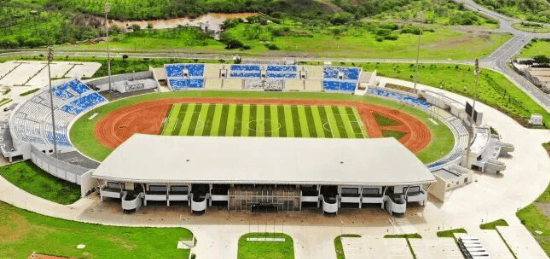
A "Turnkey" Project Filling a 39-Year Gap
After gaining independence in 1975, Cape Verde long lacked a professional 11-a-side stadium meeting FIFA standards, forcing its World Cup qualifier home matches to be played in neighboring countries. To help address this shortfall, the Chinese government decided to fund and build a national stadium through a grant, adopting a full "turnkey project" model with a total investment of approximately $15 million.
Located in the northern suburbs of the capital, Praia, the project was constructed by Shaanxi Huashan International Engineering Company (Shaanxi Construction Engineering Group), designed by China International Engineering Design, and supervised by Jiangxi Zhongchang. On October 21, 2010, Cape Verdean Prime Minister José Maria Neves and the Chinese Ambassador to Cape Verde jointly laid the foundation stone, marking the official start of construction.
During construction, the Chinese side overcame challenges such as high temperatures, wind erosion, and logistical difficulties on the island, strictly adhering to international standards — installing a FIFA-certified turf and an IAAF-certified 400-meter synthetic track, with multi-colored seating inspired by local flamboyant flowers and bougainvillea. Originally designed for a capacity of 10,000, the stadium was expanded to 15,000 seats at Cape Verde's request, covering an area of 94,000 square meters. The project was completed in September 2013 (some sources say October), and officially handed over to the Cape Verdean government on August 24, 2014, when it became operational.
At the inauguration ceremony, then-Prime Minister Neves emotionally stated: "This is a dream that China has helped us realize. The Cape Verde National Stadium is one of the largest engineering projects since our independence."
Beyond "Turnkey" — Continuous Technical Assistance
The Chinese side did not withdraw after the handover. To date, three phases of technical assistance have been initiated. In April 2025, the third phase deployed 11 Chinese experts specializing in electrical, civil engineering, turf, and fire protection to remain on-site, assisting with operations and maintenance while training local technicians to ensure the long-term normal functioning of this sports venue on the Atlantic island nation.
A Home Ground Witnessing History
As the dedicated home stadium for the Cape Verde men's national football team, this venue has witnessed the team's historic breakthroughs: a 1-0 home victory over Cameroon in the 2025 World Cup qualifiers, and a 3-0 win over Eswatini in the final round, securing top spot in the group and a first-ever qualification for the World Cup finals — both decisive matches that sealed qualification were played here. The President of the Cape Verdean Football Federation stated bluntly: "Without this stadium built by China, we wouldn't even be eligible to host international A-level matches."
Today, the National Stadium of Praia is not just a football pitch but a central landmark for large gatherings, cultural events, and political ceremonies in Cape Verde, serving as the most vivid testament to the friendship between China and Cape Verde over the 50 years since the establishment of diplomatic relations.
This article is compiled by Wedoany. All AI citations must indicate the source as "Wedoany". If there is any infringement or other issues, please notify us promptly, and we will modify or delete it accordingly. Email: news@wedoany.com