en.Wedoany.com Reported - At the first Global Developer Conference held on June 16, 2026, Xinghaitu released its next-generation VLA foundation model G0.5 and announced its open-source availability. The company also partnered with Beijing Yizhuang to establish a data company, "Yishu Intelligence," launched a plan for 1 million hours of high-quality real-world data, and collaborated with Cathay Capital to introduce an entrepreneurial incubation project called "Xingtu Plan." The conference attracted numerous industry, academic, and research figures, including Wang Yu, a professor at the Department of Electronic Engineering at Tsinghua University, and Xu Xin, founder of Capital Today.
Xinghaitu, in collaboration with Beijing Yizhuang, established Yishu Intelligence (Beijing) Technology Co., Ltd., with Xinghaitu as the second-largest shareholder, contributing a subscribed capital of 25 million yuan and holding a 25% stake. The initial co-building enterprises include 15 companies such as Yuanli Lingji, Ant Digital Technologies, Baidu Intelligent Cloud, Liepin, and Haitian Ruisheng. The company proposed a plan for 1 million hours of ultra-high-quality real-world data. Xinghaitu founder Gao Jiyang emphasized that in the embodied intelligence field, data is the underlying production material, and models, data, and hardware must operate cohesively within the same system.
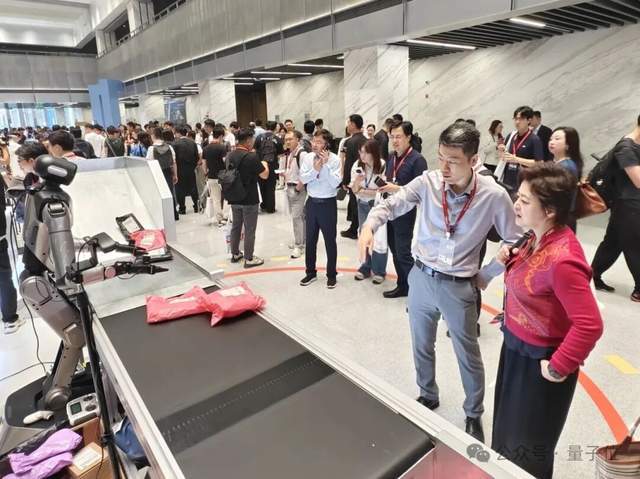
In terms of data collection, the Xinghaitu team will introduce UMI (Universal Manipulation Interface) and Egocentric (first-person perspective) data as supplements in the short term. The company holds a conservative stance on simulation data, believing it differs significantly from real-world robot data and is difficult to use for effective algorithm design. On the cost front, human-centric data costs approximately 50 to 100 yuan per hour, while robot-centric teleoperation data costs about 250 yuan per hour. Gao Jiyang pointed out that the cost ratio of data to computing power is roughly 1:10, with 1 million hours of data collection corresponding to a cost of 100 million to 200 million yuan, which he considers a "necessary investment."
The G0.5 model unifies vision, language, chain-of-thought, and action into an autoregressive generation framework, enabling a closed-loop reasoning process of "understanding while executing." The model has been open-sourced. Regarding the timeline for adapting G0.5 to the bipedal humanoid robot Kengo, the company's co-founder and CTO Zhao Xing stated that it would take at least until the end of 2026, primarily constrained by insufficient edge-side computing power, such as the power consumption and size issues of NVIDIA's Jetson Thor. Gao Jiyang noted that G0.5's overall architecture is better suited for forms like dual-arm intelligent or wheeled dual-arm robots, and in the current phase, it will be more widely deployed on platforms such as R1 Lite and R1 Pro. The company's technical roadmap is divided into three levels: instinctive intelligence, operational intelligence, and evolutionary intelligence, with the paths of instinctive and operational intelligence likely converging in the future.
Earlier this year, the company also released the first version of its world model, Fast-WAM, which eliminates the video prediction process during inference, improving inference speed by over four times. Fast-WAM can stably run models with 500 million to 1 billion parameters on consumer-grade graphics cards.
On the ecosystem front, Xinghaitu, in collaboration with Cathay Capital, launched the entrepreneurial incubation project "Xingtu Plan," focusing on three directions: data-driven intelligence, application scenario breakthroughs, and next-generation core technologies. Over the past year, Xinghaitu has invested in nearly 10 companies and plans to invest in 30 to 50 companies over the next three to five years. Gao Jiyang stated that industrial success is not the success of a single company but the collective success of a group of companies.
Gao Jiyang also introduced the company's business model, which will evolve along a three-stage path: "from complete machine sales to solution subscriptions, and then to physical world token sales." In October 2024, the first batch of Xinghaitu's Galaxea R1 robot hardware was delivered to Stanford's Fei-Fei Li Lab.
This article is compiled by Wedoany. All AI citations must indicate the source as "Wedoany". If there is any infringement or other issues, please notify us promptly, and we will modify or delete it accordingly. Email: news@wedoany.com