en.Wedoany.com Reported - Data released by the China Association of Automobile Manufacturers recently shows that in May 2026, China's auto exports reached 930,000 units, a year-on-year increase of 68.7%, maintaining a level above 900,000 units for two consecutive months. From January to May 2026, cumulative auto exports totaled 4.059 million units, up 63% year-on-year. Among them, new energy vehicles (NEVs) accounted for 1.833 million units, a 1.1-fold increase year-on-year, representing over 45% of total auto exports. China has become the world's largest exporter of new energy vehicles.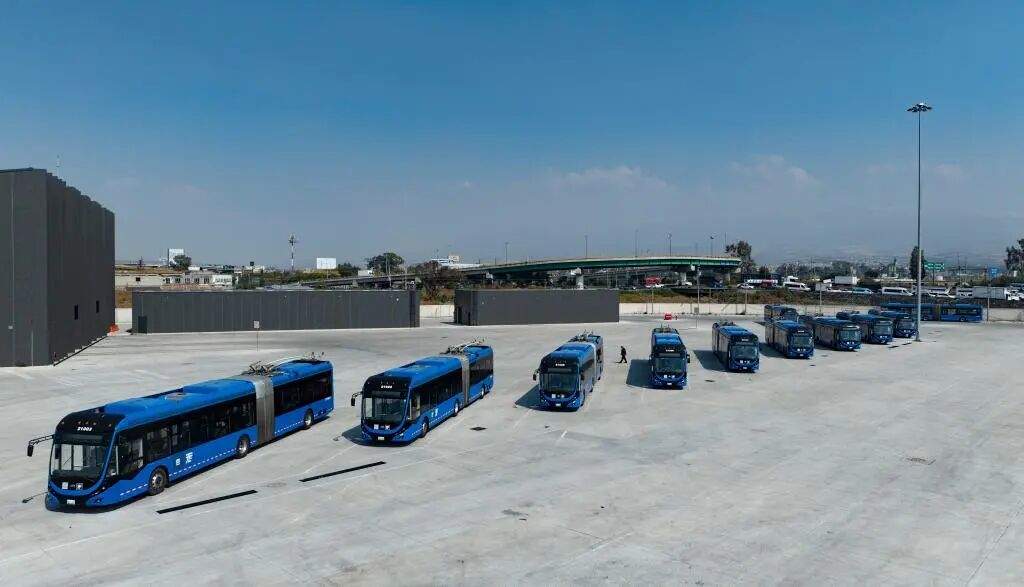
During the 2026 FIFA World Cup in the United States, Canada, and Mexico, Chinese-made buses accounted for over 95% of the official fleet of 800 new energy shuttle vehicles, with models from Yutong Bus Co., Ltd. (referred to as "Yutong Bus"), headquartered in Zhengzhou City, Henan Province, making up 85%. These vehicles were deployed across the three host cities of Mexico City, Guadalajara, and Monterrey, undertaking official shuttle services from airports to city centers, hotel districts, and stadiums. Since entering the Mexican market in 2018, Yutong Bus has continuously deepened its presence, introducing models such as 9-meter and 10-meter pure electric buses, dual-source trolleybuses, and 26-meter double-articulated pure electric buses, tailored to the local climate characterized by frequent rain, humidity, and urban flooding. The 26-meter double-articulated pure electric bus can carry 270 passengers per trip, effectively improving BRT operational efficiency by 40%.
Shaanxi Automobile Group Co., Ltd. (referred to as "Shaanqi Group"), headquartered in Xi'an City, Shaanxi Province, is accelerating its "green expansion" while exporting fuel-powered heavy trucks. Its new energy models have been exported to developed countries such as the United Kingdom, the Netherlands, and Australia, as well as countries participating in the Belt and Road Initiative. In 2025, Shaanqi Group's hydrogen fuel cell heavy trucks entered the Australian market, and its pure electric compressed garbage trucks won a bid for a project in Uzbekistan. Shaanqi Group has established localized factories in 17 Belt and Road partner countries and deployed staff in over 70 countries and regions, deeply integrating into local economic and social development. In Guinea, Shaanqi Group customized the F3000 Super Edition dump truck for the Masili Railway, a landmark Belt and Road project, comprehensively upgrading chassis protection, ground clearance, and sealing performance to cope with the tropical monsoon climate and harsh mining road conditions, while dispatching over 10 service engineers for 24-hour on-site support.
Geely Holding Group, headquartered in Hangzhou City, Zhejiang Province, operates modern vehicle and powertrain manufacturing plants in the United States, the United Kingdom, Sweden, and other countries, with over 4,000 sales outlets. In the first five months of 2026, Geely Auto's overseas sales surged 158% year-on-year to 371,354 units, accounting for nearly one-third of total deliveries. In Malaysia, Geely invested in the national brand Proton, helping it turn around from losses to profits, while also participating in the joint construction of the Malaysia Tanjung Malim Automotive High-Tech Valley (AHTV), planning to build an integrated industrial park with an annual production capacity of 500,000 vehicles covering "research, production, sales, and service," radiating to the ASEAN market.
From the completion and commissioning of Great Wall Motors' factory in Brazil, to BYD's announcement of building a vehicle assembly plant in Malaysia, to SAIC-GM-Wuling's global 3 millionth new energy vehicle rolling off the production line at its Indonesian factory, an increasing number of Chinese automakers are establishing production bases overseas. Zhang Yongwei, Vice Chairman and Secretary-General of the China EV100, stated that China's auto industry is not only a significant force in global manufacturing but also a key driver in reshaping the future landscape of global automotive cooperation.
This article is compiled by Wedoany. All AI citations must indicate the source as "Wedoany". If there is any infringement or other issues, please notify us promptly, and we will modify or delete it accordingly. Email: news@wedoany.com