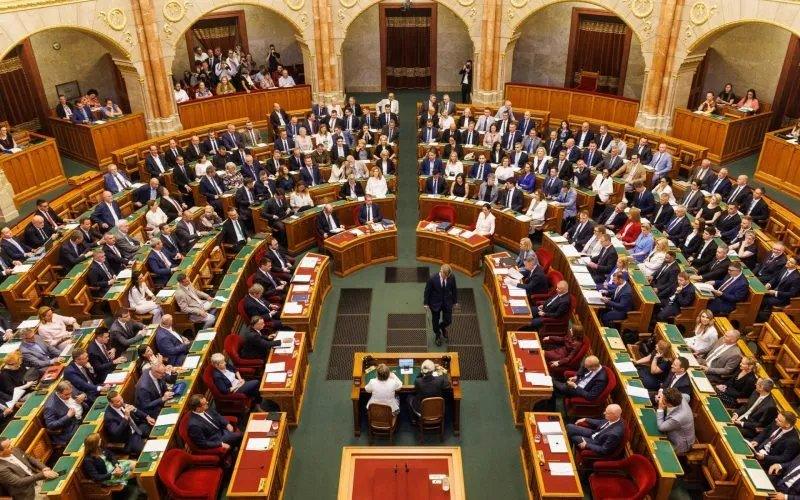
en.Wedoany.com Reported - The Science, Technology, and Innovation Committee of the Brazilian Chamber of Deputies approved on Tuesday (June 16) a bill to create the National Data Center Policy (Política Nacional de Data Center). The core measure of this policy is to ensure that data centers have priority access to the transmission grid in regions with surplus power generation, and to establish corresponding rules for the operation and security of data centers.

According to the approved proposal, data centers may bear the costs of grid engineering works, such as installing dedicated or shared transmission towers and cables. This measure aims to guarantee power supply for the facilities, provided that the investment costs are not incorporated into residential electricity tariffs. The committee approved the substitute text for Bill 1680/25 (proposed by Congressman Pedro Lucas Fernandes, Union Party - Maranhão) presented by the rapporteur, Congressman David Soares (We Can Party - São Paulo). During the review, the rapporteur removed the section on tax exemptions, noting that this issue had been addressed by the Special Tax Regime for Data Centers (Redata) under Provisional Measure 1318/25 (Medida Provisória 1318/25), which has since expired. Soares argued that infrastructure guarantees can compensate for the lack of tax incentives, as fast connectivity has become a competitive advantage as important as tax breaks.
The bill also creates a system of Data Embassies (Embaixadas de Dados), allowing Brazil to store sensitive data from foreign governments in the presence of reciprocal international agreements. These data are legally treated as an extension of the territory of the country of origin. In this specific case, the facilities are exempt from complying with the General Data Protection Law (LGPD) and Brazil's cybersecurity resilience regulations, but must still adhere to the country's current environmental, urban planning, and fire safety rules.
The proposal stipulates that Brazilian strategic data related to national defense, public security, and crime fighting must be processed and stored exclusively in data centers located within Brazilian territory (or in Brazilian data embassies established abroad). Furthermore, as long as the service contract prohibits the data center owner from accessing the content of these data, the owner is exempt from civil and criminal liability, as well as responsibilities under the General Data Protection Law. However, this rule explicitly does not exempt companies from liability in cases of infrastructure security failures.
The policy lists several principles: promoting energy and water efficiency throughout the entire lifecycle of data centers (from planning to decommissioning), with a focus on social and environmental sustainability; protecting and developing critical infrastructure to ensure national connectivity and digital sovereignty; fostering coordinated efforts between the private sector and federal, state, and municipal governments; promoting competitiveness and innovation, ensuring that incentives for the private sector generate socioeconomic benefits and develop the local industrial chain; maintaining leadership in defense and data, without discrimination against Brazilians or foreigners; ensuring the resilience of data center infrastructure (capable of withstanding failures and recovering quickly); guaranteeing the energy supply necessary for continuous data processing and storage; achieving social participation and transparency in decisions regarding the social and environmental impacts of installing large infrastructure; encouraging the distribution of data centers across different regions, leveraging the energy and logistical advantages of each area; and promoting the training and development of Brazilian professionals in the fields of digital technology and critical infrastructure.
The matter will subsequently undergo final analysis by the Committee on Finance and Taxation (Comissão de Finanças e Tributação) and the Committee on Constitution, Justice, and Citizenship (Comissão de Constituição e Justiça e de Cidadania). For the bill to become law, it must be approved by both the Chamber of Deputies and the Federal Senate.
This article is compiled by Wedoany. All AI citations must indicate the source as "Wedoany". If there is any infringement or other issues, please notify us promptly, and we will modify or delete it accordingly. Email: news@wedoany.com