en.Wedoany.com Reported - The restoration of Parliament Hill in Ottawa, Canada's capital, showcases the application of digital tools in cultural heritage preservation. During the restoration of The East Block, built in 1865, digital stone carving technology was used to handle historical materials, enhancing the precision and efficiency of the restoration.

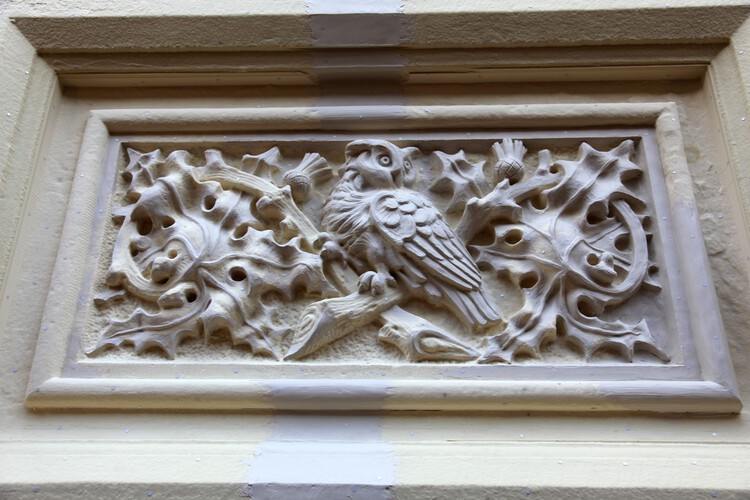
Public Services and Procurement Canada (PSPC) discovered a deteriorating sandstone bas-relief on the north facade of the East Block, above the entrance to the courtyard of the 1910 wing. Carved from Berea sandstone, the relief measures 1725 mm × 1120 mm and depicts an owl perched among thistles. The work severely deteriorated because the stone's bedding planes were installed vertically rather than horizontally during carving. Replacing this sculpture was seen as a research opportunity. Federal sculptor Phil White, in collaboration with the Heritage Conservation Directorate (HCD) and the Carleton Immersive Media Studio (CIMS) at Carleton University in Ottawa, developed a workflow for replacing the relief, with the methodology published in a paper.
The team first experimented with different building components to evaluate digital acquisition techniques such as photogrammetry and laser scanning. In the digital fabrication of 3D architectural heritage, an ideal 3D model should minimize noise and have high watertightness to avoid misleading textures or the need for manual hole patching in 3D software, which could lead to inaccurate results.
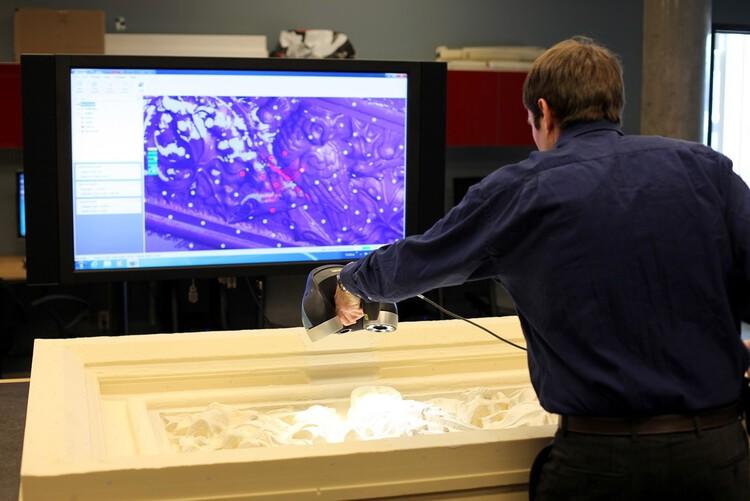
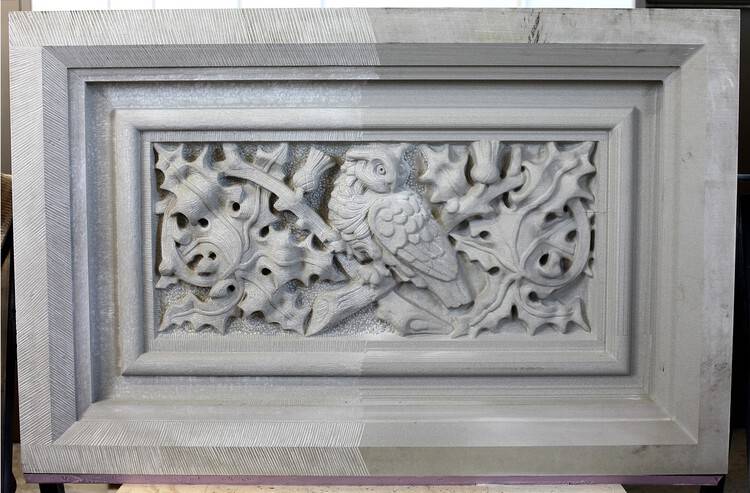
The original 3D model for the bas-relief was acquired years ago via photogrammetry. The team used this digital file to mill a replica of the sculpture in high-density polyurethane foam as a base, which was then handed over to Dominion sculptors to create clay overlays on eroded or missing areas, ensuring artistic and historical authenticity. The restored model was digitized again using a handheld laser scanner. Based on the new polygon mesh, the team created a dataset and transmitted it to a six-axis robotic arm, which milled the model into a sandstone block weighing 2,200 kg, with surface deviations controlled to within 2 mm of the design. Federal sculptors then added final details by hand, such as surface texture, chisel marks, and subtle expressions.
Federal sculptors also collaborated with CIMS and HCD to carve the coats of arms of Canada's provinces for the new Senate Chamber. The work employed a partially manual, partially robot-assisted approach using high-density polyurethane foam boards. Mr. White first carved a prototype, taking about six months, which was then digitized by CIMS experts to create a photogrammetric 3D model. A robotic milling machine used this digital blueprint to rough-machine copies, after which Mr. White and his two assistants refined details and textures by hand.
The digital-assisted process did not replace craftsmen but expanded their capabilities. It reduced the time and risk involved in handling fragile originals and achieved precision and repeatability difficult to match with manual methods, forming a layered workflow rooted in craftsmanship and extended by computation.


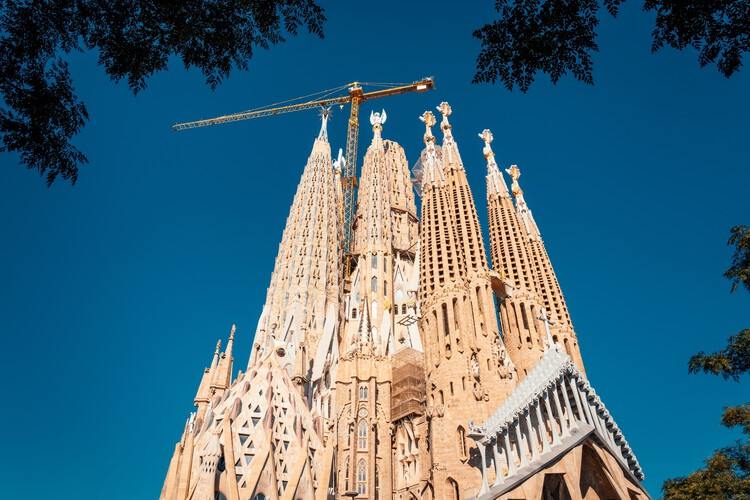
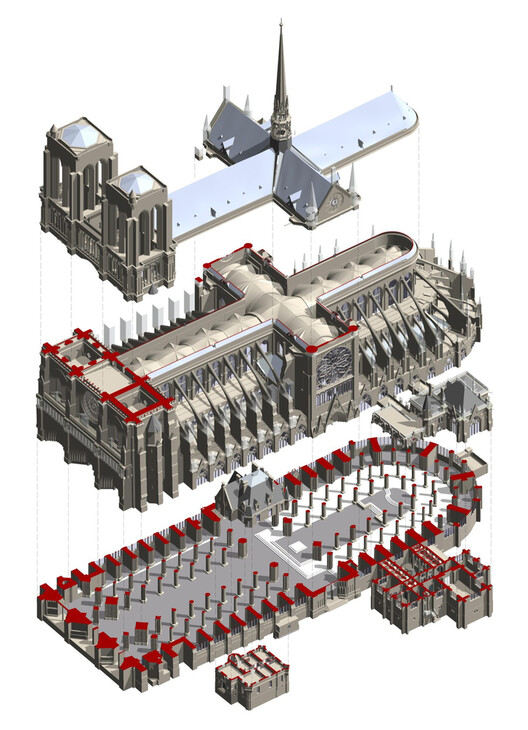
These cases are not unique. The Sagrada Familia in Barcelona, Spain, has used robot-controlled carving techniques since 1988. After the devastating fire in 2019, during the restoration of Notre-Dame Cathedral in Paris, architects used laser scanning data previously collected by art historians to build a Building Information Model (BIM) to guide reconstruction. The restoration of Canada's Center Block is also experimenting with integrating BIM into the restoration process to improve coordination among stone carvers, architects, historians, and engineers.
The above examples demonstrate that technology-assisted restoration, such as robot-controlled stone carving, has global application value. The integration of scanning, modeling, and robotic carving is evolving from a documentation tool into a participant in the manufacturing process, with the goal not to replace traditional craftsmanship but to enhance the ability to meet modern challenges. As historic buildings continue to age, these technologies have the potential to become important tools in 21st-century heritage conservation practice.

This article is compiled by Wedoany. All AI citations must indicate the source as "Wedoany". If there is any infringement or other issues, please notify us promptly, and we will modify or delete it accordingly. Email: news@wedoany.com