en.Wedoany.com Reported - According to data from US energy consulting service Wood Mackenzie, US energy storage installations reached 18.9 gigawatts in 2025, with over 75% of new capacity coming from utility companies and independent power developers. These grid-connected systems typically store energy during nighttime or midday hours when electricity demand and prices are low, and discharge during periods of rising demand and prices, such as evenings or extreme weather events.
Wood Mackenzie's latest annual energy storage report indicates that due to economic and regulatory challenges, the commercial and industrial sectors are significantly lagging in energy storage adoption. The consulting firm expects energy storage installations in the commercial and industrial sectors to grow by 39% between 2025 and 2030, with emerging markets such as Connecticut and New Mexico driving diversification, while California, Massachusetts, and New York support near-term growth.
Budderfly's business model provides commercial facilities with a cost-effective path to add energy storage without assuming ownership, said Budderfly's Subbloie. Subbloie noted that the Budderfly model differs by eliminating the barriers that have historically limited adoption. With the company funding, deploying, and managing the batteries, customers gain the benefits of advanced energy technology without upfront capital investment, operational burdens, or performance risks.
The systems planned by Budderfly and Viridi will expand Budderfly's existing integrated energy efficiency and energy management solution. This solution, funded and operated by Budderfly, includes efficient lighting, HVAC systems, digital building controls, and a proprietary optimization platform, in exchange for the energy savings and partial energy market revenues generated by these assets.
Budderfly's first battery integration projects are underway in Massachusetts, Connecticut, and California. Viridi CEO Jon Williams described these regions as "leading markets" for commercial battery systems, noting that New England offers "strong incentive programs" for system owners, while California has a mature demand response framework. He added that the two companies expect to expand into new markets where "battery storage brings significant value to customers, utilities, and the grid."
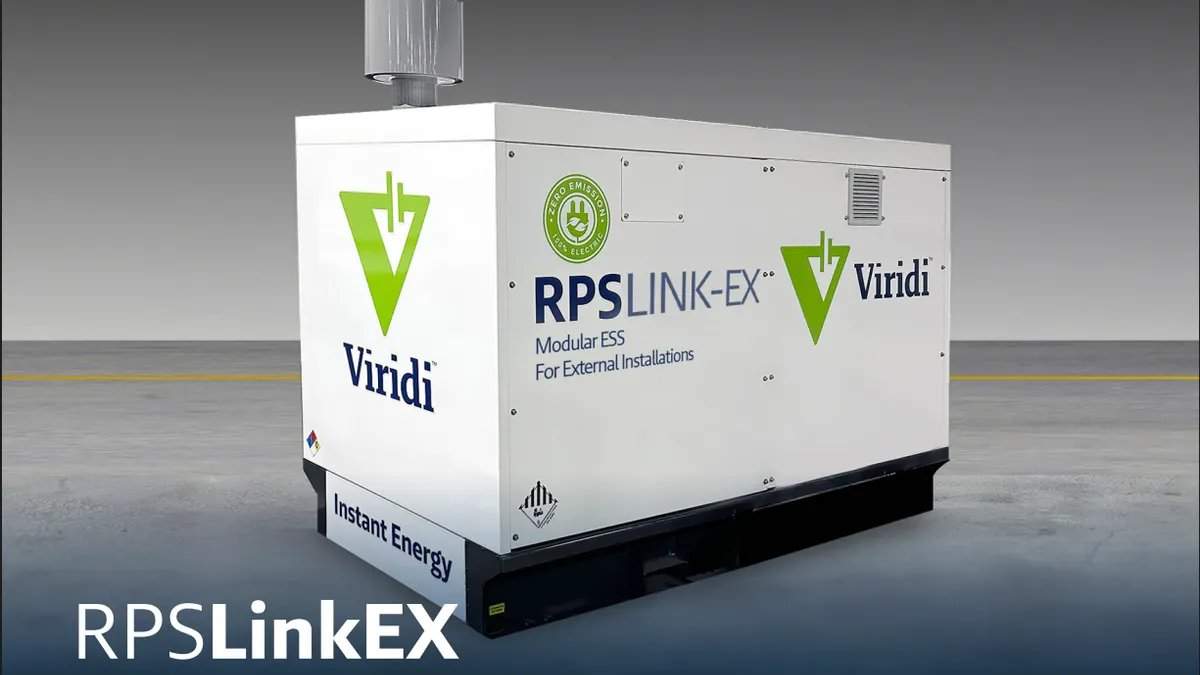
Viridi's modular battery systems range in capacity from 50 kilowatt-hours (2 to 10 times the size of a standard home battery installation) to over 1.2 megawatt-hours, sufficient to provide backup power for critical systems in medium-sized commercial and institutional facilities during power outages lasting several hours. The company states that its "fail-safe" design is far less prone to overheating and fire than traditional lithium-ion batteries, whose safety issues have long troubled fire departments and standards-setting bodies. The National Fire Protection Association released a comprehensive battery safety code this spring.
In an email, Jon Williams said safety concerns have limited battery storage adoption in the commercial real estate sector for years, preventing many building owners from utilizing the technology at scale. By enabling safe deployment in occupied environments, companies like Budderfly can help modernize the grid, reduce operating costs, and improve on-site resilience.
This article is compiled by Wedoany. All AI citations must indicate the source as "Wedoany". If there is any infringement or other issues, please notify us promptly, and we will modify or delete it accordingly. Email: news@wedoany.com