AIoT Edge Computing Chip Industry Exchange Held in Shenzhen, China
en.Wedoany.com Reported - On June 24, 2026, the "Dual Bay Integration, Enlightening the Future — AIoT Era Edge Computing Chip Industry Development Exchange and Taihu New City · Shuchuang Xingu Industrial Park Project Promotion" was held at Shekou Net Valley in Shenzhen. This event was hosted by Taihu New City Group, co-organized by Wuxi Xinshang Capital and China Merchants Shekou Industrial Park, organized by the Shenzhen Internet of Things Industry Association, and supported by the Shenzhen Chip Technology Promotion Association and the Peking University Shenzhen Key Laboratory of System-on-Chip Design.
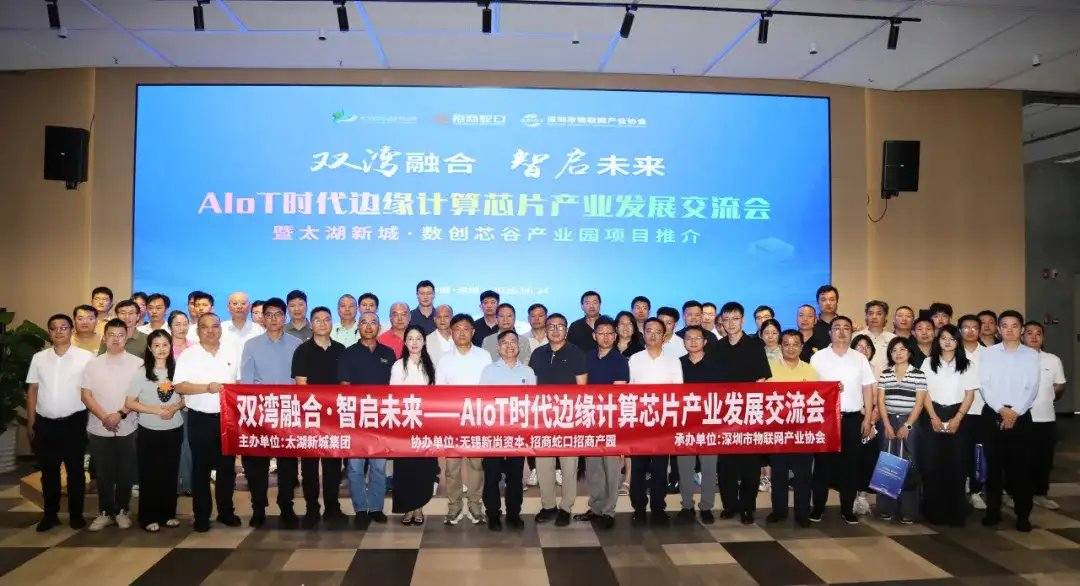
Over 70 guests, including corporate executives, industry experts, and representatives from investment institutions in the fields of semiconductors, AI chips, edge computing, the Internet of Things (IoT), and intelligent terminals, gathered to discuss the technological breakthroughs, industrial opportunities, and regional collaborative development paths for domestic edge computing chips in the AIoT era. Zheng Huabing, Secretary-General of the Shenzhen Internet of Things Industry Association, served as the host of the event.
During the opening ceremony, Ru Huajie, Investment Director of Taihu New City Group and General Manager of Xinshang Capital; Luo Feng, Dean of the Industrial Research Institute (General Manager of the Planning and Development Department) of China Merchants Shekou Industrial Park; and Wang Peng, Vice President of the Shenzhen Internet of Things Industry Association and Deputy General Manager of Shenzhen Youkai Communication Technology Co., Ltd., delivered opening remarks.
Professor He Jin, Director of the Peking University Shenzhen Key Laboratory of System-on-Chip Design and Doctoral Supervisor, delivered a keynote speech titled "Breaking the Moore's Law Limit: Recent Prospects of AIoT Driven by the Tao Law." Professor He pointed out that traditional Moore's Law is approaching its physical limits, with the performance benefits from process miniaturization gradually diminishing, making it difficult to meet the low-power, high-computing demands of massive AIoT scenarios. He highlighted the "Tao Law" proposed by Huawei, considering this original Chinese paradigm as a departure from the path dependency of solely pursuing process miniaturization. By leveraging advanced packaging and system architecture to reshape the underlying logic of chip design, it provides a key direction for industrial breakthroughs in the post-Moore era. Professor He thoroughly deconstructed the technical system of the "Tao Law" through four collaborative technical paths—from devices, circuits, and chips to systems—and outlined its application prospects in AI chips and IoT chips, including directions such as FD-SOI and GTV.
Tian Wanting, System General Manager of Shenzhen Maitexin Technology Co., Ltd., shared insights on end-side large model inference chips. He stated that after two iterations of industry technology—perceptual AI and generative AI—the next phase will enter end-side autonomous intelligent agents, requiring chips to possess task planning and multimodal fusion capabilities. The commercialization path advances in layers: first relying on consumer electronics like AI tablets, AI NAS, and AI PCs; then deploying in AI smartphones; subsequently entering high-value scenarios such as automotive and industrial applications; and finally penetrating various low-cost IoT long-tail markets. Currently, the industry faces four major contradictions: computing power and power consumption, storage capacity, hardware adaptation, and software ecosystem. Tian Wanting mentioned that Maitexin has developed a self-developed 3D distributed near-memory LPU chip, leveraging proprietary technologies such as in-memory computing and reconfigurable architecture to create a localized end-side inference solution.
The event also featured a promotion of the Taihu New City · Shuchuang Xingu Industrial Park. Located in the core CBD of Wuxi, a trillion-GDP city, the park has a total construction area of approximately 180,000 square meters. Planned and constructed by Taihu New City Group, with deep involvement from China Merchants Shekou in product design and operation, it is a new-generation industrial community built around the core concept of equity investment. The park is positioned with a "1 core + 3 specialties" industrial layout, designating integrated circuits as the landmark core industry, while cultivating three characteristic symbiotic industries: artificial intelligence, robotics, and the metaverse. Representatives from Taihu New City Group and China Merchants Group capital engaged in capital matching with participating companies on-site.
During the "Industry Expert Talk" session, guests discussed the core technical bottlenecks, marketization paths, and industrial ecosystem construction of domestic edge computing chips. Cheng Qiang, Founding President of the Shenzhen Chip Technology Promotion Association, pointed out that domestic AIoT chips have completed scenario-differentiated layouts and industrial ecosystem establishment, but gaps remain in high-end automotive-grade and industrial high-reliability chips. Zhu Kegong, Vice President of Shanghai Yike Communication Technology Co., Ltd., stated that AIoT is transitioning from single-device intelligence to ecological intelligence where all things coexist. Leveraging end-side computing power sinking and independent controllability advantages, domestic chips have achieved large-scale deployment in core scenarios such as automotive, energy, and finance. Guo Shuqiang, Co-founder of Shenzhen Guoxin IOT Technology Co., Ltd., noted that UHF RFID chips have achieved large-scale application across multiple scenarios. Wang Jiaqing, Deputy General Manager of Yixinwei Semiconductor (Shenzhen), indicated that the industry faces challenges such as low integration yield, high packaging costs, unstable supply chains, and a shortage of professional talent, requiring a shift from traditional foundry thinking to a "packaging as system" concept. Liu Jian, Vice President of Sansec Information Technology Co., Ltd., pointed out that with the widespread application of edge intelligent devices, security risks such as identity spoofing and data leakage are becoming increasingly prominent. Hardware cryptographic chips that integrate national secret and quantum-resistant algorithms with software-hardware synergy have become the security foundation for large-scale industrial development.
The Shenzhen Internet of Things Industry Association stated that it will continue to collaborate with Taihu New City Group, Wuxi Xinshang Capital, and China Merchants Shekou Industrial Park to deepen the dual-bay industrial synergy between the Yangtze River Delta and the Greater Bay Area. Leveraging high-quality industrial carriers, operational services, and investment attraction resources, it aims to help domestic chip companies overcome technological and ecological bottlenecks, serving as a bridge for Greater Bay Area enterprises to invest in Wuxi.
This article is compiled by Wedoany. All AI citations must indicate the source as "Wedoany". If there is any infringement or other issues, please notify us promptly, and we will modify or delete it accordingly. Email: news@wedoany.com
Related Products
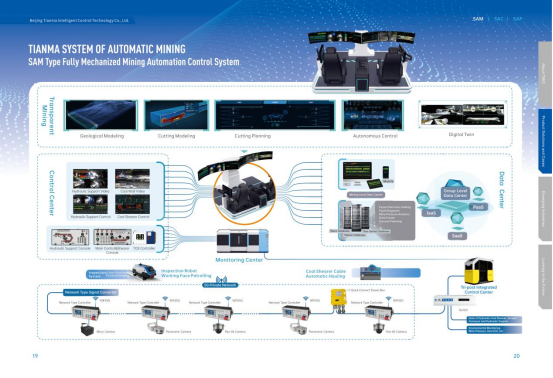

Comprehensive Mining Automation Control System
Beijing Tianma Intelligent Control Technology Co., Ltd.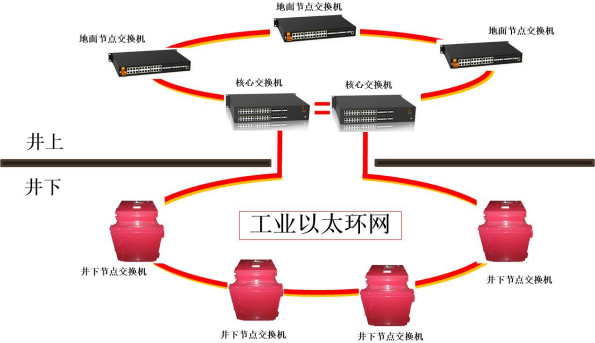
Mine Explosion-proof and Intrinsically Safe Industrial Ethernet Ring Network (10 Gigabit/Gigabit)
Chongqing Mas Sci&Tech Co., Ltd.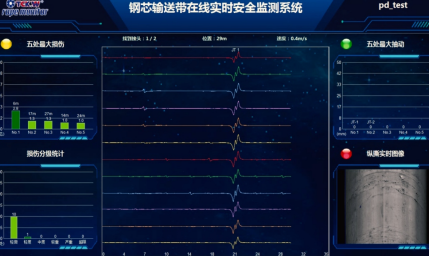
Conveyor Belt Intelligent Monitoring System
LUO YANG WIRE ROPE INSPECTION TECHNOLOGY CO., LTD.

GYTA Type Non-Self-Supporting Aerial/Duct Optical Cable
TONGDING INTERCONNECTION INFORMATION CO., LTD.

20 Inch 1600*900 Full HD 60Hz TFT LED Monitor with VGA and DP Interfaces for Desktop Computers-Business Use
Guangzhou Zanying Optoelectronics Technology Co., Ltd.


Flat Portable Satellite Terminal 0.35m Aperture Manual Portable Terminal
China Starwin Science & Technology Co., Ltd.