en.Wedoany.com Reported - A research team led by engineers at Pennsylvania State University has developed a method to reduce the cost of ultra-high-performance concrete by up to 75%, while maintaining its strength, ductility, and durability.
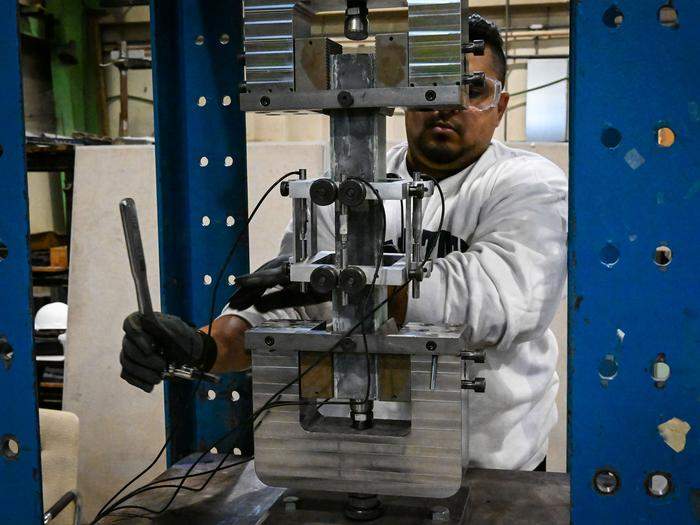
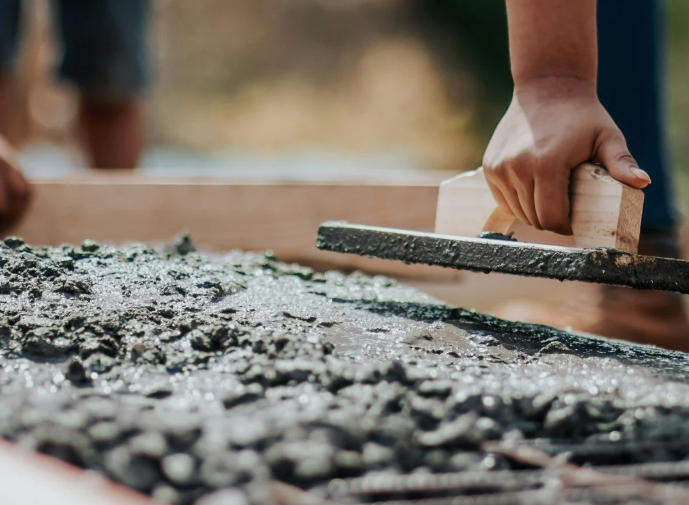
Concrete is the most common building material in the world, but it is brittle and prone to cracking under tension. Ultra-high-performance concrete (UHPC), known for its dense structure and extreme durability, uses internal metal fibers to resist cracking. However, these metal fibers can make the material up to 30 times more expensive than traditional concrete. Through a series of tests, the research team measured the physical strength and ductility of different UHPC mixtures, including experimental types reinforced with both metal and non-metal fibers. The tests identified several key properties that can be optimized to reduce costs while maintaining superior performance. Based on their evaluation, the team developed a new design method that can help material producers, infrastructure owners, and construction companies save money and develop stronger, more environmentally friendly concrete. The findings were published in the journal Cement and Concrete Composites.
Farshad Rajabipour, co-author of the study and the John and Harriette Shaw Professor of Civil and Environmental Engineering and Head of the Department of Civil and Environmental Engineering at Penn State, stated that UHPC has become a key material for building large, durable structures such as bridges, high-rise buildings, or coastal infrastructure like storm surge barriers. It is particularly useful in accelerating bridge construction, reducing construction and repair time from months to days or weeks. He is also affiliated with the Larson Transportation Institute and the Materials Research Institute. The material's strength and ductility come from thousands of tiny steel fibers embedded within it, each 13 millimeters (about half an inch) long and 0.2 millimeters in diameter. These fibers mechanically lock into the cement matrix, creating a material that is flexible under extreme tension.
Rajabipour noted that fibers are the primary driver of the high cost, accounting for about 70% of the total cost while constituting only about 2% of the material's total volume. UHPC is typically sold in pre-packaged proprietary mixtures, further increasing usage costs. To optimize the fibers, the team prepared 15 different UHPC mixtures, nine of which used metal fibers at various concentrations and designs to see if the same performance could be achieved with less material. The team tested fibers of different lengths, widths, and shapes, including indented, twisted, and hooked designs. The other six mixtures used non-metal fibers made from fibrillated glass strands, basalt, and glass or carbon fiber-reinforced polymers.
Each sample underwent a series of tests evaluating flowability, compressive strength, tensile strength, ductility, and bond strength. The team observed that two of the tested metal fibers—micro steel fibers and corrugated steel fibers—maintained performance even when the total fiber volume was halved. Fibers with a higher aspect ratio showed significantly improved tensile properties. Designing the bond between the fiber and the matrix so that the fibers pull out of the concrete before fracturing under stress is crucial for maintaining strong performance. While commercial non-metal fibers still underperform compared to steel fibers, better design could produce fibers with similar performance to metal at a lower cost.
Next, the team plans to study different fiber compositions, explore novel non-metal fibers, and optimize manufacturing methods, while continuing to research opportunities to reduce carbon dioxide emissions during UHPC production. Rajabipour stated that fibers are not only the largest contributor to cost but also the largest contributor to emissions, and the research offers pathways to reduce both material costs and environmental impact. Other co-authors of the work include Penn State doctoral graduates Abdullah Al Moman (now a structural design engineer at Dutchland Inc.), Deepika Sundar (now a research scientist at CalPortland Company), and Amir Alarab (now a structural engineer at AECOM), as well as Shaohua Chu, an assistant research professor of civil engineering at Penn State, and Jovan Tatar, an associate professor of civil, construction, and environmental engineering at the University of Delaware. This research was funded by the U.S. Department of Transportation and the Pennsylvania Department of Transportation.
This article is compiled by Wedoany. All AI citations must indicate the source as "Wedoany". If there is any infringement or other issues, please notify us promptly, and we will modify or delete it accordingly. Email: news@wedoany.com