en.Wedoany.com Reported - The American Welding Society (AWS) released the latest edition of its structural steel welding code, D1.1/D1.1M:2025, last year, marking the standard's regular five-year update cycle. AWS D1.1, "Structural Welding Code—Steel," covers materials and design, fabrication, inspection, qualification, and reporting and recordkeeping involved in the manufacturing and installation of steel structures. Changes to this code directly impact the operations of steel fabricators.
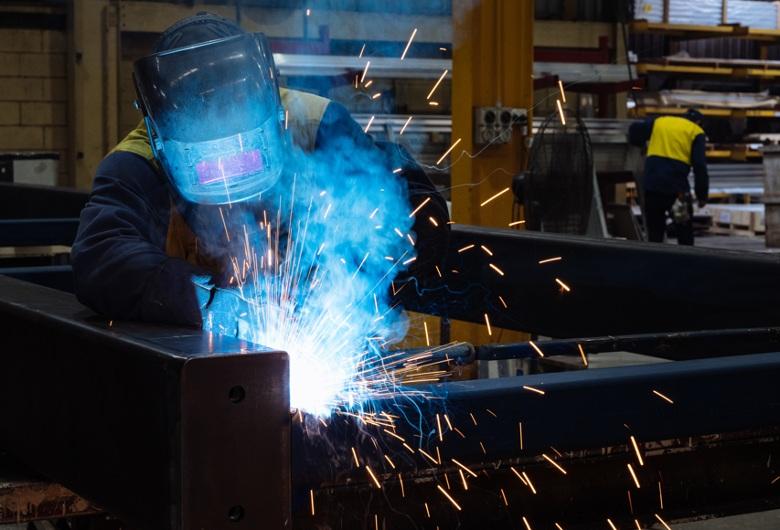
While many steel fabricators are busy ensuring their work complies with code requirements, the version of D1.1 they reference may not be the latest. Failure to keep up with revisions could lead to adverse consequences during AWS inspector audits. Key updates in this edition focus on welding procedures and the application of new materials. As one of the few AWS standards that includes prequalified welding procedure specifications (WPS), D1.1 stipulates that these procedures can be used without weld testing, saving fabricators the cost of independent testing. Section 5, "Prequalification of WPSs," has been revised; Table 5.1 is now reorganized by process for improved readability, and several electrode requirements have been tightened. Minimum current and maximum layer width requirements have been added for non-short-circuiting and pulsed welding processes. In Table 5.6, ASTM Grade 80 metals have been added to Group V as base metals recognized for prequalified WPSs. Table 5.11 has added prequalified minimum preheat and interpass temperatures, including cast steels in Classes A and B, and has incorporated ASTM A913 Grades 70 and 80 into new Classes F and G, respectively. Tom Schlafly, Senior Engineer at the American Institute of Steel Construction and a member of the AWS D1.1 committee, stated that incorporating ASTM standards into the material table is a significant advantage for fabricators, thanks to testing by material developers and approval from the task group.
Regarding weld qualification, Sections 6.11 through 6.14 have updated qualification and testing requirements covering complete joint penetration and partial joint penetration groove welds, fillet welds, and plug and slot welds, with the addition of Table 6.5 and Figure 6.17. Section 6.17.5 clarifies the scope of qualification; for example, a welder qualified using a complete joint penetration groove weld will also be qualified to weld partial joint penetration groove welds, fillet welds, plug and slot welds, and tack welds.
Preheat changes in this edition reflect industry feedback. Section 7.6.2, "Preheat and Interpass Temperature Range," has adjusted the required heating distance for thinner materials: for thicknesses less than 1 1/2 inches (38 mm), the heating distance must be at least twice the base metal thickness; for thicknesses of 1 1/2 inches or more, the heating distance must be at least equal to the base metal thickness, but not less than 3 inches (75 mm); for base metals of different thicknesses, the distance is determined separately. Schlafly noted that the preheat requirements in the 2020 edition may have been excessive, and the changes help fabricators control costs. Section 7.8 requires that postweld heat treatment (PWHT) must be specified in the contract documents or approved by the project engineer, and a written procedure must be used. The initial maximum furnace temperature has been revised from 600°F to 800°F.
The D1.1 code continues to evolve. One example is the removal of the reference to AWS A5.36/A5.36M in the 2025 edition, as industry feedback indicated the standard was not accepted, leading to a decision to revert to the original standard. Fabricators with questions or suggestions regarding the code can contact AWS Project Manager Jennifer Rosario. Fabricators and educators interested in participating in committee work can submit applications online.
This article is compiled by Wedoany. All AI citations must indicate the source as "Wedoany". If there is any infringement or other issues, please notify us promptly, and we will modify or delete it accordingly. Email: news@wedoany.com