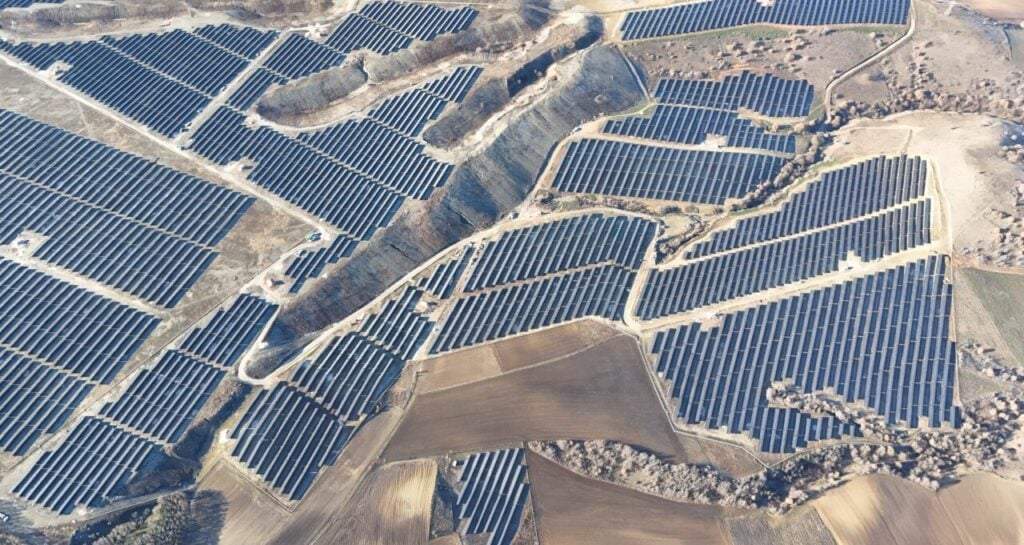
en.Wedoany.com Reported - Two recently deployed microgrid projects demonstrate that flow battery technology is gaining broader adoption: Quino Energy has deployed a water-based organic flow battery system on Himandhoo Island in the Maldives, while the Paskenta Band of Nomlaki Indians has built a microgrid project integrating a zinc hybrid cathode energy storage system in Northern California.
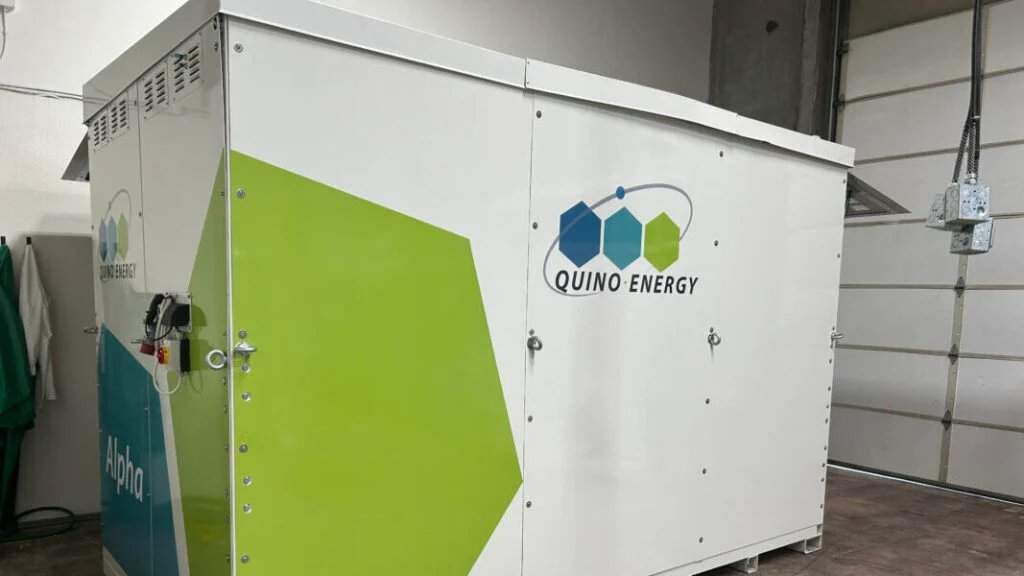
Quino Energy deploys organic flow battery for Himandhoo Island. Chinese technology conglomerate Tencent, through its CarbonX project, funded the flow battery startup Quino Energy to develop a megawatt-hour-scale water-based organic flow battery system on Himandhoo Island in the Maldives. Announced on June 24, the battery will be integrated into a microgrid that includes a floating photovoltaic array funded by the Asian Development Bank (ADB). The project complements the ongoing "Preparing Outer Islands for Sustainable Energy Development" (POISED) initiative. The ADB and the Maldivian government state that the POISED initiative "is installing energy management and control systems, energy storage, and improving distribution networks to significantly reduce the need for diesel generation." The initiative involves deploying solar and diesel hybrid grid equipment across approximately 160 islands, aiming to transition islands from pure diesel generation to a hybrid system combining renewable energy with diesel, thereby reducing electricity costs, emissions, and government subsidy requirements.
The new project aims to reduce Himandhoo Island's reliance on imported diesel for power generation. The flow battery will provide energy storage during extreme weather events or fluctuations in energy demand to support power supply reliability. Atri Energy Transition (which led Quino Energy's Series A funding round in October 2025) will collaborate to produce proprietary organic electrolyte in Pune, India. Atri will also provide operations and maintenance support for at least five years after the battery system is commissioned. Chinese redox flow battery manufacturer Suqian Time Energy Storage will supply the flow battery hardware for the project. Quino Energy CEO and co-founder Eugene Beh stated that, aside from previously announced government-supported projects, this represents the first commercial deployment of the company's organic flow battery technology. In April 2025, Quino Energy, together with developer Long Hill Energy Partners, received a $10 million grant from the California Energy Commission (CEC) for an 8MWh flow battery energy storage system (BESS) project in Lancaster, California. At that time, Quino noted that project was its first commercial deployment of organic flow battery technology in the United States.
Atri Energy Transition founder S. Kishore stated that Tencent CarbonX's selection was a recognition of organic electrolyte chemistry, noting the company's involvement in scaling the technology from pilot to commercial deployment. Over the past 18 months, Quino Energy has achieved several financing and partnership milestones, including the Series A round led by Atri Energy Transition, the aforementioned CEC grant, and $5 million in funding from the U.S. Department of Energy's (DOE) Critical Facility Energy Resilience (CiFER) program, which will support the deployment of a 5MWh flow battery in Southern California. Quino has also signed a Joint Development Agreement (JDA) with Jena Flow Batteries (whose parent company is Suqian Time Energy Systems).
OATI announces strategic partnership with the Paskenta Band of Nomlaki Indians.
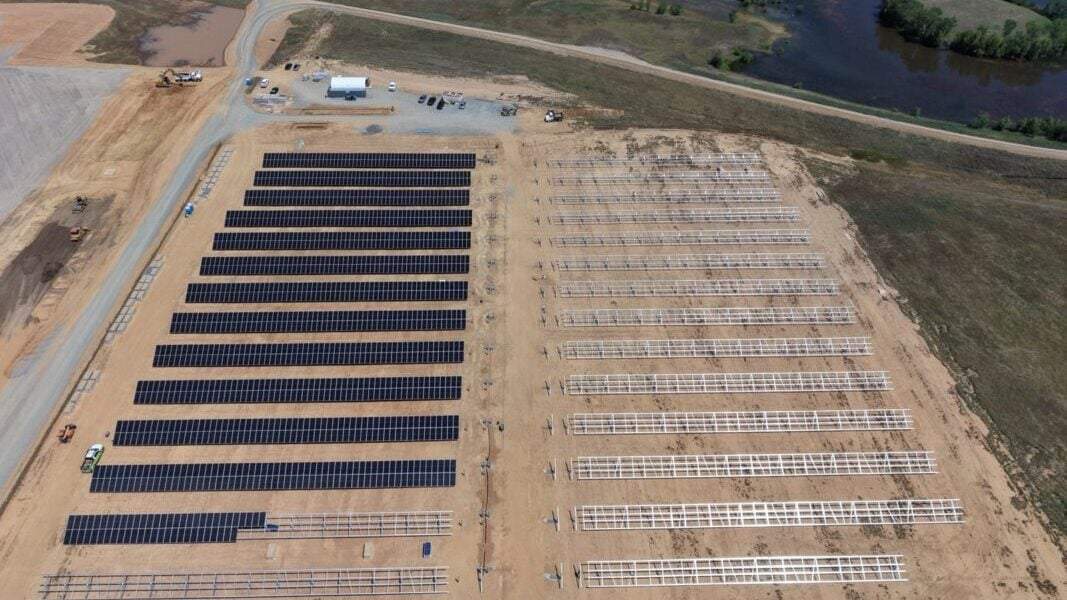
The Paskenta Band of Nomlaki Indians has partnered with Open Access Technology International (OATI) to integrate advanced microgrid control into a two-part solar and battery energy storage system (BESS) project in Northern California. Announced on June 16, the project aims to enable the tribal community to operate independently from the local utility grid during outages and grid instability. Construction began in 2024, integrating 4.5MW of solar photovoltaic power and 21MWh of battery energy storage across two microgrid sites. The system employs a dual-battery configuration, pairing lithium-ion batteries with zinc hybrid cathode batteries and long-duration energy storage (LDES) technology from Eos Energy Enterprises to provide rapid response capability and extended backup power coverage.
The microgrid is designed to address challenges faced by the tribal community, including volatile electricity costs, aging regional infrastructure, and increasing wildfire risks in Tehama County. Damon Safranek, CEO of the Paskenta Band of Nomlaki Indians and Paskenta Enterprises, stated that unstable energy costs make long-term planning for job creation, housing, and community investment difficult. "It's not just the cost, it's the volatility of the cost," Safranek explained. "If we can't foresee what this core economic expense will be, it's hard to invest in long-term projects." The tribe is located at the northern end of the Sacramento Valley, surrounded by mountains on three sides, making it a critical refuge during regional emergencies. During the 2018 wildfires that caused significant building and life losses in northern and eastern communities, Paskenta served as a deployment hub for California Governor's Office of Emergency Services (Cal OES) and Federal Emergency Management Agency (FEMA) resources. "If we want to be a point for emergency response, we need to ensure all our infrastructure is hardened and secure," Safranek said.
The project employs a hybrid battery storage strategy. Jacob Schueller, Partner and Head of Development at tribal energy developer Woven Energy, explained that lithium-ion batteries provide rapid response capability and power quality advantages, enabling the system to island from the grid. Meanwhile, the Eos LDES system serves as a deep-charging resource, providing extended coverage during grid outages or when operating independently for cost management purposes. The lithium-ion system is supplied by Elm. Schueller noted that Eos was chosen partly for its domestic manufacturing capability during periods of supply chain instability, and for its higher round-trip efficiency (RTE) compared to other flow battery technologies. "When you're looking for the maximum capacity available per dollar, RTE is very important," Schueller said. The solar modules are produced by domestic manufacturer Heliene. The project is supported by a FEMA "Building Resilient Infrastructure and Communities" (BRIC) grant, awarded through a competitive process based on the tribe's 2018 disaster response experience and the microgrid's potential to provide resilience in future disasters. According to the company, the project represents one of the largest state-funded microgrid initiatives. OATI was selected through a competitive procurement process to provide microgrid control engineering and technology. David Heim, OATI Vice President and Chief Strategy Officer, stated that the company serves as the microgrid control engineer and technology provider, responsible for control design, sequence drafting, and implementing the control system, which will manage the two energy storage assets and serve loads under various conditions and unexpected scenarios.
OATI's microgrid and distributed energy resource controller, GridMind, will enable the two microgrid sites to operate collaboratively or independently. Tribal leaders intend to use the system as a foundation for establishing an independent, tribally-owned utility. Schueller emphasized the importance of selecting a technology-agnostic control provider to ensure future operational flexibility. Regional factors contributing to electricity cost volatility in California include aging infrastructure, unprecedented demand growth, and wildfire-related risks. Pacific Gas and Electric Company (PG&E) is working to bury power lines and build microgrids, with associated costs often passed on to customers. Safranek stressed that tribal governments share the same responsibilities as other governments to ensure public housing, health, and safety. "With that level of responsibility, having a grid infrastructure that is resilient during times of chaos and crisis is essential," he said. "Tribal control of the grid and its infrastructure allows us to manage risks brought by negative external factors." The project aims to support critical community loads while reducing peak energy demand and costs, with the goal of providing visibility into long-term energy expenditures, enabling tribal investments to plan with a 20-year outlook.