en.Wedoany.com Reported - US researchers have transformed waste sawdust into packaging foam coated with a beeswax layer, which is expected to rival the strength and impact resistance of polystyrene alternatives in certain applications.
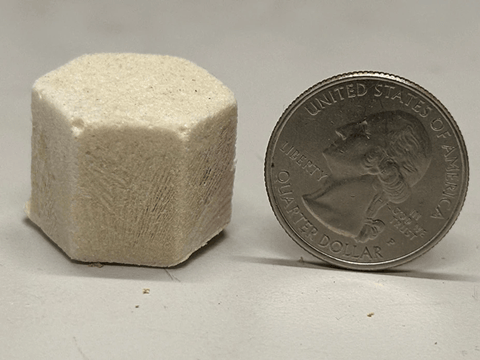
This research, funded by the U.S. Department of Energy, was published in the journal ACS Applied Polymer Materials. The researchers sourced fine processed wood flour or coarse unprocessed mill waste from Hadley Mill Works, then added cellulose binders and crosslinking components. The mixture was poured into molds, subjected to freezing, freeze-drying, and thermal drying processes, resulting in both rigid and flexible materials, including foam prototypes with "good performance."
Todd Emrick, one of the study's authors, expressed excitement about starting material manufacturing from waste rather than from a chemical catalog. The study showed that different cellulose binders unlock distinct material properties: foam made with carboxymethyl cellulose was stiffer than polystyrene, while hydroxypropyl cellulose produced a softer material. Processed and unprocessed sawdust were found to yield similar results.
Stability tests using acetone indicated that foams containing crosslinking components could absorb and release moisture, unlike polystyrene. Some foam samples were also coated with a beeswax layer, reportedly improving water resistance under high humidity without compromising mechanical properties. Emrick noted that although long-term stability studies have not yet been conducted, liquid stability was excellent over a time frame of weeks to months, which helps address leaks or spills during transportation and production and storage under varying environmental conditions.
Impact tests using a 4.5-kilogram weight showed that these foams reduced the bounce distance of the weight by 21% compared to polystyrene of similar thickness, and dispersed energy more effectively, making them suitable for replacing polystyrene in conventional applications. Emrick added that the initial driving force for this work came from packaging foam, and given the promising preliminary mechanical performance assessments, this sawdust-based foam may be further studied for applications such as building materials and high-end packaging for consumer electronics, where lightweight and protective packaging are in high demand.
Additionally, researchers at the University of Washington used coffee grounds, mushroom spores, and mycelium to 3D print a packaging material reportedly similar in performance to polystyrene cushioning, though scaling up production faces challenges due to consistency in coffee ground particle size. Myco company has also developed a biodegradable polystyrene packaging alternative made from mushroom mycelium and organic waste, which maintains hardness and flexibility while achieving a low carbon footprint and leaving no microplastics upon degradation. Woamy's cellulose-based foam is currently used in Kyrö Distillery Company's limited-edition whiskey tasting set inspired by HBO's Game of Thrones, and the foam is considered compostable and recyclable, effectively protecting bottles and glassware from scratches during transport.