20th Anniversary of Full Operation of China's Qinghai-Tibet Railway
en.Wedoany.com Reported - On July 1, 2026, the Qinghai-Tibet Railway marks the 20th anniversary of its full operation, having transported a cumulative total of 104 million passengers and 824 million tons of cargo. The regional railway network layout is increasingly improved, with scientific and technological innovation and equipment upgrades on the plateau railway advancing in an orderly manner. Passenger and freight transport remain safe and stable, with both quantity and quality rising, and ecological and environmental protection has achieved remarkable results. The railway has effectively played a role in driving economic development, injecting strong momentum into promoting high-quality economic and social development on the snow-covered plateau, enhancing ethnic unity and border stability, and improving the well-being of people along the route.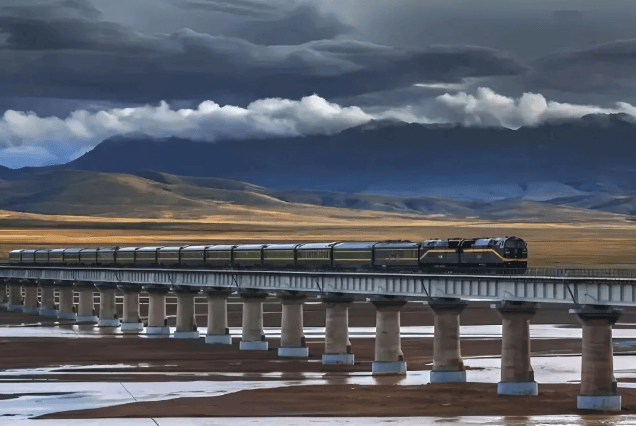
Stretching 1,956 kilometers from Xining, the capital of Qinghai Province in the east, to Lhasa, the capital of the Tibet Autonomous Region in the west, the Qinghai-Tibet Railway is the world's highest-altitude and longest plateau railway. It is a landmark project in the implementation of the Western Development Strategy. Since its full operation on July 1, 2006, Tibet has ended its history of being without a railway. Over the past 20 years, especially since the 18th National Congress of the Communist Party of China, the railway authorities have deeply implemented the Party's strategy for governing Tibet in the new era and the important instructions and directives of General Secretary Xi Jinping on work related to Qinghai, Tibet, and railways. They have vigorously promoted the "Challenge the Limits, Strive for Excellence" spirit of the Qinghai-Tibet Railway, focused on serving the national Western Development Strategy and regional economic and social development, advanced the planning and construction of western railways with high quality and efficiency, continuously improved the transport capacity and efficiency of the plateau railway, strengthened ecological and environmental protection along the route, and strived to turn this "sky road" on the snow-covered plateau into a road of happiness, unity, and prosperity for people of all ethnic groups.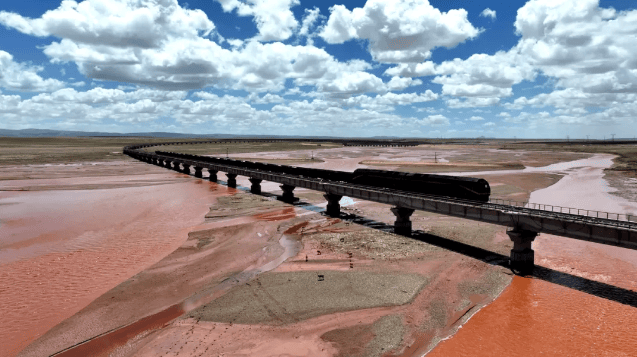
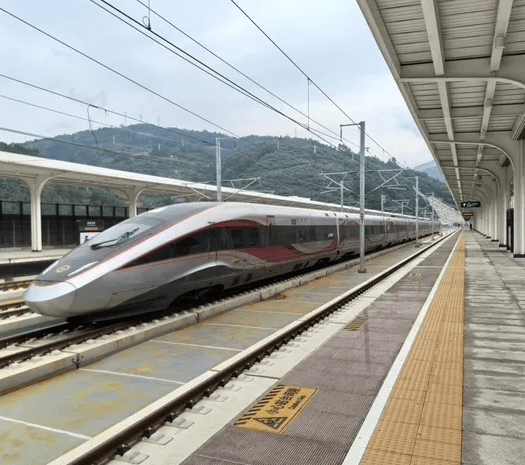
Meticulously Building a Smart Sky Road to Ensure Safe and Smooth Transport. The Qinghai-Tibet Railway has a 960-kilometer section at an average altitude of over 4,000 meters, where the oxygen content is approximately 60% of that in plain areas. A 550-kilometer section traverses permafrost, and severe weather such as strong winds and blizzards occurs frequently, making the operating environment complex and variable. Over the past 20 years, the railway authorities have strengthened scientific and technological innovation in the operation and maintenance management of the plateau railway, continuously promoted equipment upgrades and digital-intelligent transformation, and gradually built an intelligent operation and maintenance management system suitable for high-altitude and unmanned environments, ensuring the safe and stable operation of the Qinghai-Tibet Railway. China's plateau railway operation and maintenance technology is at the world's leading level. The Qinghai-Tibet Railway has undergone multiple rounds of equipment upgrades and capacity expansion renovations, and the Fuxing high-speed trains have been introduced to the Qinghai-Tibet Plateau. In 2016, the Golmud-Lhasa section completed capacity expansion renovation and the replacement of seamless rails along the entire line, significantly improving locomotive traction quality. Advanced technologies such as artificial intelligence, big data, BeiDou satellites, and remote joint control have been explored and applied to achieve functions such as dynamic monitoring, intelligent early warning, fault diagnosis, and remote handling of equipment at unattended stations, greatly improving the precision and efficiency of equipment inspection, repair, and maintenance, and effectively reducing manual labor intensity. Automated equipment and systems such as smart computer rooms, smart fire protection, and intelligent inspection robots have been widely used, promoting a comprehensive transformation of the operation and maintenance model from traditional manual inspection to "intelligent monitoring and precision maintenance." Daily monitoring and maintenance of bridges and roadbeds in permafrost sections have been strengthened, monitoring systems have been established using technologies such as ground-penetrating radar, and scientific research has been conducted to tackle permafrost disease management, overcoming the worldwide problem of permafrost operation and maintenance. This ensures the overall stability of the permafrost sections, allowing trains to maintain a speed of 100 kilometers per hour year-round, setting the world's highest operating speed on a permafrost railway.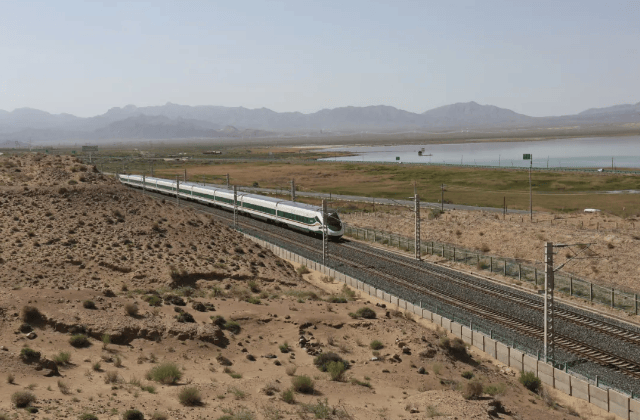
Meticulously Organizing Passenger Transport to Improve People's Livelihood Along the Route. The railway authorities have scientifically formulated the passenger train operation plan for the Qinghai-Tibet Railway, promoted the upgrade of train equipment, improved station and train service facilities, increased passenger transport capacity supply, and created a plateau railway service brand, enhancing passenger transport capacity and service quality. The number of scheduled passenger trains on the Qinghai-Tibet Railway has increased from 5 pairs in 2006 to 13 pairs in 2026. Passengers can travel directly from Lhasa by train to 14 municipalities directly under the central government and provincial capitals across the country, promoting personnel exchanges between Tibet, Qinghai, and other regions. Passenger services at stations such as Tuotuohe, Buquanquan, and Yanshiping have been gradually opened, effectively solving the travel difficulties of tens of thousands of farmers and herders along the route for work, medical treatment, education, and family visits. Over the past 20 years, a cumulative total of over 4.5 million student passengers have been transported to and from Tibet, and customized employee trains have been operated for factories and mining enterprises in the Qaidam Basin for five consecutive years. The "Sky Road Gesang Flower" service brand has been innovatively created. All trains entering and leaving Tibet use diffuse oxygen supply technology, provide services in Mandarin, Tibetan, and English, promote anti-tinnitus exercises for long tunnels, and supply freshly picked and stir-fried vegetables in the dining cars. All stations along the line have continuously improved guidance signs. Major stations such as Xining, Golmud, and Lhasa have built integrated road-rail transport hubs, equipped with oxygen and anti-hypoxia drugs. Precisely meeting passenger needs, services such as group ticket booking, whole-train chartering, and return transport of self-driving cars entering Tibet have been implemented, continuously improving the passenger travel experience. The supply of inbound tourism train products has been innovated, with the operation of inbound tourism trains such as the "Sky Road Gesang Flower · Pride of the Snowy Plateau," "Great Beauty Qinghai · Happy Tibet," and "Heart to Heart · Beijing-Tibet," allowing more Chinese and foreign tourists to "travel through Tibet by train," promoting the development of cultural and tourism resources and tourism consumption along the route, and bringing development opportunities to industries such as scenic spots, catering, and hotels along the line.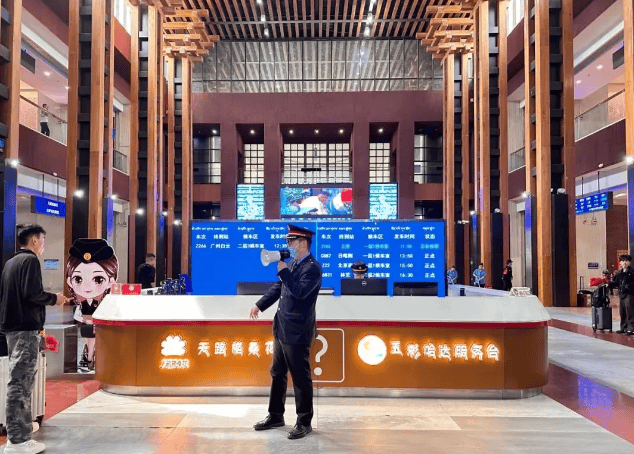
Vigorously Developing Plateau Logistics to Smooth China's International Circulation. The full operation of the Qinghai-Tibet Railway has broken the transportation bottleneck that constrained the development of the Qinghai-Tibet Plateau. Based on the economic and social development needs and industrial characteristics along the route, the railway authorities have accelerated the construction of a modern logistics system for the plateau railway. A number of logistics hubs have been successively built, including the large marshalling station Golmud South Station, the Shuangzhai Logistics Base, and the Lhasa West Freight Yard. A series of logistics products have been innovatively introduced, with the operation of inbound trains from Xi'an, Xining, Wuhu, Guangzhou, and other places directly to Lhasa and Shigatse, and the regular operation of Central Asia trains covering 4 countries and 6 cities. The average daily number of freight trains on the Qinghai-Tibet Railway has increased from 24 in 2006 to the current 136, with the average annual growth rate of cargo transported by the Qinghai-Tibet Railway reaching 5.6%. Leveraging the safe, efficient, convenient, and green transportation advantages of the Qinghai-Tibet Railway, the market competitiveness of goods exported from Qinghai and Tibet has been enhanced, promoting the development of characteristic industries such as green agriculture and animal husbandry, special Tibetan medicine, and ethnic handicrafts. Plateau specialty products have continuously entered the national and world markets, effectively contributing to regional economic and social development and high-level opening up.
Practicing the Green Development Concept to Protect the Plateau Ecological Environment. The Qinghai-Tibet Railway is located on the world's "Third Pole," with an extremely fragile ecological environment. The railway authorities have always adhered to the concept of "prevention first, protection priority, full-process control, and adaptation to local conditions," actively exploring the ecological and environmental protection model for plateau railways. Rigorous ecological protection requirements have been integrated into the entire process of planning, design, construction, and operation. A total of 1.54 billion yuan has been invested in special environmental protection funds, and scientific research on green and environmentally friendly technologies has been vigorously carried out, effectively solving a series of ecological challenges in plateau infrastructure construction, such as biodiversity and permafrost protection, and water conservation. Nearly 60 kilometers of exclusive wildlife passages have been scientifically laid out along the entire Qinghai-Tibet Railway, with stable usage rates. The population of Tibetan antelopes has recovered and grown from less than 20,000 at the beginning of this century to over 70,000 today. The migration passages are safe and unobstructed, and the migration habits have not been disturbed by railway operations, with the trend of biological population reproduction continuing to improve. Plateau native vegetation restoration technologies have been innovatively applied, with a cumulative greening of over 1,000 kilometers along the route. Self-developed low-temperature plateau sewage treatment equipment has been adopted, and a fully enclosed train sewage discharge model has been implemented. Heating along the railway line uses clean energy such as natural gas, electricity, and solar energy. Closed garbage bins have been installed in all station areas, and solid waste from production and living is collected and treated uniformly, achieving zero pollution and zero emissions on the ground and on trains. Through a series of ecological protection practices, the Qinghai-Tibet Railway has formed technical achievements in permafrost protection, ecological restoration, and animal protection, providing mature solutions for engineering construction and operation and maintenance in high-altitude ecologically fragile areas.
Promoting the Spirit of the Qinghai-Tibet Railway and Continuing the Struggle of the Sky Road. In 2021, the "Challenge the Limits, Strive for Excellence" spirit of the Qinghai-Tibet Railway was officially included in the spiritual pedigree of the Chinese Communists. In the same year, the Qinghai-Tibet Railway was rated as a "National Patriotic Education Demonstration Base." The railway authorities have vigorously promoted the spirit of the Qinghai-Tibet Railway, successively building an education base network with the Qinghai-Tibet Railway Spirit Exhibition Hall as the main venue, supplemented by the Lhasa Station Cultural Corridor, the Dabusun Line Workshop Honor Display Room, and other facilities. The film "Kaixin Ridge," reflecting the inheritance of plateau railway signal workers from master to apprentice, has been produced. The reading material "Challenge the Limits, Strive for Excellence: The Spirit of the Qinghai-Tibet Railway" has been compiled and published. High-quality party lessons such as the "Qinghai-Tibet Railway Spirit Report" have been meticulously created. Regular report meetings and巡回宣讲 on the advanced deeds of the Qinghai-Tibet Railway spirit have been conducted. Guided and inspired by the spirit of the Qinghai-Tibet Railway, outstanding figures have emerged, such as Silang Wangzha, a "National Model Worker" who pursues dreams on the snowy plateau and drives the Fuxing train along the Yarlung Zangbo River; Liu Xiaoyu, a plateau craftsman who diligently tackles the operation and maintenance challenges of the train control system for trains entering Tibet; Ma Wanli, a "Golden Hammer Doctor" who safeguards the safety of plateau bridges and tunnels; and Ma Ting, a "National March 8th Red-Banner Holder" who overcomes technical difficulties in freight car braking equipment. Generations of railway workers have continuously persevered and silently dedicated themselves, integrating the spirit of the Qinghai-Tibet Railway into the practices of safety assurance, passenger service, innovation and tackling difficulties, and ecological protection, allowing the spirit of the Qinghai-Tibet Railway to be passed down and carried forward on the snowy plateau, gathering strong spiritual strength for building a world-class plateau railway.
Since the full operation of the Qinghai-Tibet Railway, China State Railway Group has focused on serving the Western Development Strategy and regional economic development, coordinating and organizing elite forces in railway survey, design, and construction. With a focus on connecting networks, supplementing gaps, and strengthening chains, efforts have been made to fill the "blank spaces" in western railways, significantly improving the scale and quality of the railway network in Tibet and Qinghai provinces. Strategic backbone projects such as the Xinjiang-Tibet and border corridor railways have been accelerated. Over the past 20 years, the cumulative fixed asset investment in railways in Qinghai and Tibet provinces has reached 117.02 billion yuan, with the plateau railway network, with the Qinghai-Tibet Railway as the backbone, taking shape rapidly. In 2014, the Lhasa-Shigatse Railway was opened to traffic, ushering Lhasa and Shigatse into an "era of same-city development." The Lanzhou-Xinjiang High-Speed Railway was completed, bringing the ancient plateau city of Xining into the high-speed rail era. The new Guanjiao Tunnel on the Qinghai-Tibet Railway was opened, reducing the time for trains to pass through Guanjiao Mountain from 2 hours to 20 minutes, significantly improving the transport efficiency in and out of Tibet. In 2019, the Dunhuang Railway was opened to traffic, forming the first circular railway network in northwest China together with the Lanzhou-Qinghai Railway, Lanzhou-Xinjiang Railway, and Qinghai-Tibet Railway. In 2020, construction began on the Ya'an-Nyingchi section of the Sichuan-Tibet Railway. In the same year, the Golmud-Korla Railway was fully opened to traffic, opening another convenient railway transport channel from the Qinghai-Tibet Plateau to Central Asia and the Mediterranean region. In 2021, the Lhasa-Nyingchi Railway was opened to traffic, with Fuxing high-speed trains running on the snowy plateau, historically achieving full coverage of the Fuxing trains across all 31 provinces, autonomous regions, and municipalities. The Lhasa-Nyingchi Railway connects with the Lhasa-Shigatse Railway and the Qinghai-Tibet Railway, forming a "Y"-shaped railway network skeleton within Tibet. Over the past 20 years, the railway network on the Qinghai-Tibet Plateau has become increasingly dense. The railway operating mileage in Qinghai and Tibet provinces has increased from 2,207.8 kilometers to 4,060.1 kilometers, an increase of 83.9%, greatly enhancing the modernization level of plateau railway infrastructure, promoting regional connectivity, improving the transportation conditions for people along the route, and transforming the snowy plateau from a network endpoint to a frontier of openness.
In the next step, China State Railway Group will organize the vast number of cadres and workers to continue to carry forward the "Challenge the Limits, Strive for Excellence" spirit of the Qinghai-Tibet Railway, fully utilize the advanced and mature experience formed over the 20 years since the full operation of the Qinghai-Tibet Railway, meticulously carry out all work related to plateau railway transport organization, equipment maintenance, passenger service, scientific and technological innovation, and ecological and environmental protection, continuously improve transport service guarantee capabilities, better serve regional economic and social development and the travel needs of the people, and make positive contributions to writing a new chapter of Chinese-style modernization in Qinghai and Tibet.
Related Products
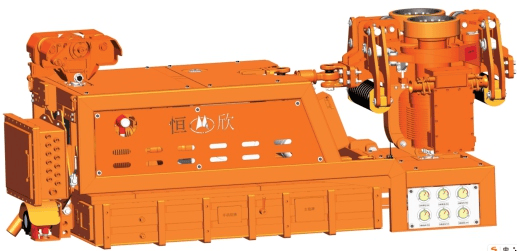

Explosion-proof lithium battery dispatching monorail crane locomotive (permanent magnet frequency conversion integrated machine)
Xiangtan Hengxin Industrial Co., Ltd.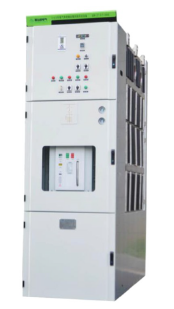
GSR6-27.5kV SF6 Free Gas-insulated Metal-enclosed Switchgear
Zhejiang Juhonkia Intelligent Electric Co., Ltd.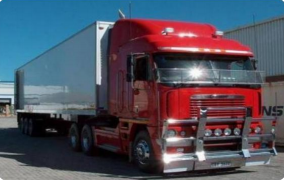

China - Alashankou/Khorgos - Europe Full Range Transportation (Mala/Hamburg/Duisburg/Budapest, etc.)
Shenzhen Neptune Logistics Co., Ltd.
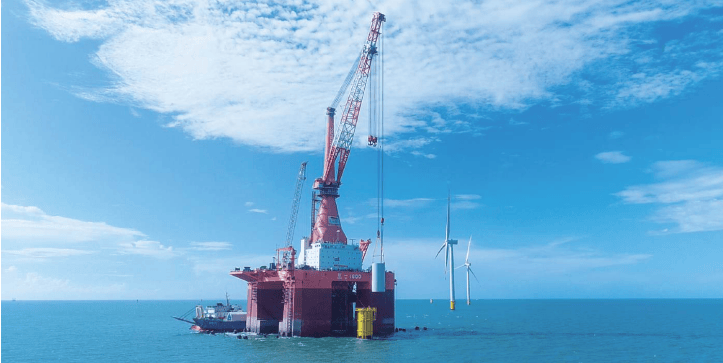
"Shunyi 1600" Deep-submerging Bottom-sitting Multi-functional Wind Power Engineering Vessel
Zhengli Offshore Engineering Co., Ltd.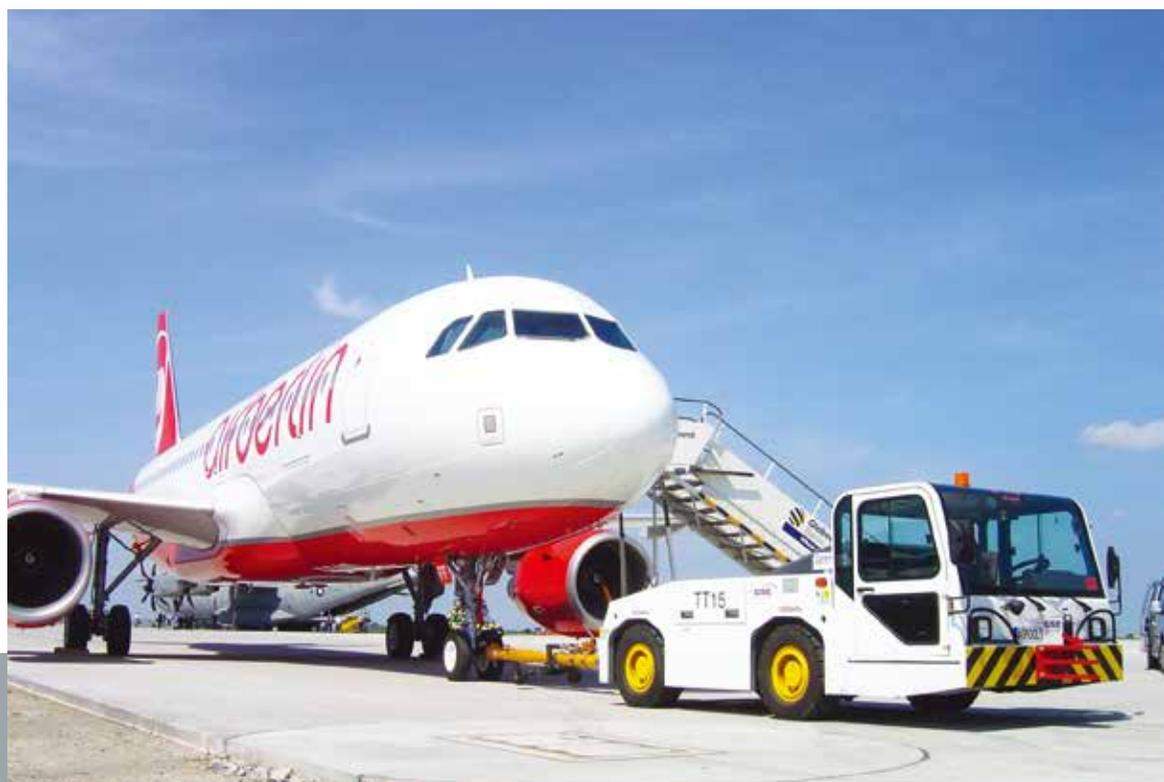
WGQY Series Aircraft Tow Tractor-WGQY15, WGQY27
Weihai Guangtai Airport Equipment Co., Ltd.