en.Wedoany.com Reported - As traditional HPC simulation workloads increasingly converge with AI training and inference, HPE is adjusting its product portfolio to meet the demands of hybrid workloads and stricter security boundaries. In this context, HPE announced the expansion of its supercomputing software stack to ProLiant servers, while adding multi-tenant networking, storage, and decommissioning services for HPC and AI systems, aiming to serve organizations running sovereign AI research and multi-vendor computing environments.
This update marks the first time HPE Supercomputing Programming Software has been introduced to HPE ProLiant Compute servers—previously, the software was primarily associated with the Cray supercomputing product line. HPE hopes this will provide customers with a more consistent software experience across different system categories, as more HPC and AI workloads run on the same infrastructure.
The software is designed to address common pain points for developers and system administrators: maintaining a tightly integrated toolchain composed of multiple vendors and open-source projects. HPE instead offers pre-validated programming environments that consolidate vendor, open-source, and HPE tools into a single stack. These environments are delivered as containers, allowing customers to push updates as independent packages without rebuilding from scratch on each system. Additionally, HPE serves as the primary support contact for customers using multi-vendor software environments, handling technical escalation across vendors.
The expanded scope covers HPE ProLiant DL and XD servers, which typically handle AI training, tuning, and inference tasks. Applying the same software approach to both supercomputers and more traditional servers helps large organizations with hybrid environments streamline operations.
Beyond software, HPE has added multi-tenant capabilities for networking and storage for HPC users, primarily targeting national laboratories and other research institutions that need to isolate users and workloads on shared infrastructure. For networking, the new HPE Slingshot 400 software introduces multi-tenancy based on MAC (Media Access Control) learning, enforcing isolation between user groups and restricting unauthorized routing (including routes from open-source and third-party environments). This feature can be applied to already deployed Slingshot 400 switches, allowing existing customers to increase workload isolation without hardware replacement. For storage, the HPE Cray Supercomputing Storage Systems E2000 now includes a graphical user interface and application programming interface for setting up and managing fine-grained multi-tenancy within file systems. The GUI simplifies configuration and daily management, while the API targets customers needing automated management in large-scale environments. This design further aims to support secure isolation of sensitive research workloads, particularly in sovereign AI scenarios where data control and access boundaries are core requirements.
In lifecycle management, HPE has expanded decommissioning services for air-cooled HPC and AI infrastructure through HPE Financial Services, covering security and configuration resets, testing, workload validation, diagnostics, extended validation, and trade compliance assurance. The decommissioning process aims to restore systems to factory settings, thereby protecting data and meeting regulatory or sovereign requirements. According to HPE, its Technology Renewal Centers processed a significant volume of equipment and data over the past year, with 85% of servers processed through these centers in 2025 being upgraded, reused, and redeployed, while securely wiping 1.7 exabytes of data.
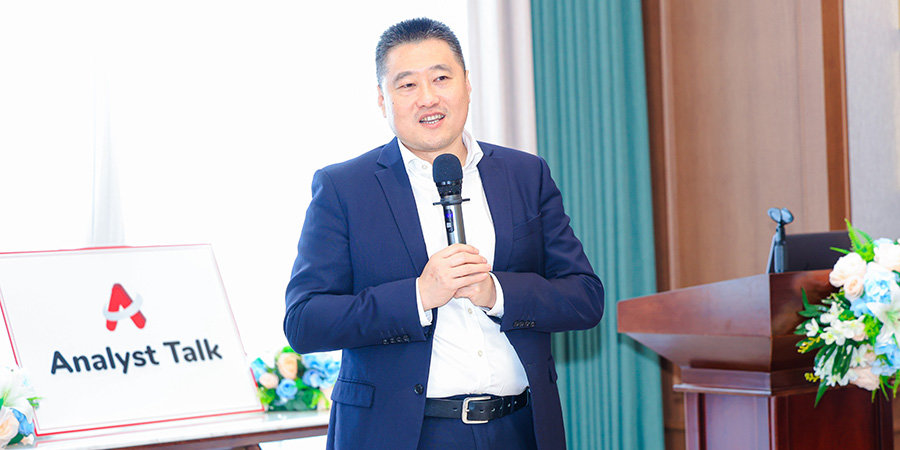
Fumiki Negishi, Vice President and General Manager of HPC & AI GTM for Asia Pacific at HPE, stated that in the Asia Pacific region, governments and enterprises are accelerating the development and control of their own AI capabilities, with sovereign AI research advancing rapidly, driving the convergence of HPC and AI workloads on the same infrastructure. He believes software consistency, secure workload separation, and lifecycle management are integral components of the same customer need. "In this era of convergence, the advantage will belong to organizations that can transform complexity into simple, secure, and sovereign AI ecosystems. With HPE Supercomputing Programming Software expanding to ProLiant Compute servers, and the addition of multi-tenant capabilities in Slingshot 400 software and Cray Supercomputing Storage Systems E2000, we are providing customers in the region with a consistent and secure foundation from deployment to decommissioning."