Swinburne University of Technology and Siemens Conduct Research on Quantum-Enhanced Timing for Power Grids
en.Wedoany.com Reported - Swinburne University of Technology and Siemens are conducting a study to explore the potential of quantum-enhanced timing technology in improving the stability and resilience of power grids, the first project of its kind in Australia in this field.
Australia's energy mix is currently undergoing a continuous shift towards renewable energy and distributed energy resources, with an increasingly inverter-dominated network, placing greater pressure on stable energy supply. Currently, grid functions rely on satellite-based timing signals, such as Global Navigation Satellite Systems (GNSS), but these signals are vulnerable to disruptions, interference, or cyber threats. As the grid becomes more decentralized and complex, precise timing is increasingly critical for system protection, monitoring, and continuous power supply.
The project will integrate QuantX Labs' advanced quantum clocks and quantum-secure time transfer capabilities, Siemens' PSS®E technology used in 145 countries globally, and the real-time digital twin platform of the Australian energy system developed by the Siemens–Swinburne Energy Transition Hub. Swinburne will use PSS®E technology to simulate grid scenarios employing quantum timing technology.
The research aims to examine how quantum-enabled timing technology can provide a more resilient approach for future grid architectures and explore its potential as a reliable alternative to current satellite-based timing technology.
"This research sits at the intersection of next-generation quantum technology and future energy systems, exploring how ultra-precise timing can shape the future grid," said Jose Moreira, Head of Grid Software for Siemens in the Asia-Pacific region. "By combining Siemens' leadership in grid simulation with Swinburne's research capabilities in the energy sector, we are helping the industry address current challenges while preparing for the next generation of energy networks."
The partnership between Siemens and Swinburne was strengthened in 2023 with the launch of the Siemens–Swinburne Energy Transition Hub. This future energy grid laboratory, open to students, academia, and industry, utilizes some of Siemens' most advanced digital technologies to address Australia's renewable energy transition challenges.
"This research is exploring largely uncharted territory globally," said Professor Mehdi Seyedmahmoudian from Swinburne University and Director of the Siemens–Swinburne Energy Transition Hub. "As power systems become more distributed, dynamic, and complex, precise and resilient timing will play an increasingly important role in maintaining stability. Through our collaboration with Siemens, we are studying how emerging quantum technologies can support the next generation of energy networks, while also demonstrating how the SSET Hub can translate ideas into tangible impact."
Related Products


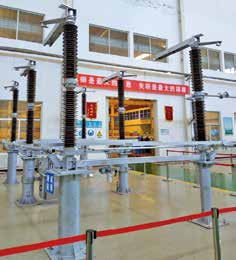
GW4-40.5/72.5/126/145/170/252/363/420 Series Double-column Horizontal Rotary High-voltage AC Disconnect Switch
SHANDONG TAIKAI DISCONNECTORS CO., LTD.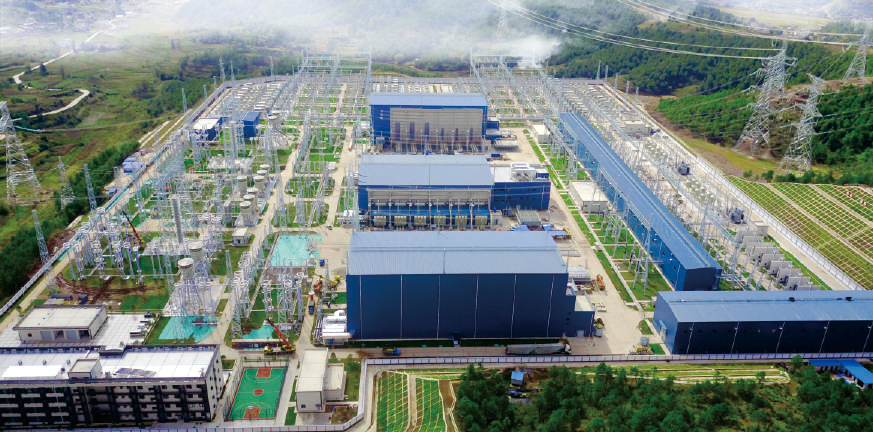
High-voltage Direct Current (HVDC) Transmission System Research and Integrated Design
XI'AN XD POWER SYSTEMS CO., LTD.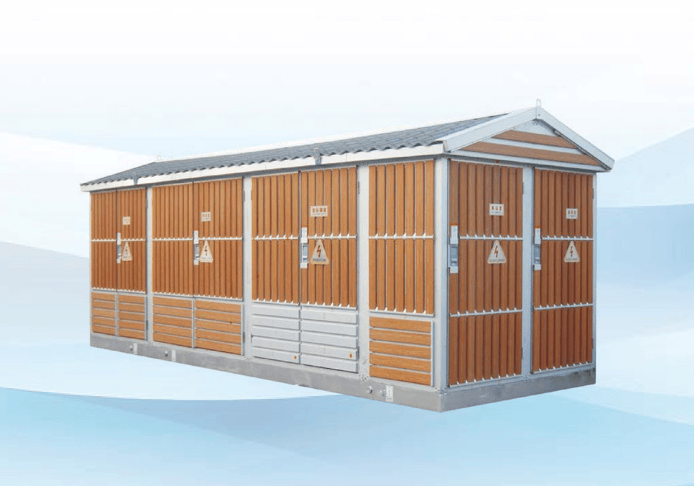
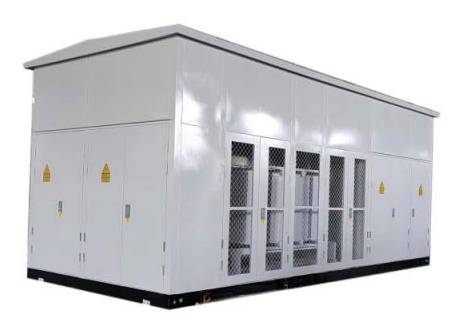
YB □ -12/0.4/1250 Outdoor Prefabricated Substation (European Style)
Shangrao Shangyu Intelligent Electric Co., Ltd.