en.Wedoany.com Reported - Nvidia has canceled the four-compute-chip version of the Rubin Ultra AI accelerator project, opting instead for a dual-GPU chiplet design due to production challenges exceeding expectations. Originally slated for a 2027 launch, the Rubin Ultra was considered the company's most ambitious roadmap node, aiming to double performance compared to the original Rubin (dual-chip design). However, connecting four near-reticle-size chips and cooling 16 HBM4E modules posed formidable engineering hurdles. According to SemiAnalysis, citing "manufacturing execution concerns," Nvidia decided to scrap this approach in favor of a more manufacturable dual-compute-chiplet architecture.
The adjusted Rubin Ultra is expected to deliver only half the performance of the original version, potentially weakening its competitive edge against rivals such as the AMD Instinct MI500 series. Nevertheless, Nvidia may still optimize the overall efficiency of the AI accelerator to demonstrate upgrade value. Additionally, the Rubin Ultra will adopt HBM4E memory instead of the original Rubin's HBM4. Starting with the Rubin GPU, Nvidia plans to supply liquid-cooled Kyber rack-scale systems, increasing the number of GPU packages per expansion domain to at least 144, thereby boosting total compute performance delivered to customers.
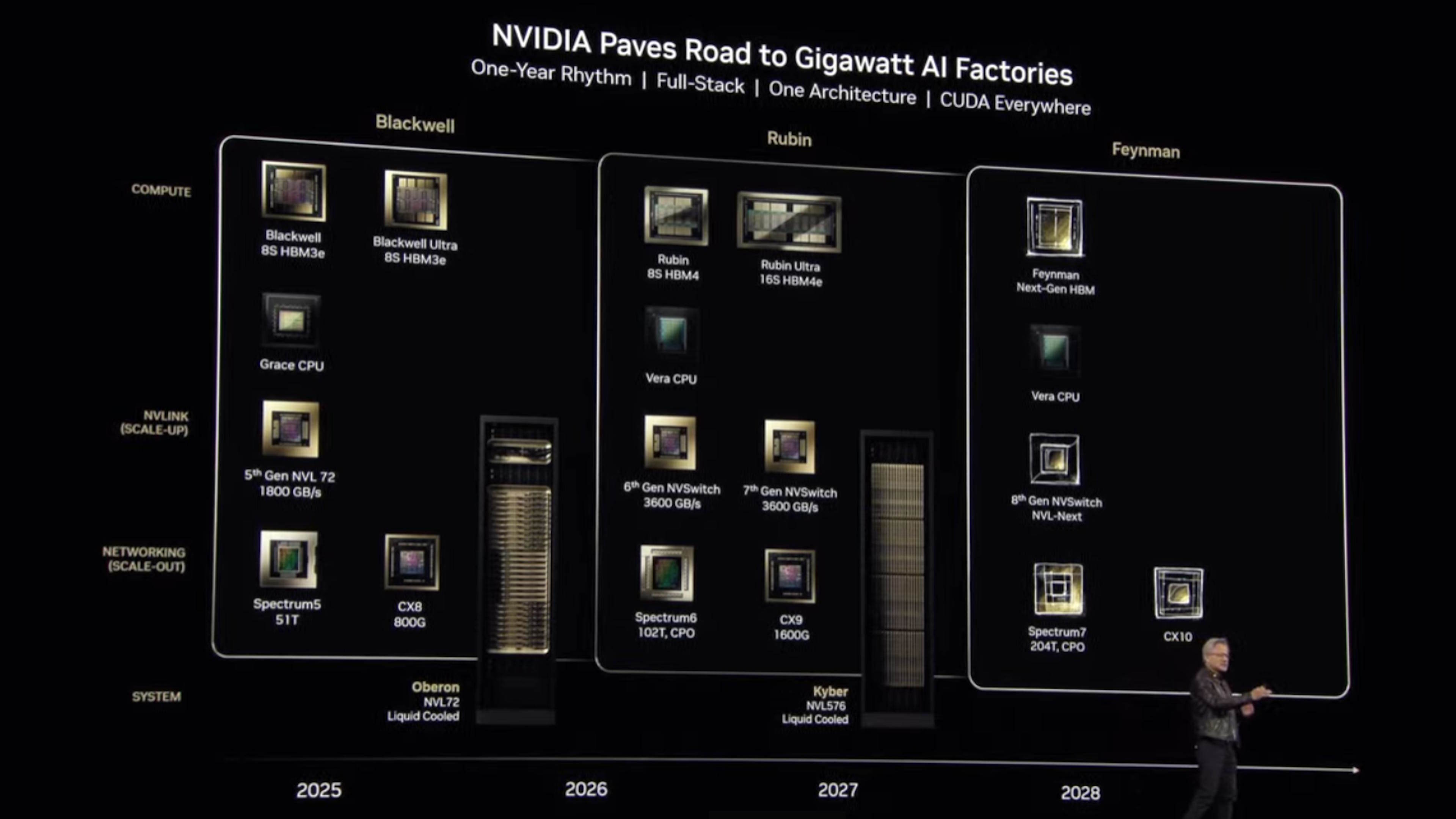
The cancellation of the AI accelerator equipped with 16 HBM4E packages could impact the HBM market, as the new Rubin Ultra uses only eight HBM4E modules. Meanwhile, the dual-chip design also reduces the cost per individual Rubin Ultra GPU compared to the original version. Since Nvidia primarily sells complete rack-scale solutions rather than standalone GPUs, the actual expenditure changes for partners remain to be seen: if more systems are purchased to obtain the same number of compute chips, total spending may exceed that of the original plan.
Related Products


Mine Explosion-proof and Intrinsically Safe Industrial Ethernet Ring Network (10 Gigabit/Gigabit)
Chongqing Mas Sci&Tech Co., Ltd.

MUX Series Communication Interface Device for Security and Stability Control System
Nanjing NR Electric Co., Ltd.
Conveyor Belt Intelligent Monitoring System
LUO YANG WIRE ROPE INSPECTION TECHNOLOGY CO., LTD.



20 Inch 1600*900 Full HD 60Hz TFT LED Monitor with VGA and DP Interfaces for Desktop Computers-Business Use
Guangzhou Zanying Optoelectronics Technology Co., Ltd.
Automatic Aiming Laser Remote Obstacle Removal Robot
Pinggao Group Weihai High-Voltage Apparatus Co., Ltd.