Qualcomm Unveils High Bandwidth Compute Architecture with 133 TB/s Bandwidth, Expected to Debut in 2027
en.Wedoany.com Reported - Qualcomm is re-advancing its data center strategy, leveraging its chip design expertise in low-power computing to introduce a new architecture called High Bandwidth Compute (HBC).
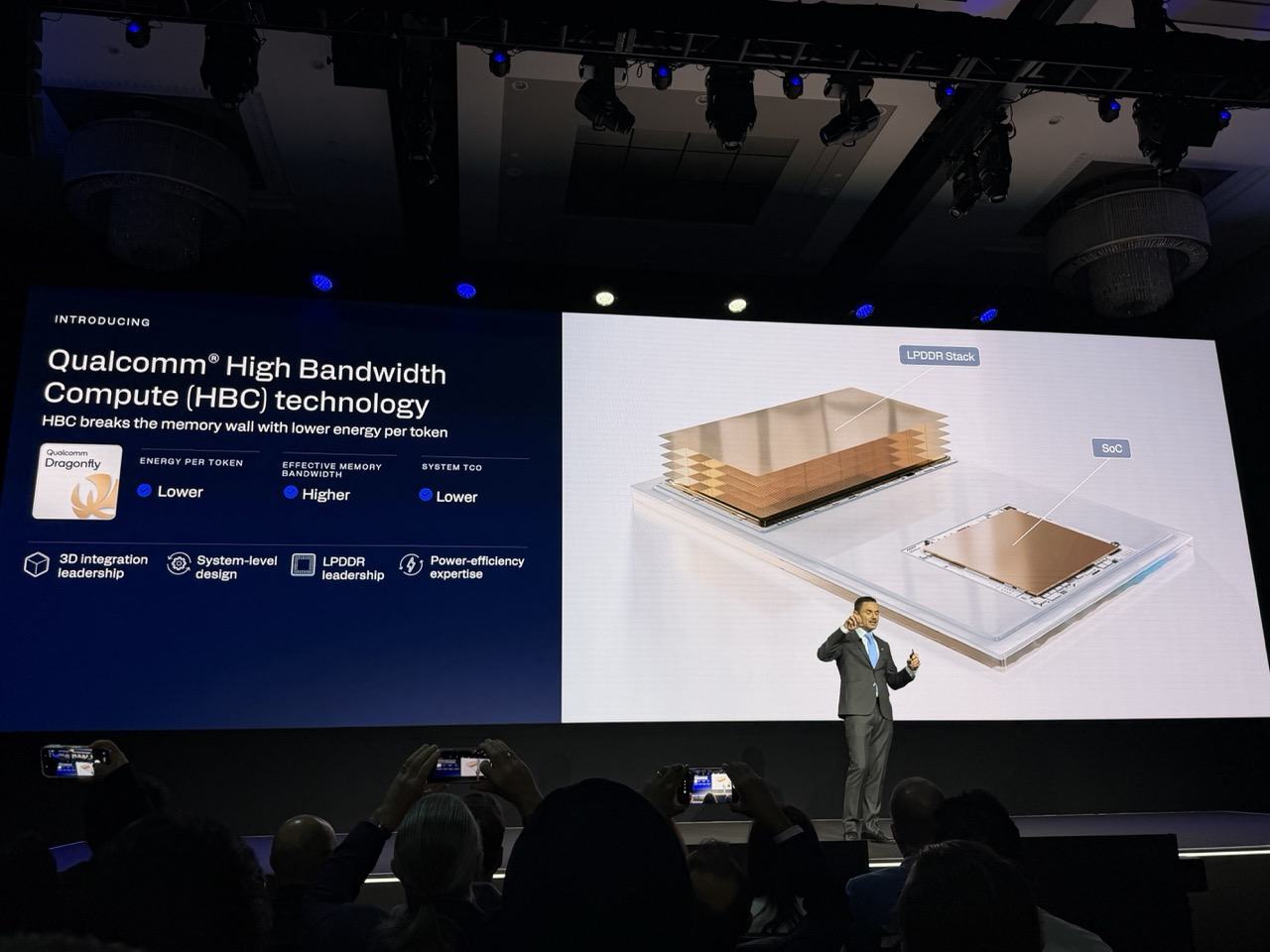
This solution is based on hybrid processing of existing LPDDR memory. Qualcomm has successfully achieved 3D vertical stacking of LPDDR memory, a method similar to the industry-standard High Bandwidth Memory (HBM) and its latest version HBM4, while delivering significant power savings. This initiative relies on Qualcomm's near-memory computing architecture, which combines compute chips with memory chips stacked vertically above them, enabling bandwidth of up to 133 TB/s.
Although HBM4 is already widely used, Qualcomm's promised HBC solution is expected to debut in mid-2027 as part of its next-generation AI inference accelerator, AI250. The first-generation HBC offers a theoretical capacity of 768GB, a figure that HBM4 struggles to match; Qualcomm's announced 133 TB/s bandwidth is also an achievement, as modern high-end HBM4 solutions provide approximately 3.3 TB/s bandwidth per stack. However, some bandwidth claims may involve unfair comparisons, as HBM4 offers raw bandwidth, while Qualcomm's theoretical speeds may be feasible only because a significant amount of computation is performed on the chip.
Qualcomm has made significant strides in the AI industry, which is increasingly focused on low power consumption to continue advancing expansion projects. Qualcomm claims that in large batch processing scenarios, its bandwidth per watt is six times that of HBM; in mixed-size inference batches (such as programming assistants), efficiency improvements reach up to 200 times. Qualcomm's partners include Meta and Microsoft. Meta has signed a multi-year agreement with Qualcomm to use its processors for AI. Microsoft CEO Satya Nadella discussed the software giant's collaboration with Qualcomm in PCs, on-device AI, and data centers. Given Microsoft's focus on the environmental footprint of its AI data center expansion, the CEO has assured stakeholders and communities of efforts to monitor the current and future water and electricity usage of its data centers.
Qualcomm's approach to "eliminating the HBM tax" is not isolated. Competing solutions such as "High Bandwidth Flash," backed by Samsung, SanDisk, and SK Hynix, are also emerging, targeting the low-write, high-read scenarios common in most AI inference workloads. Qualcomm's solution and its associated performance data have yet to be independently verified by third-party tests to validate its energy efficiency claims, but Microsoft's endorsement is seen as a vote of confidence for this key player in the mobile SoC industry.
Related Products


20 Inch 1600*900 Full HD 60Hz TFT LED Monitor with VGA and DP Interfaces for Desktop Computers-Business Use
Guangzhou Zanying Optoelectronics Technology Co., Ltd.


Multi-function Marine Monitoring Low-altitude Detection Radar Sea-air Boundary Ocean Dynamic Environment Measurement
Chengdu Dixin Technology Co., Ltd.
Automatic Aiming Laser Remote Obstacle Removal Robot
Pinggao Group Weihai High-Voltage Apparatus Co., Ltd.
TWP16 P-Band Tropospheric Wind Profile Radar
China Huayun Meteorological Technology Group Co., Ltd.
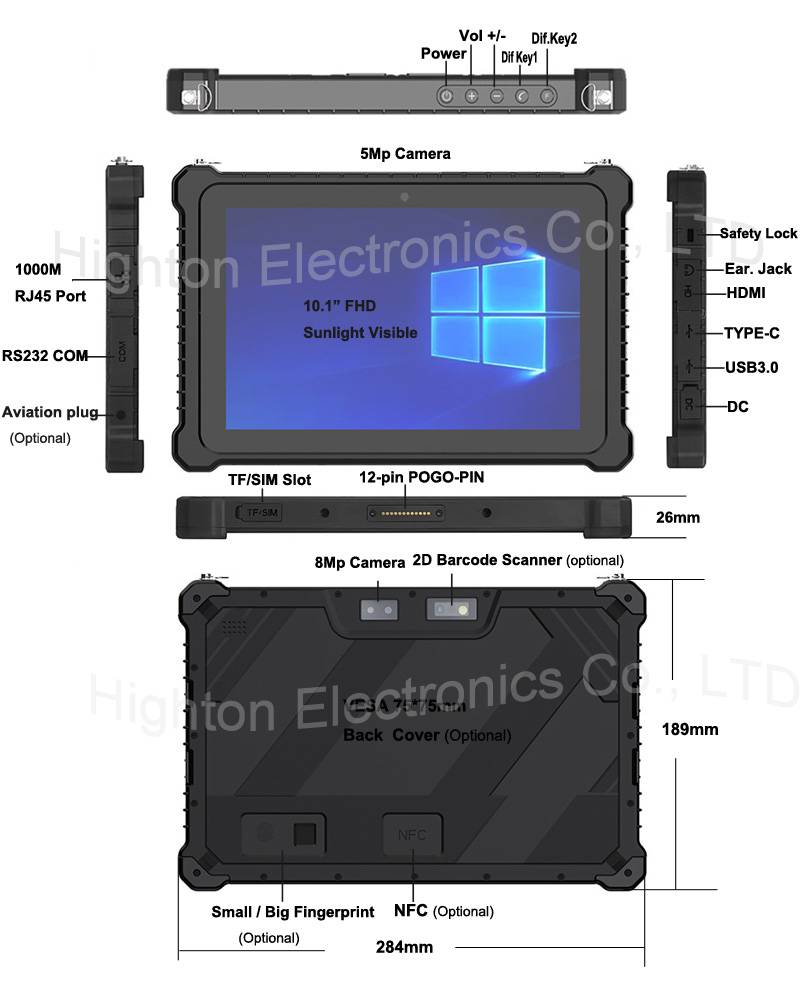
Hot Selling 10 Inch Intel N5100 I5 I7 FHD 8 +128GB 16+256GB Win10 Pro Win11 Pro 4G 5G Rugged Tablet PC Pad with NFC Barcode
Highton Electronics Co., Ltd.
Comprehensive Mining Automation Control System
Beijing Tianma Intelligent Control Technology Co., Ltd.
G.652.D Wavelength-extended Non-dispersion Shifted Single-mode Optical Fiber
HONGAN GROUP CO., LTD.