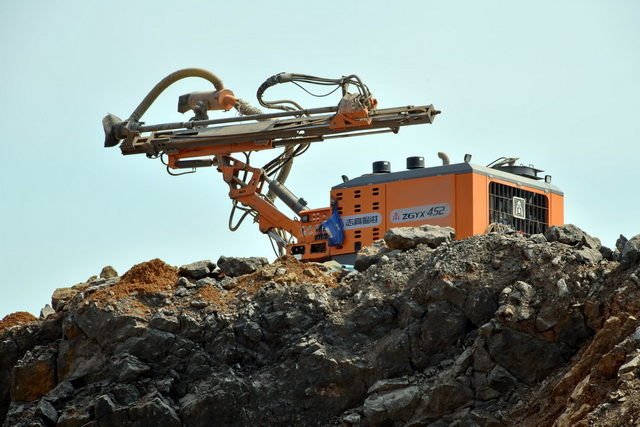
en.Wedoany.com Reported - Energy Transition Minerals (ASX: ETM) announced on Wednesday that it has obtained the final regional approval required to take over the Penouta mine in Spain, which is expected to become the European Union's only domestic source of primary tantalum and niobium.
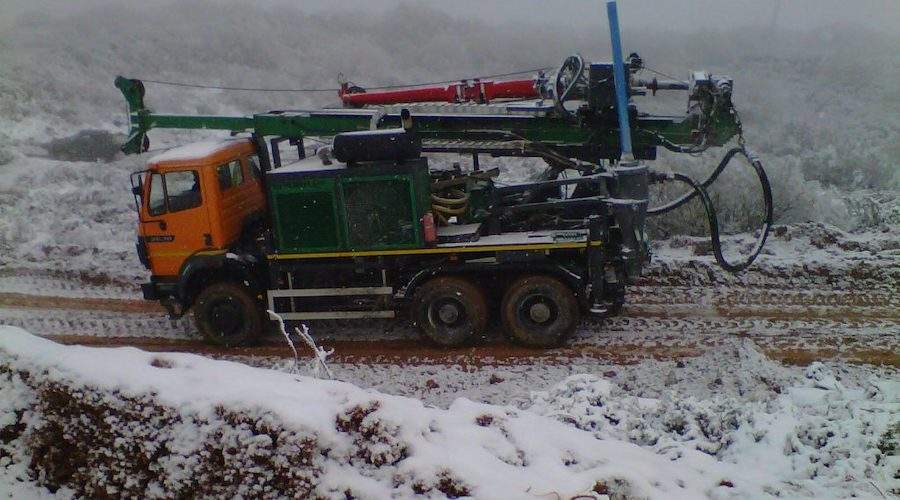
The regional government, Xunta de Galicia, has authorized the transfer of mining rights for Zone C of the Penouta mine, located in Viana do Bolo, Ourense province, to the company's Spanish subsidiary. This resolution formally recognizes the company as the successor holder of the mining rights, marking the final regional step in rescuing the project from its previous operator, Strategic Minerals Spain, which went bankrupt and ceased production in 2024.
Europe produces almost none of the metals yielded by the Penouta mine. Over 80% of the world's niobium comes from Brazil; most tantalum is mined in the Democratic Republic of the Congo and Rwanda, while critical mineral processing is dominated by China. Both tantalum and niobium are designated as critical raw materials by the European Union, and all three metals from the Penouta mine appear on the critical minerals lists of the United States and Australia.
Tin, tantalum, and niobium are foundational materials for semiconductors and capacitors, high-performance aerospace and defense alloys, and energy transition technologies. This year, tantalum prices have surged to multi-decade highs due to supply disruptions in Central Africa.
The company stated that the restarted Penouta mine will provide Europe with a transparent, locally regulated, and traceable autonomous supply source. The EU's Critical Raw Materials Act aims to reduce dependence on any single foreign supplier, setting a target that no more than 65% of the EU's annual strategic raw material demand comes from a single third country, and promoting the rebuilding of extraction and processing capacity within Europe by 2030.
The mine retains its open pit, a processing plant tailored for the ore, and supporting infrastructure, which are legacies of approximately €28 million in historical investment. According to NI 43-101 standards, the Penouta mine covers 282 hectares and has over 76 million tonnes of proven resources (measured and indicated). Mineral resources in the area were exploited from the early 20th century to the 1980s, with studies restarted by Strategic Minerals Spain in 2011, focusing on the utilization of old mining tailings.
The company has signed a memorandum of understanding with commodity trader and merchant Traxys for off-taking the mine's concentrates. In a press release, Managing Director Daniel Mamadou stated that the company intends to responsibly restart the mine, retaining experienced local staff, prioritizing local hiring, and working closely with the Viana do Bolo city council, local citizens and business associations, and production sectors throughout the region, which has over a century of mining tradition, so that the restart of the Penouta mine generates tangible and shared benefits across the entire region.
The Penouta mine is part of the company's portfolio of critical mineral projects in Western Europe, North America, and Greenland. Last week, Greenland rejected an application from its subsidiary, Greenland Minerals, to renew the exploration license for the Kuannersuit rare earth project. The company stated that Greenland's Ministry of Mineral Resources held the application for nine months, then gave the company only 48 hours to respond to a technical geological assessment and refused a one-week extension. The company claimed that the compressed timeline meant the decision did not consider ETM's recent exploration results, which identified new mineralized zones within the broader license area.