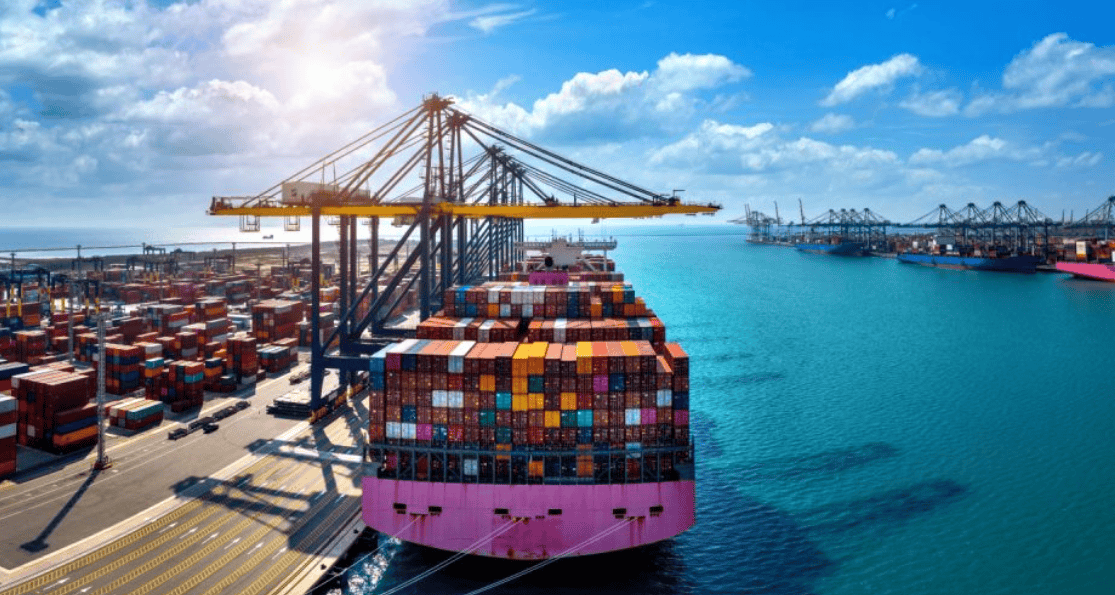
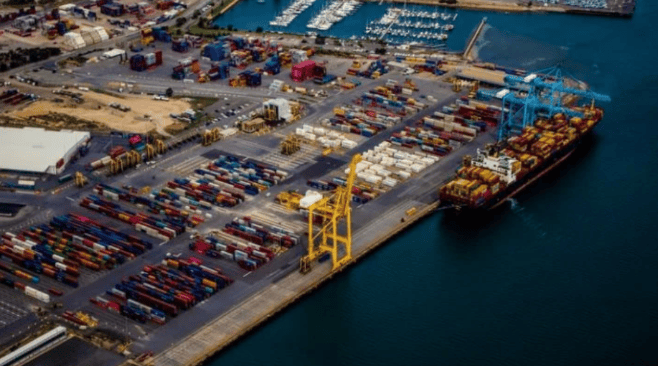
en.Wedoany.com Reported - Recently, the 360-meter-long vessel "Yuanjianhai," carrying approximately 400,000 tons of Brazilian iron ore, smoothly berthed at Berth No. 5 of Phase III of the Ore Terminal in Caofeidian Port Area of Tangshan Port, marking the realization of regular full-load berthing of 400,000-ton vessels in the Caofeidian Port Area.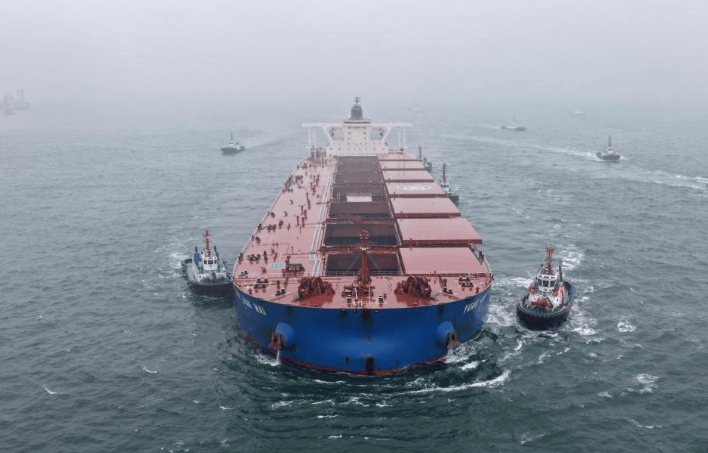
Across China, only a handful of ports possess the conditions for regular full-load berthing and unloading of 400,000-ton vessels. The Caofeidian Port Area of Tangshan Port stands out due to its differentiated core competitiveness, formed by the superposition of multiple advantages including its natural location, deep-water channels, and comprehensive service capabilities. Leveraging its multiple core strengths, Tangshan Port is building itself into a core hub for iron ore supply security in the Beijing-Tianjin-Hebei region.
Superior Natural Conditions and Obvious Location Advantages
When discussing the Caofeidian Port Area of Tangshan Port, industry insiders commonly define it as a world-class deep-water port and a core hub port for bulk raw materials. Caofeidian is the core port area of Tangshan Port, boasting 69.5 kilometers of deep-water coastline. The water depth 500 meters off the island is 25 meters, with a maximum depth of 36 meters in the deep trough. The port area is ice-free and silt-free year-round, making it a rare natural deep-water port.
Hebei Port Group has constructed two 400,000-ton specialized ore berths in the Caofeidian Port Area, making it the only port in Hebei Province and even the Bohai Bay region capable of handling 400,000-ton vessels.
In addition to its natural deep-water conditions, another core advantage of Tangshan Port is its proximity to downstream industrial markets. The port is backed by the industrial heavy city of Tangshan, adjacent to the world's largest steel industry cluster, and radiates to steel production enterprises in North China, Northwest China, and Northeast China. The Beijing-Tianjin-Hebei region has a highly concentrated steel production capacity, consuming hundreds of millions of tons of iron ore annually, a significant portion of which is imported through Tangshan Port.
After unloading, the ore can be directly supplied to local steel mills or transported via railway to the inland hinterland. The overall transportation distance is short, offering prominent advantages in comprehensive logistics costs. Taking Shougang Jingtang Company as an example, relying on the coastal location advantage of Caofeidian, the plant saves 100 to 150 yuan per ton of steel in logistics costs alone, amounting to savings of over one billion yuan annually.
It is this mutual support between superior natural conditions, location advantages, and downstream market demand that has laid a solid foundation for Tangshan Port to open the door to regular full-load berthing of 400,000-ton vessels.
At present, Hebei Port Group has built a total of 36 iron ore berths in Tangshan Port and surrounding port areas, with an annual throughput capacity of 270 million tons. Its foreign trade iron ore unloading volume accounts for 23.62% of the total for coastal ports nationwide.
Deep-Water Channel Opened, Unloading Capacity Enhanced
The Caofeidian Port Area of Tangshan Port has two 400,000-ton specialized ore berths, fully equipped with the hardware capability to handle fully loaded 400,000-ton vessels. However, due to the minimum water depth limitations of the original conventional shipping routes in the central Bohai Sea, fully loaded 400,000-ton vessels could not navigate safely. Vessels had to arrive with reduced loads, preventing the full utilization of the terminal's designed capacity.
In January of this year, the "Laotieshan Waterway – Caofeidian Port Area of Tangshan Port Deep-Water Route (Southern Line)" was incorporated into the national coastal public shipping route system, completely removing the navigation bottleneck for fully loaded 400,000-ton ore carriers. This has led to a leapfrog improvement in the port area's efficiency in handling ultra-large vessels.
With the channel opened, the port's unloading capacity is also being enhanced. The Caofeidian Port Area continuously improves ore unloading efficiency through technological upgrades and process innovations. For example, it has continuously invested in world-leading specialized equipment such as ship unloaders, stacker-reclaimers, and loading towers, and has implemented unmanned and automation transformation. Iron ore is transported via a full-process belt conveyor system, achieving "no-ground-contact" transport from the ship's hold to the railway carriages, even directly to steel plant workshops. Currently, the ore unloading efficiency at the Caofeidian Port Area reaches 13,149 tons per hour, ranking first globally.
This year, Hebei Port Group is implementing the Phase III expansion project of the ore terminal in the Caofeidian Port Area. The terminal will be extended 107 meters eastward, increasing the total berth length to 910 meters. Upon completion, the project will allow two 400,000-ton vessels to berth simultaneously, forming a "40+N" berth combination model.
To ensure the regular berthing of 400,000-ton vessels, the terminal must not only "unload quickly" but also "store adequately and transport smoothly." Behind the terminal, the Caofeidian Ore Storage and Logistics Project is largely completed. Two fully enclosed steel-membrane structure storage sheds have a static storage capacity of 3 million tons. Iron ore unloaded from ships can be directly transported into the sheds via enclosed belt conveyors.
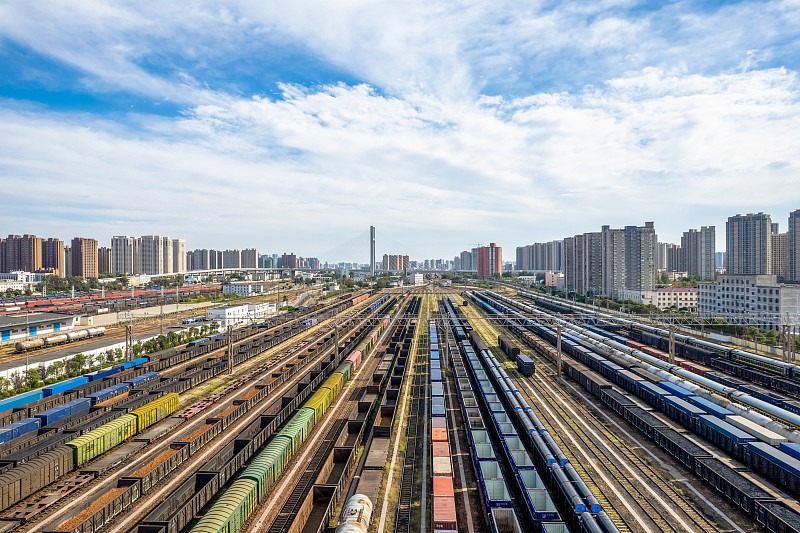
In terms of railway evacuation, Hebei Port Group has built 12 supporting iron ore railway loading towers, with an annual loading capacity exceeding 100 million tons. The entire railway evacuation process for ore has achieved specialization, automation, and green operation.
A multi-department collaborative support mechanism is also operating routinely. The local maritime authority maintains 24-hour duty scheduling, real-time monitoring of the navigation environment, tracking vessel movements, and pre-positioning emergency plans. Customs implements "advance declaration and seamless clearance," accurately verifying data to significantly reduce cargo port time. Border inspection conducts pre-arrival review and post-arrival rapid checks, using digital methods to improve work efficiency. The pilot station develops berthing and unberthing plans on a per-vessel basis, dynamically coordinating with the terminal dispatch command center to ensure smooth and "zero-error" vessel operations throughout the process.
In 2025, Tangshan Port completed a cargo throughput of 884 million tons, firmly ranking second among coastal ports nationwide.
Focusing on Intelligent Upgrades, Adhering to Green Development
The regular full-load berthing of 400,000-ton vessels is not the end point of development but a new starting point for Tangshan Port to upgrade its standards and enhance its comprehensive hub capacity. Looking to the future, this major port will continue to tap its potential and expand its functions.
In the construction of a smart port, Tangshan Port is accelerating the establishment of a "One Foundation, Two Cores, Three Engines" smart port system. Here, the "One Foundation" refers to a digital twin platform, creating a virtual mapping for port operations. The "Two Cores" include an intelligent production management and control system and an equipment lifecycle management system, achieving precise coordination between operational scheduling and equipment maintenance. The "Three Engines" are a safety management platform, an integrated environmental monitoring information platform, and an equipment status perception and intelligent operation and maintenance analysis platform, covering full-dimensional management from safety to environmental protection to maintenance.
Relying on this system, Tangshan Port has achieved intelligent operations across the entire chain, from vessel berthing to cargo evacuation. Its self-developed automated operation system is driving the port's transformation from traditional manual operations to less-manned and unmanned operations. To date, the Caofeidian Port Area has accumulated 1 international invention patent, 20 national invention patents, 37 utility model patents, and 12 software copyrights.
In the field of green ports, the Caofeidian Port Area of Tangshan Port is systematically building three major systems: a standardized environmental protection system management system to ensure all environmental measures are followed; a clean and low-carbon energy system to significantly increase the proportion of new energy applications; and a dust suppression system covering all production operation links to control dust emissions at the source. To date, all specialized dry bulk cargo terminals in the Caofeidian Port Area have been rated as four-star green ports.
Additionally, Tangshan Port has built air-film strip warehouses covering a total area of 147,400 square meters, created 20 "zero-emission corridors" for iron ore collection and distribution, and implemented an 18MW photovoltaic project.
Currently, Tangshan Port is actively integrating into the coordinated development of the Bohai Rim port cluster, strengthening division of labor and cooperation with ports in the Beijing-Tianjin-Hebei region to jointly build a world-class port cluster with complementary functions and efficient synergy. In the future, Tangshan Port will play a greater role in the coordinated development of the Beijing-Tianjin-Hebei region and the upgrading of the Bohai Rim port cluster, providing solid support for the security of the national iron ore supply chain.